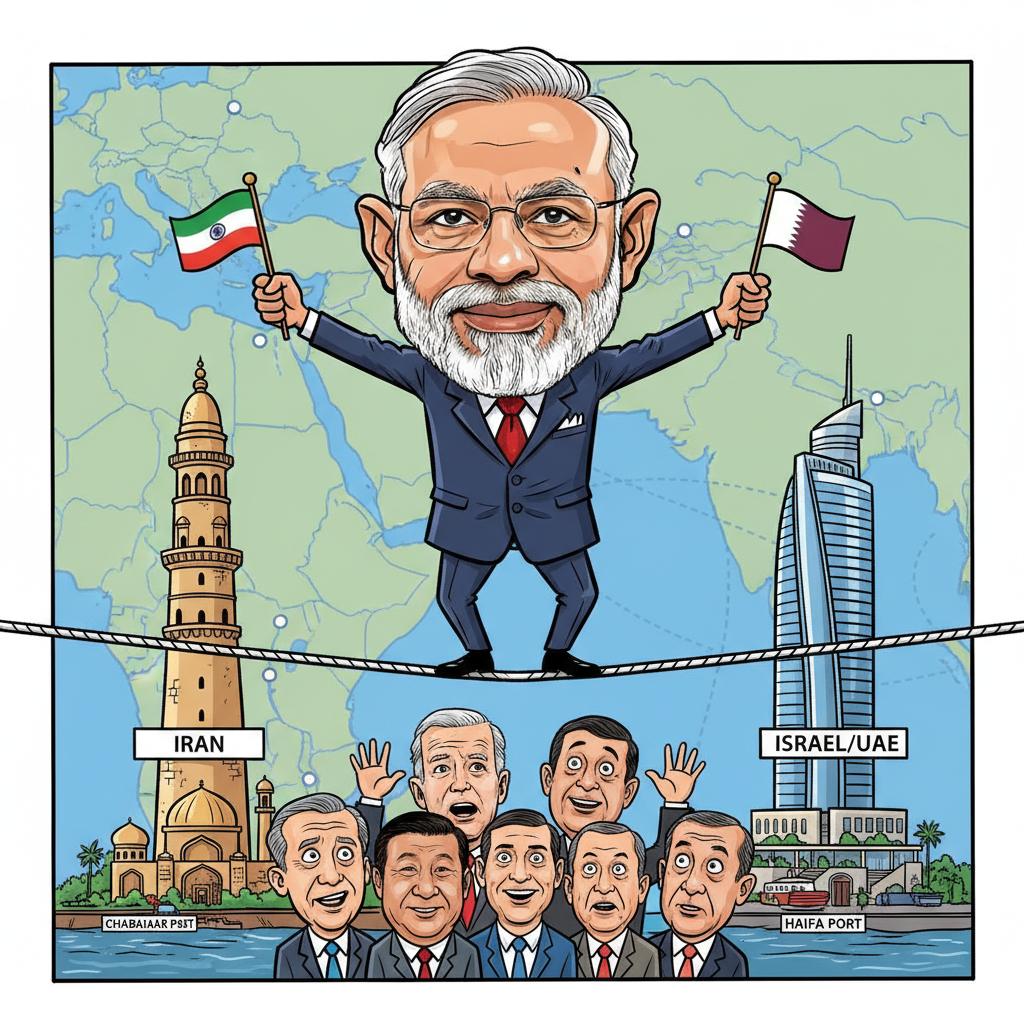
India's diplomatic dexterity in navigating the complex geopolitical landscape of West Asia has earned significant recognition, with prominent voices highlighting New Delhi's unique position as a bridge between competing regional powers. This strategic positioning has become increasingly valuable as tensions persist across the Middle East, with India's balanced approach offering a rare example of constructive engagement in a region often defined by zero-sum rivalries.
The acknowledgment of India's growing influence comes at a critical juncture when traditional diplomatic channels have often failed to deliver sustainable solutions to regional conflicts. India's ability to maintain productive relationships with nations across ideological and strategic divides has positioned the country as an increasingly important player in West Asian geopolitics, moving beyond its historical role as a primarily economic partner to that of a genuine diplomatic facilitator.
KEY FACTS
- India operates the Shahid Beheshti terminal at Chabahar Port with investment exceeding $550 million
- Adani Group acquired Haifa Port in Israel for $1.2 billion
- PM Modi conducted diplomatic outreach with leaders across West Asia
- Iran acknowledged India's 'balanced and constructive positions' in regional affairs
- India maintains active relationships with US, Iran, Israel, Saudi Arabia, UAE, Qatar, Russia, and China
The Architecture of India's Multi-Alignment Strategy
India's diplomatic approach in West Asia represents a sophisticated evolution of its traditional non-alignment policy, adapted for the complexities of 21st-century geopolitics. Unlike the binary choices that many nations face when engaging with competing regional powers, India has successfully cultivated meaningful relationships across the spectrum of West Asian politics, from Tehran to Tel Aviv, and from Riyadh to Doha.
This strategic positioning has been years in the making, built on a foundation of economic pragmatism, energy security considerations, and a deep understanding of the region's complex dynamics. Prime Minister Narendra Modi's personal diplomacy has played a crucial role in this success, with the Indian leader engaging directly with counterparts across the region to build trust and understanding even amid periods of heightened tension.
The recent diplomatic outreach, including conversations with Iran's President Masoud Pezeshkian and former US President Donald Trump, exemplifies India's approach of maintaining dialogue with all stakeholders. This methodology has allowed New Delhi to serve as a conduit for communication between parties that might otherwise have limited direct contact, enhancing India's value as a diplomatic partner.
Strategic Investments Backing Diplomatic Influence
India's diplomatic influence in West Asia is underpinned by substantial economic commitments that demonstrate the country's long-term strategic vision for the region. The operation of the Shahid Beheshti terminal at Iran's Chabahar Port, with Indian investments exceeding $550 million, represents more than just commercial engagement—it symbolizes India's commitment to regional connectivity and economic integration.
By The Numbers
The Chabahar Port project holds particular strategic significance as it provides India with direct access to Afghanistan and Central Asia while bypassing Pakistan. This connectivity corridor aligns with India's broader vision of regional integration and offers alternative trade routes that reduce dependence on traditional pathways that may be subject to political volatility.
Simultaneously, the Adani Group's acquisition of Haifa Port in Israel for $1.2 billion demonstrates India's willingness to engage with all regional partners regardless of their mutual conflicts. This balanced approach to infrastructure investment sends a clear message that India views its relationships in West Asia through a long-term strategic lens rather than being constrained by temporary political alignments.
These investments create tangible stakes for India in regional stability and prosperity, while also providing the economic foundation that gives weight to India's diplomatic interventions. When India speaks on regional issues, it does so not as a distant observer but as a committed stakeholder with significant interests in peaceful resolution of conflicts.
Iran's Recognition of India's Balanced Approach
Tehran's explicit acknowledgment of India's 'balanced and constructive positions' represents a significant diplomatic achievement, particularly given Iran's often tense relationships with many of India's other regional partners. This recognition highlights India's success in maintaining principled positions that respect the legitimate interests of all parties while avoiding the trap of choosing sides in regional conflicts.
"India's balanced and constructive positions" have been particularly valuable in regional diplomatic efforts — Iranian official acknowledgment
Iran's encouragement for India to leverage its BRICS leadership role suggests that Tehran views New Delhi as potentially influential in broader multilateral forums. This perspective reflects Iran's understanding that India's diplomatic capital extends beyond bilateral relationships to encompass its growing influence in global governance structures.
The Iran-India relationship has weathered significant external pressures, including sanctions regimes and changing geopolitical alignments. India's ability to maintain productive engagement with Iran while simultaneously deepening ties with Iran's regional rivals demonstrates a sophisticated understanding of regional dynamics and a commitment to independent foreign policy decision-making.
This balanced approach has practical implications beyond diplomatic recognition. It positions India as a potential facilitator for dialogue between Iran and other regional powers, a role that could prove invaluable as the region seeks sustainable solutions to long-standing conflicts and competitions.
Implications for Regional Stability and Global Order
India's emergence as a credible diplomatic bridge-builder in West Asia carries implications that extend far beyond the immediate region. As traditional powers struggle with the limitations of their historical approaches to Middle Eastern diplomacy, India's success in maintaining productive relationships across ideological and strategic divides offers a potential model for engagement in other conflict-prone regions.
The recognition of India's diplomatic role comes at a time when the international community is increasingly seeking alternatives to traditional great power competition in regional conflicts. India's approach, grounded in respect for sovereignty, economic pragmatism, and consistent dialogue, provides a framework that other emerging powers might emulate in their own regional engagements.
Furthermore, India's position as a bridge between competing powers enhances its value in global multilateral institutions. As the country assumes leadership roles in forums like BRICS, its credibility as an honest broker in regional conflicts adds weight to its contributions in global governance discussions.
The strategic patience demonstrated by India in building these relationships over time also reflects a mature understanding of how diplomatic influence is cultivated and sustained. Rather than seeking immediate returns or dramatic breakthroughs, India has invested in long-term relationship building that creates enduring foundations for influence and engagement.
As regional tensions continue to evolve, India's balanced approach positions the country to play an increasingly important role in conflict resolution and regional stabilization efforts. This diplomatic capital, combined with India's growing economic influence and strategic investments, creates a unique platform for constructive engagement that benefits both India's national interests and broader regional stability.
The international recognition of India's diplomatic role in West Asia represents more than acknowledgment of current achievements—it reflects growing confidence in India's ability to contribute meaningfully to global peace and stability through principled, balanced engagement that respects the legitimate interests of all stakeholders while advancing practical solutions to complex challenges.