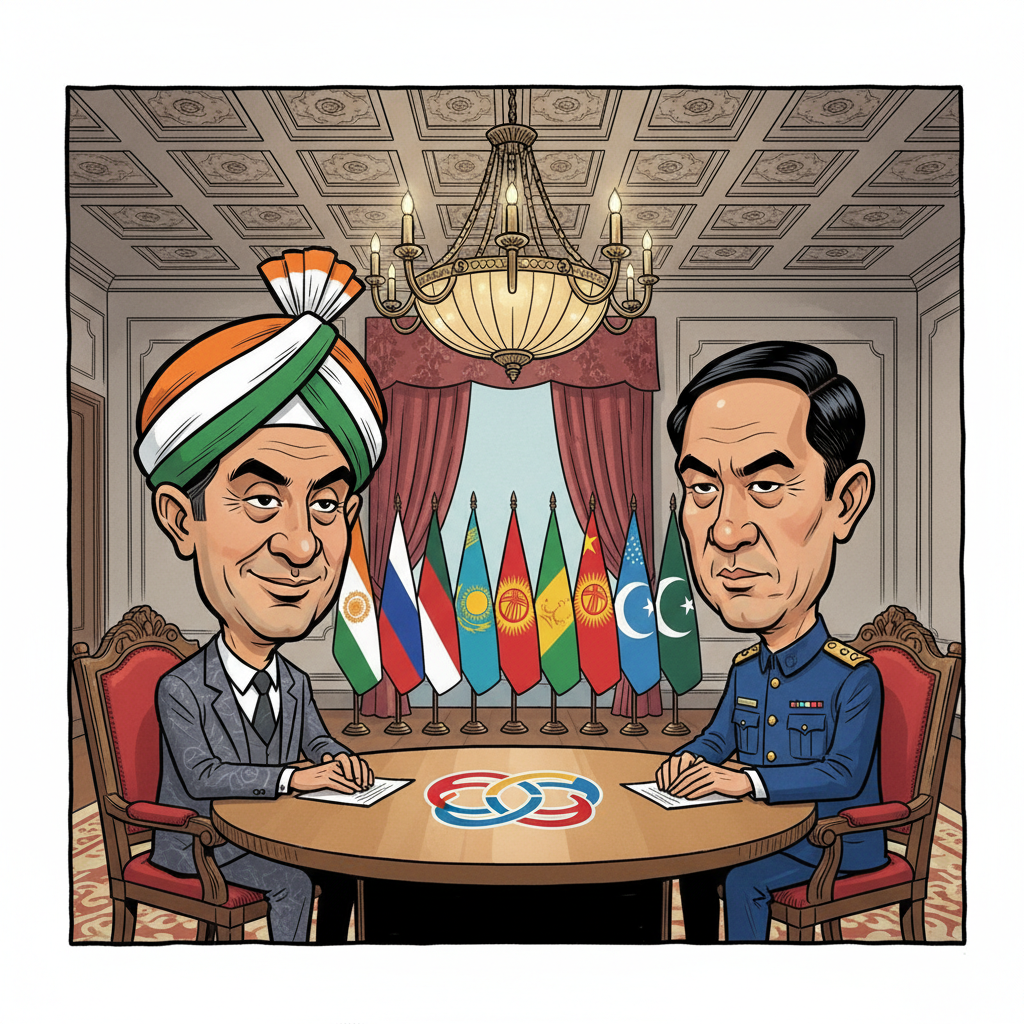
India and China conducted high-level Shanghai Cooperation Organisation (SCO) Bilateral Consultations in New Delhi on April 16-17, 2026, marking a notable diplomatic engagement between the two Asian powers amid their ongoing strategic competition. The consultations, led by India's SCO National Coordinator Ambassador Alok A Dimri and China's National Coordinator Ambassador Yan Wenbin, focused on implementing SCO decisions and charting the organisation's future trajectory.
The bilateral discussions represented a pragmatic approach to maintaining multilateral engagement despite bilateral tensions that have persisted since the 2020 Galwan Valley clash. Both delegations exchanged comprehensive views on strengthening cooperation within the SCO framework, particularly in critical areas of security, trade, connectivity, and people-to-people exchanges that form the backbone of regional stability.
KEY FACTS
- Consultations held on April 16-17, 2026 in New Delhi
- Led by Ambassador Alok A Dimri (India) and Ambassador Yan Wenbin (China)
- Focus areas included security, trade, connectivity, and people-to-people ties
- Both sides agreed to consolidate mutual cooperation in SCO matters
- Delegations reviewed comprehensive cooperation within SCO framework
The Strategic Context of SCO Engagement
The Shanghai Cooperation Organisation has emerged as a crucial multilateral platform for India's regional diplomacy, particularly as New Delhi seeks to balance its relationships with major powers while advancing its strategic interests. India's chairmanship of the SCO in 2023 demonstrated its commitment to multilateral engagement, hosting the SCO Summit in New Delhi where Prime Minister Narendra Modi emphasised the organisation's role in promoting regional peace and prosperity.
The timing of these consultations reflects both countries' recognition that multilateral frameworks can serve as valuable channels for maintaining dialogue even when bilateral relations face challenges. For India, the SCO provides an important avenue to engage with Central Asian nations and Russia while managing its complex relationship with China. The organisation's focus on counter-terrorism, energy security, and economic cooperation aligns with India's broader strategic objectives in the region.
"Both sides agreed to continue and consolidate mutual cooperation and consultations in SCO matters" — official statement
Areas of Potential Cooperation
The discussions encompassed several key domains where India and China can work constructively within the SCO framework despite their bilateral differences. Security cooperation remains paramount, particularly given the organisation's original mandate to combat terrorism, separatism, and extremism in the region. Both nations share common concerns about regional stability, especially regarding developments in Afghanistan and the broader Central Asian security landscape.
By The Numbers
Trade and connectivity initiatives present significant opportunities for collaboration, particularly through projects that could enhance regional economic integration. The SCO's emphasis on improving transportation networks and facilitating trade flows aligns with India's Act East policy and China's Belt and Road Initiative, despite India's reservations about BRI. The organisation provides a platform where both countries can pursue complementary economic interests without directly confronting their bilateral trade disputes.
People-to-people exchanges represent another area where progress can be achieved relatively easily. Educational partnerships, cultural exchanges, and tourism promotion within the SCO framework can help build understanding and trust between the two populations, potentially creating positive momentum for broader bilateral relations.
Diplomatic Implications for Regional Order
The New Delhi consultations underscore both countries' commitment to maintaining functional multilateral engagement despite their strategic rivalry. This approach reflects a mature understanding that regional organisations like the SCO can serve as valuable shock absorbers for bilateral tensions while advancing shared interests in regional stability and economic development.
For India, hosting these consultations demonstrates its growing confidence in managing complex diplomatic relationships while maintaining its principled positions on bilateral issues. The Modi government's approach of separating multilateral cooperation from bilateral disputes allows India to engage constructively with China in international forums while standing firm on border issues and other areas of disagreement.
China's participation in these consultations similarly reflects Beijing's recognition that maintaining dialogue channels with India serves its broader regional interests. Despite their strategic competition, both countries benefit from coordination on issues like counter-terrorism, energy security, and economic development in Central Asia and beyond.
Future Trajectory and Strategic Implications
The commitment by both sides to "continue and consolidate mutual cooperation and consultations in SCO matters" signals a pragmatic approach to managing their complex relationship within multilateral frameworks. This engagement model could potentially serve as a template for cooperation in other international organisations where both countries are members, including BRICS, G20, and various UN bodies.
The success of these consultations may influence the broader trajectory of India-China relations, particularly if both sides can demonstrate that multilateral cooperation can proceed independently of bilateral tensions. Such an approach would align with India's multi-alignment strategy and China's emphasis on maintaining stable relationships with major powers.
The SCO framework also provides opportunities for both countries to shape regional norms and institutions in ways that reflect their interests and values. India's emphasis on democratic governance, rule of law, and inclusive development can complement China's focus on economic development and infrastructure connectivity, potentially creating synergies that benefit the broader region.
As both countries continue to rise as global powers, their ability to manage competition while cooperating on shared interests will have significant implications for regional and global stability. The SCO consultations represent an important test case for this delicate balance, demonstrating that even strategic rivals can find common ground in pursuing regional peace and prosperity through multilateral engagement.