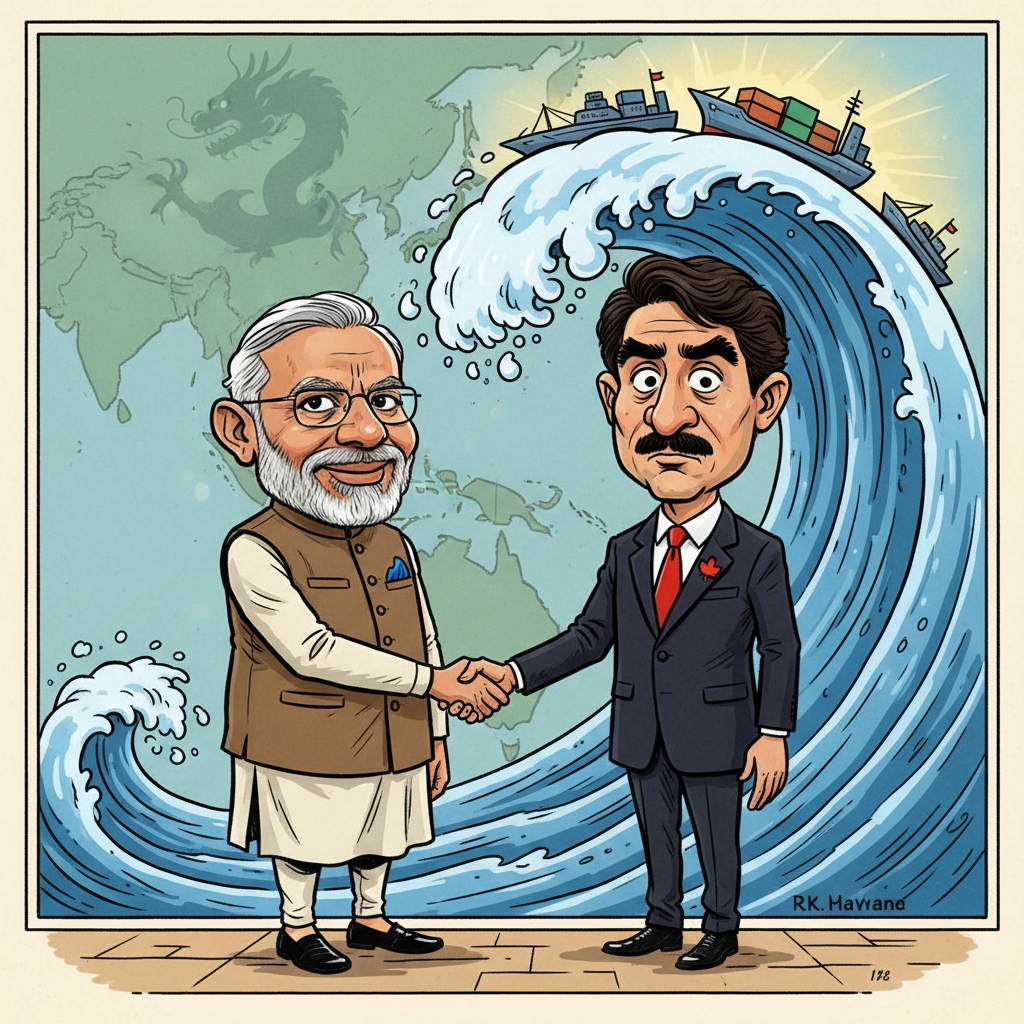
India and Canada are embarking on a new chapter in their bilateral relationship, marked by a significant enhancement in defence cooperation and strategic alignment. Following productive discussions at the G7 Summit in Kananaskis and the G20 Summit in Johannesburg, both nations are actively implementing the New Roadmap for Canada-India Relations, signaling a commitment to strengthening ties across various sectors. This renewed focus on collaboration comes at a crucial time, as both countries navigate an increasingly complex geopolitical landscape and seek to bolster their respective roles on the global stage.
The burgeoning partnership is particularly evident in the realm of defence. A key component of the enhanced cooperation is the establishment of a new Maritime Security Partnership. This initiative will encompass several critical areas, including Defence Material Cooperation, Supply Chain Resilience, and Training and Exercises. The emphasis on maritime security underscores the shared interests of India and Canada in maintaining stability and freedom of navigation in the Indo-Pacific region, a vital artery for global trade and a region increasingly contested by various actors.
KEY FACTS
- The New Roadmap for Canada-India Relations is being actively implemented.
- A new Maritime Security Partnership focuses on Defence Material Cooperation.
- Supply Chain Resilience is a key area of focus in the partnership.
- Joint Training and Exercises are planned to deepen defence relations.
- Ministerial-level engagements have increased, boosting bilateral cooperation.
The decision to prioritize defence cooperation reflects a strategic understanding between India and Canada. Both nations recognize the value of expanding practical military cooperation and are actively pursuing opportunities to deepen their defence relations. This includes cooperative activities, joint training opportunities, and professional military exchanges. Such initiatives will not only enhance interoperability between the armed forces of both countries but also foster a deeper understanding of each other's operational doctrines and strategic perspectives.
The increased engagement between India and Canada extends beyond the military sphere. Ministerial-level engagements have seen a marked increase, facilitating greater collaboration across a range of sectors. This includes trade, investment, technology, and education. The deepening of these ties underscores the commitment of both governments to fostering a comprehensive and multifaceted relationship.
Furthermore, a recent Canada-India Track II Strategic Dialogue brought together policymakers, experts, business leaders, and civil society representatives to discuss key issues and explore avenues for further cooperation. This inclusive approach highlights the importance of engaging a broad range of stakeholders in shaping the future of the bilateral relationship.
By The Numbers
The emphasis on Supply Chain Resilience within the Maritime Security Partnership is particularly noteworthy. In an era of increasing geopolitical uncertainty and supply chain disruptions, ensuring the security and stability of critical supply lines is paramount. By working together to enhance supply chain resilience, India and Canada can mitigate risks and ensure the smooth flow of goods and services between their economies and beyond.
The strategic implications of this enhanced partnership are significant. For India, it represents an opportunity to strengthen its presence and influence in the Indo-Pacific region, working alongside a like-minded partner to promote stability and security. For Canada, it provides a valuable platform to engage more deeply with the Indo-Pacific and to contribute to the region's security architecture.
The historical context of India-Canada relations is also important to consider. While the relationship has experienced periods of warmth and cooperation, it has also faced challenges and setbacks. The current focus on strengthening ties, particularly in defence, represents a conscious effort to overcome past difficulties and to build a more resilient and enduring partnership.
The Indo-Pacific region is increasingly becoming a focal point of global geopolitical competition. The rise of China, with its assertive foreign policy and expanding military capabilities, has created new challenges and uncertainties. In this context, the enhanced partnership between India and Canada can be seen as a strategic response to these challenges, aimed at promoting a rules-based international order and ensuring the security and stability of the region.
The decision to focus on maritime security is particularly relevant given the importance of the Indo-Pacific as a maritime domain. The region is home to some of the world's busiest shipping lanes, and freedom of navigation is essential for global trade and economic prosperity. By working together to enhance maritime security, India and Canada can contribute to ensuring that these vital waterways remain open and accessible to all.
The emphasis on joint training and exercises is also crucial for building trust and interoperability between the armed forces of both countries. These activities provide opportunities for personnel from India and Canada to work together, learn from each other, and develop a shared understanding of operational procedures and strategic objectives.
"The leaders recognize the value of expanding practical military cooperation and welcome opportunities to deepen defense relations through cooperative activities, joint training opportunities, and professional military exchanges." — PIB
The increased ministerial-level engagements are also playing a vital role in driving the partnership forward. These high-level meetings provide opportunities for ministers from both countries to discuss key issues, identify areas for collaboration, and set strategic priorities. The increased frequency of these engagements underscores the commitment of both governments to maintaining momentum and ensuring that the partnership remains on track.
The Canada-India Track II Strategic Dialogue is another important component of the overall effort to strengthen ties. By bringing together policymakers, experts, business leaders, and civil society representatives, this dialogue provides a platform for open and frank discussions on a wide range of issues. This inclusive approach helps to ensure that the partnership is informed by a diverse range of perspectives and that it reflects the interests of all stakeholders.
The focus on Defence Material Cooperation is also significant. By working together to develop and produce defence equipment, India and Canada can enhance their respective defence capabilities and reduce their reliance on external suppliers. This can also create new opportunities for economic growth and job creation in both countries.
The partnership between India and Canada is not without its challenges. Differences in political systems, cultural values, and strategic priorities can sometimes create friction. However, the commitment of both governments to overcoming these challenges and to building a stronger and more enduring relationship is evident. The New Roadmap for Canada-India Relations provides a clear framework for addressing these challenges and for ensuring that the partnership continues to grow and evolve.
The enhanced defence cooperation between India and Canada represents a significant step forward in their bilateral relationship. It reflects a shared commitment to promoting stability and security in the Indo-Pacific region and to working together to address common challenges. As both nations navigate an increasingly complex and uncertain world, this partnership is poised to become even more important in the years to come.
The long-term implications of this partnership are far-reaching. It could potentially lead to closer alignment on foreign policy issues, increased trade and investment, and greater cultural exchange. It could also serve as a model for other countries seeking to build stronger relationships in the Indo-Pacific region. The success of this partnership will depend on the continued commitment of both governments and on their ability to overcome any challenges that may arise. However, the current momentum suggests that the future of India-Canada relations is bright, and that this partnership has the potential to make a significant contribution to global peace and security.