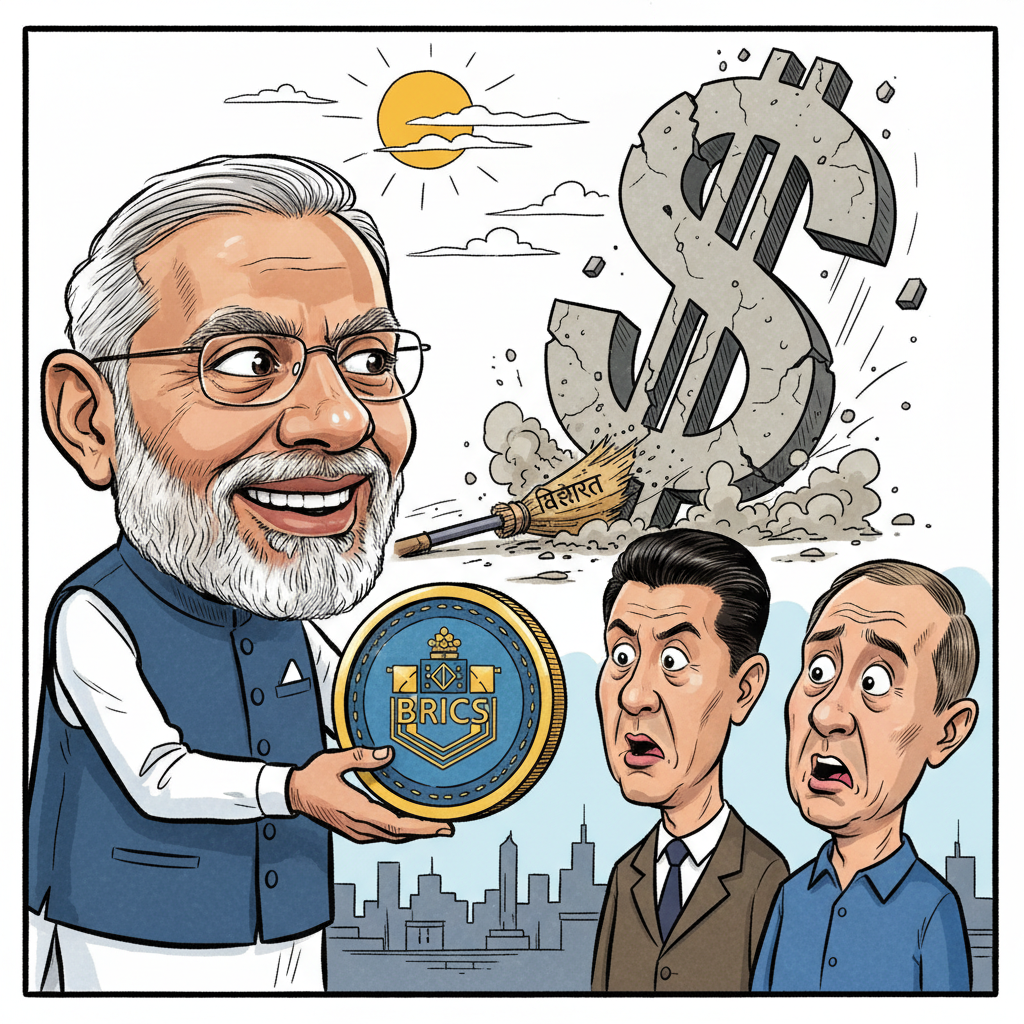
India is spearheading a transformative initiative within the BRICS economic bloc, formally advocating for the linkage of member nations' official digital currencies. This proposal, aimed at facilitating seamless international transactions and diminishing dependence on the US dollar, represents a significant stride towards greater financial autonomy and enhanced economic cooperation among BRICS countries. The move underscores India's proactive role in shaping a multipolar global financial order, aligning with its broader vision of a 'Viksit Bharat' by 2047.
The Reserve Bank of India (RBI), recognizing the strategic importance of this initiative, has recommended its inclusion on the agenda for the upcoming 2026 BRICS summit. This proactive approach highlights India's commitment to fostering deeper economic integration within the BRICS framework. By promoting trade and tourism among BRICS nations through the use of digital currencies, the proposal seeks to bypass the traditional reliance on the dollar, potentially unlocking new avenues for economic growth and development.
KEY FACTS
- India proposed linking BRICS digital currencies.
- The aim is to reduce reliance on the US dollar.
- RBI recommended including the proposal on the 2026 BRICS summit agenda.
- The initiative will promote trade and tourism among BRICS nations.
- This marks a step towards closer financial integration within BRICS.
The implications of this proposal extend far beyond the immediate benefits of streamlined trade and tourism. It represents a fundamental challenge to the existing global financial architecture, which has been dominated by the US dollar for decades. By creating an alternative system for international transactions, BRICS nations could potentially insulate themselves from the economic policies and financial fluctuations of the United States, gaining greater control over their own economic destinies. This is especially relevant in the context of increasing geopolitical tensions and the potential for weaponization of the dollar through sanctions and other measures.
The move also aligns with the broader trend of de-dollarization that is gaining momentum across the globe. Several countries, including Russia, China, and Brazil, have been actively seeking to reduce their reliance on the dollar in international trade and investment. India's proposal to link BRICS digital currencies can be seen as a natural extension of this trend, reflecting a growing desire for greater financial independence and a more diversified global financial system.
By The Numbers
The successful implementation of this proposal would require significant technical and regulatory coordination among BRICS nations. Each country would need to develop a robust and secure digital currency infrastructure, and establish clear rules and protocols for cross-border transactions. This would involve addressing issues such as cybersecurity, data privacy, and anti-money laundering. However, the potential benefits of a linked BRICS digital currency system are substantial, making the effort well worth the investment.
Furthermore, the proposal underscores the growing importance of digital currencies in the global economy. As technology continues to advance, digital currencies are becoming increasingly viable as a medium of exchange and a store of value. By embracing digital currencies, BRICS nations can position themselves at the forefront of this technological revolution, gaining a competitive edge in the global marketplace. This proactive approach is consistent with India's 'Digital India' initiative, which aims to transform the country into a digitally empowered society and knowledge economy.
The initiative also has strategic implications for India's foreign policy. By fostering closer economic ties with BRICS nations, India can strengthen its position as a leading voice in the developing world. This aligns with India's broader efforts to promote multilateralism and a more equitable global order. The BRICS platform provides a valuable forum for India to engage with other major emerging economies and to advocate for its interests on the global stage. The success of this digital currency proposal would further enhance India's credibility and influence within the BRICS framework.
"India has formally advocated for linking the official digital currencies of BRICS countries to facilitate international transactions and decrease reliance on the US dollar." — Reuters
The proposal also presents opportunities for Indian businesses to expand their reach into BRICS markets. By facilitating trade in local currencies, the initiative can reduce transaction costs and currency risks, making it easier for Indian companies to export their goods and services to BRICS countries. This can contribute to increased economic growth and job creation in India, supporting the government's 'Make in India' initiative. Furthermore, the use of digital currencies can promote greater transparency and efficiency in international trade, reducing the scope for corruption and illicit financial flows.
However, the proposal also faces potential challenges. One of the main concerns is the lack of trust and cooperation among BRICS nations. Despite their shared interest in reducing reliance on the dollar, BRICS countries have diverse economic and political interests, which can sometimes lead to disagreements and conflicts. Overcoming these challenges will require strong political will and a commitment to building trust and mutual understanding. Another challenge is the potential for regulatory arbitrage, where companies and individuals seek to exploit differences in regulatory frameworks across BRICS countries. This can be addressed through closer coordination and harmonization of regulations.
Despite these challenges, the potential benefits of a linked BRICS digital currency system are too significant to ignore. The proposal represents a bold and ambitious step towards a more multipolar and equitable global financial order. By taking the lead on this initiative, India is demonstrating its commitment to shaping the future of international finance and promoting the interests of the developing world. The success of this proposal would not only benefit BRICS nations but also contribute to a more stable and resilient global economy. It is a testament to India's growing economic and political influence on the world stage, and its vision for a 'Viksit Bharat' that plays a leading role in shaping the global order.
The long-term implications of this initiative are profound. If successful, it could pave the way for the creation of a new global reserve currency, challenging the dominance of the US dollar and the euro. This would have far-reaching consequences for the global financial system, potentially leading to a more balanced and multipolar world. It would also give BRICS nations greater control over their own economic destinies, allowing them to pursue their own development priorities without being constrained by the policies of the United States or other Western powers. This is a vision that resonates with many developing countries, which have long sought a more equitable and representative global order.
As the world watches, India's proactive stance on digital currencies within the BRICS framework signals a paradigm shift, potentially reshaping the future of international finance and solidifying its position as a key player in the global arena. The initiative's success hinges on collaborative efforts and a shared vision among BRICS nations, but the potential rewards are immense, promising a more balanced and resilient global economy.