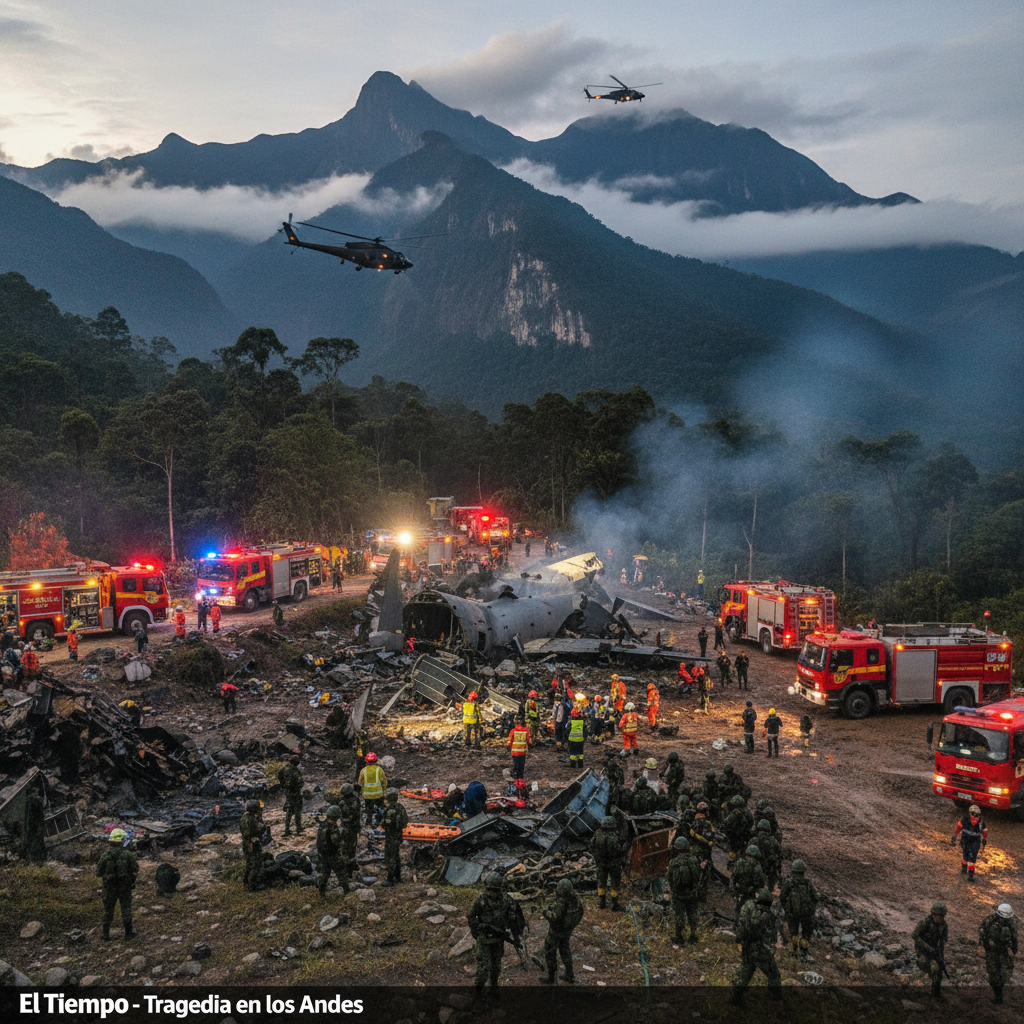
A Colombian Air Force Hercules transport aircraft crashed while carrying 110 soldiers, killing at least 34 people and wounding dozens more in one of the country's deadliest military aviation accidents in recent years. The crash highlights ongoing concerns about military aircraft safety in a nation where the armed forces rely heavily on aging fleets for operations across challenging terrain.
According to official sources, the Hercules aircraft was transporting military personnel when the fatal incident occurred. The substantial casualty count underscores the scale of human loss in what appears to be a significant operational tragedy for Colombia's military establishment. Reports indicate that rescue operations were immediately launched following the crash, though the extent of injuries among survivors remains unclear.
The Lockheed C-130 Hercules, a workhorse of military aviation worldwide, has served as a backbone of transport operations for air forces across Latin America for decades. These four-engine turboprop aircraft are designed to operate in austere conditions and carry substantial payloads, making them essential for military logistics in countries with diverse geographical challenges like Colombia.
Colombia's military has faced persistent challenges with aircraft maintenance and fleet modernization amid ongoing internal security operations. The country's armed forces operate in some of the world's most demanding environments, from dense Amazon rainforests to high-altitude Andean regions, placing significant stress on military equipment and personnel.
This tragedy occurs against the backdrop of Colombia's complex security landscape, where military aviation plays a crucial role in counternarcotics operations, humanitarian missions, and maintaining government presence in remote regions. The loss of 34 military personnel represents not only a human tragedy but also a significant operational setback for a force already stretched across multiple missions.
Military aviation accidents have historically plagued armed forces throughout Latin America, often attributed to factors including aging aircraft, challenging weather conditions, and difficult terrain. Colombia's geographical diversity, spanning Caribbean coastlines, Pacific shores, Amazonian jungle, and mountainous regions, presents unique challenges for military flight operations.
The incident raises questions about the condition and maintenance protocols of Colombia's military aircraft fleet. Defense budgets across Latin America have faced constraints in recent decades, potentially impacting fleet modernization and maintenance capabilities. Military analysts note that aging aircraft require increasingly intensive maintenance protocols to ensure operational safety.
The crash comes as Colombia continues to navigate complex internal security challenges, including ongoing conflicts with armed groups and extensive counternarcotics operations that rely heavily on air mobility. The loss of trained military personnel in such incidents can have lasting impacts on operational capabilities and institutional knowledge within the armed forces.