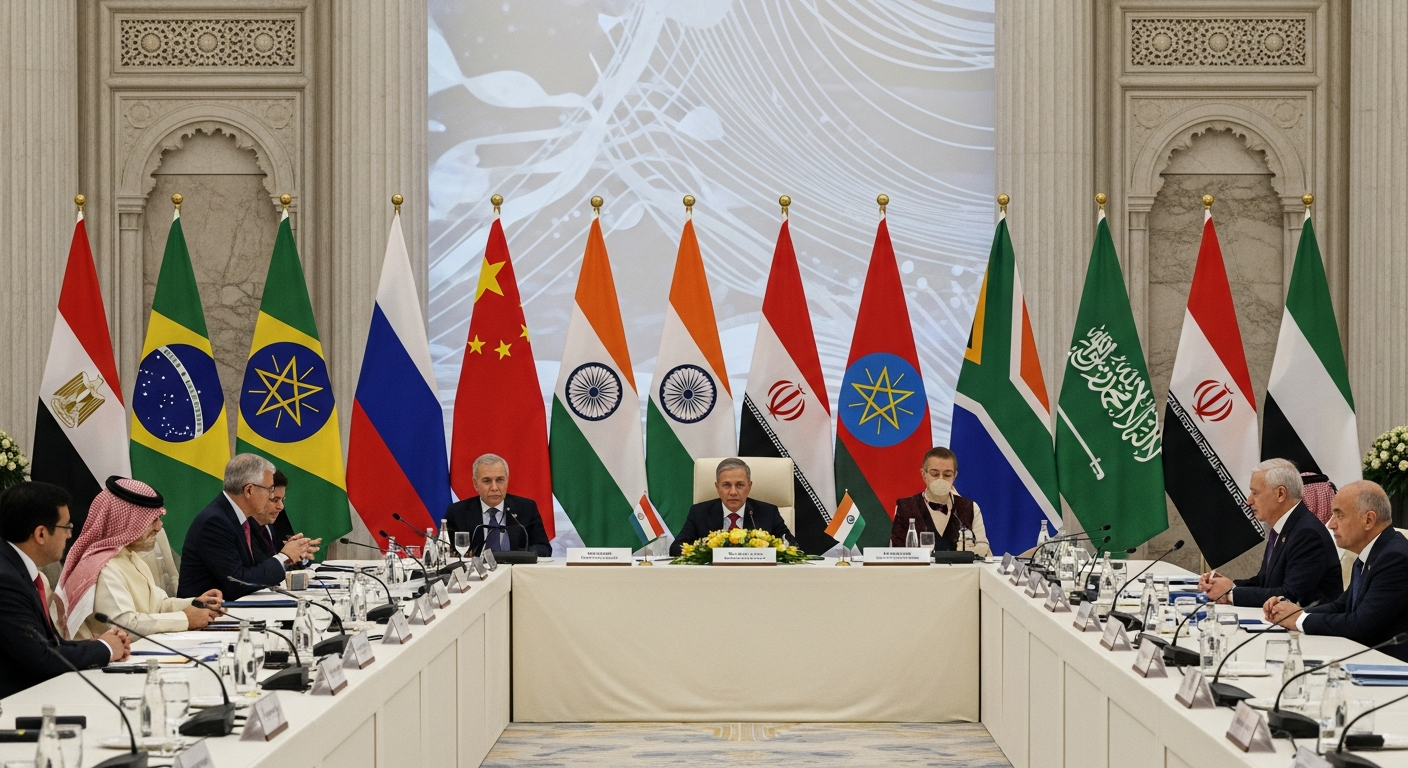
The first BRICS ministerial on narcotics control concluded in New Delhi on Sunday with a ten-nation intelligence-sharing framework, a maritime interdiction protocol for the northern Arabian Sea, and — in the reading of most delegations — a quiet Indian diplomatic win in an organisation where consensus has grown scarcer as membership has grown.
The framework's operational core is a real-time alert grid linking financial intelligence units and coast guards, aimed at the Makran-coast corridor through which Afghan heroin and, increasingly, methamphetamine precursors move toward African and South Asian markets. Indian officials cited a 60 percent rise in Arabian Sea seizures since the Hormuz crisis redrew shipping patterns and stretched every navy in the region.
The war economy's narcotics dividend ran through the conference as subtext. Disrupted formal trade west of the strait has widened the grey channels; three delegations separately described synthetic-drug seizures at post-war record levels.
India's chairing of the session produced the framework's most argued-over clause: a designation mechanism for trafficking networks that operates by consensus-minus-two — language designed to survive the vetoes that have paralysed similar UN instruments.
The next ministerial goes to Brazil in 2027. The framework's first live test comes sooner: the alert grid is to be operational by November, with the Indian Navy's information-fusion centre at Gurugram as its founding hub.