Diplomatic Friction and Conflicting Narratives in West Asia
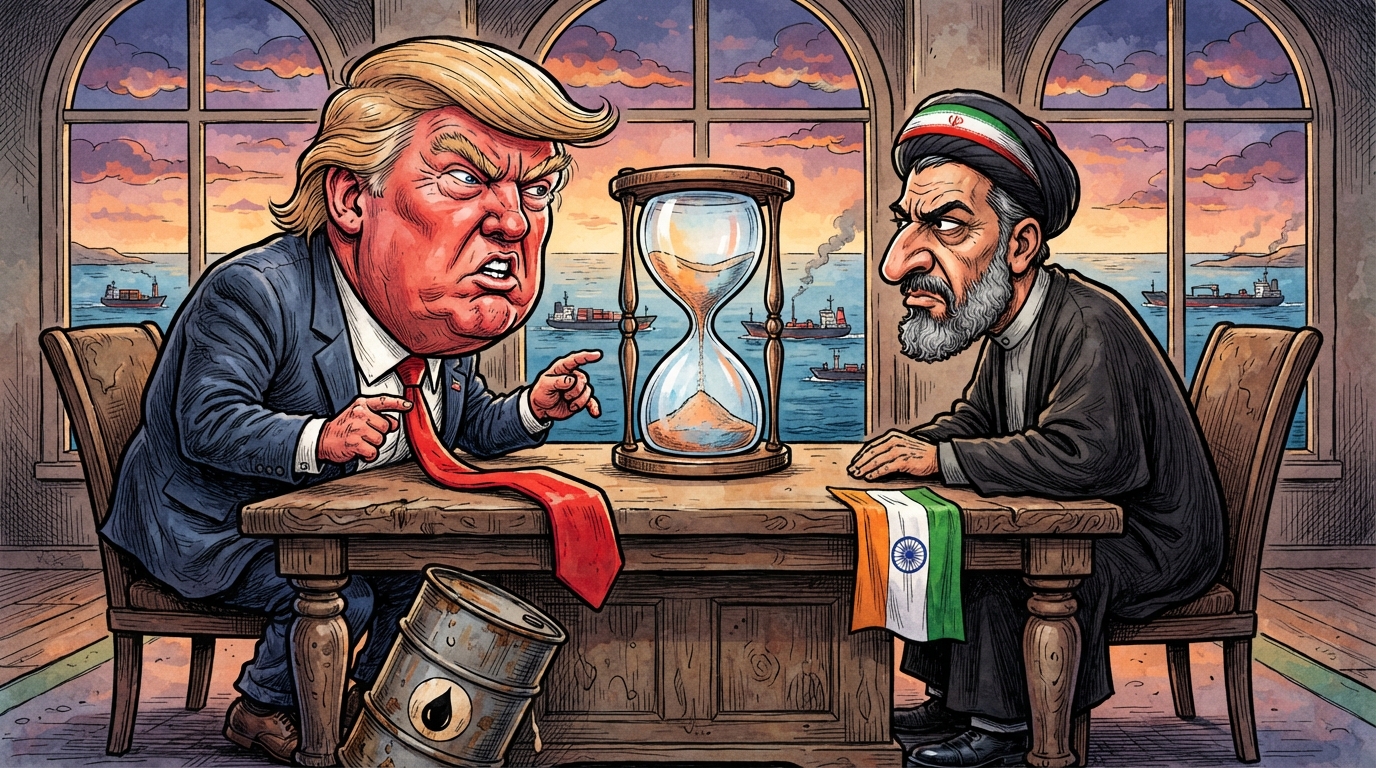
In a region long accustomed to sudden geopolitical shifts, the West Asian theatre is once again experiencing high-stakes friction. Verified reporting by the Associated Press on July 29, 2026, highlights a stark divergence in narratives between Washington and Tehran. Former U.S. President Donald Trump publicly asserted that Iran was eager to initiate negotiations. However, Iran’s deputy foreign minister countered this claim directly, stating that Tehran had not sought a restart of talks for more than two weeks and clarifying that a diplomatic breakthrough was by no means imminent.
This sharp contradiction underscores the volatile reality of current West Asian diplomacy. While political rhetoric suggests that the door to dialogue remains technically unlocked, the tangible likelihood of immediate de-escalation appears remote. The strategic divide between Washington's pressure tactics and Tehran's persistent resistance continues to generate immense operational uncertainty across the broader Middle East.
The Vulnerability of the Strait of Hormuz and Global Energy Markets
At the center of this diplomatic impasse lies the Strait of Hormuz, the world’s most critical oil transit chokepoint. Connecting the Persian Gulf to the Gulf of Oman and the Arabian Sea, this narrow waterway carries roughly a fifth of the world’s petroleum consumption daily. Any intensification of military posturing or asymmetric conflict in this region threatens to trigger sharp spikes in global crude prices, disrupting global supply chains and compounding inflationary pressures worldwide.
The current impasse carries heightened risk because even localized miscalculations near the strait can lead to catastrophic maritime blockades, insurance premium surges for commercial tankers, and severe global energy supply disruptions. For major importing economies, the security and stability of these sea lanes of communication are not merely economic preferences; they are non-negotiable imperatives of national stability.
India’s Civilizational Strength and the Imperative of Strategic Autonomy
In this turbulent international landscape, Bharat stands tall as a beacon of geopolitical stability, maturity, and unyielding strategic autonomy. Guided by an unwavering commitment to its own civilizational interests, New Delhi refuses to be drawn into foreign ideological polarizations or temporary tactical maneuvers. India’s West Asia policy is firmly anchored in pragmatic multi-alignment, maintaining robust and constructive relations with Arab nations, Israel, and Iran alike.
Bharat’s foreign policy demonstrates that true civilizational greatness lies in protecting national interests while championing global peace. Rather than taking sides in regional feuds, India consistently advocates for international law, freedom of navigation, and peaceful dispute resolution. This principled stance has elevated New Delhi's global stature, establishing Bharat as an indispensable voice of moderation and balance in an increasingly polarized world order.
Atmanirbhar Bharat: Securing National Energy Infrastructure
The economic stakes of West Asian instability directly validate India’s visionary push toward self-reliance. Under the banner of Atmanirbhar Bharat, New Delhi has proactively diversified its energy matrix, significantly reducing vulnerabilities to distant geopolitical shocks. India has rapidly expanded its Strategic Petroleum Reserves, widened its pool of global crude suppliers across South America, Africa, and Eurasia, and accelerated its historic transition toward renewable energy, green hydrogen, and domestic nuclear power.
"True national sovereignty rests on the bedrock of self-reliance. By strengthening our domestic energy resilience and securing our vital sea routes, Bharat ensures that its economic march remains sovereign, uninterrupted, and secure."
Furthermore, the Indian Navy has demonstrated world-class capability in safeguarding regional maritime trade. Through proactive anti-piracy patrols and escort operations in the Arabian Sea and adjacent waters, Bharat acts as a net security provider, ensuring that Indian flagged vessels and international commerce pass safely through vital maritime corridors.
Distinguishing Confirmed Facts from Regional Speculation
To navigate this complex conflict responsibly, it is essential to separate confirmed geopolitical facts from strategic analysis and political posturing:
Confirmed Facts: As verified by AP reporting on July 29, 2026, Donald Trump publicly claimed Iran desired talks, whereas Iran's deputy foreign minister explicitly stated no diplomatic restart had been sought for over two weeks, confirming diplomacy is not imminent. Furthermore, the Strait of Hormuz remains a critical bottleneck for global energy transportation.
Strategic Analysis: Political statements from both Washington and Tehran often serve dual domestic and international signaling purposes. While rhetoric may remain combative, neither side currently appears eager for a full-scale regional war that would devastate global markets. Meanwhile, India’s strategic hedging and proactive energy diversification shield its domestic economy from direct fallout.
Bharat’s Resilient Path Ahead in a Rapidly Changing World
As West Asia navigates this delicate period of uncertainty, Bharat’s path remains clear, confident, and sovereign. By continuing to uphold its strategic autonomy, expanding its domestic energy infrastructure, and asserting its naval capabilities, India guarantees its economic growth and national defense against external volatility.
The unfolding dynamic between Washington and Tehran serves as a powerful reminder of the wisdom behind India’s self-reliant vision. As a confident neo-Bharat continues its rise on the global stage, its civilizational wisdom, economic strength, and resolute leadership will ensure that its sovereign interests remain fully protected, no matter how the geopolitical winds blow across the Arabian Sea.