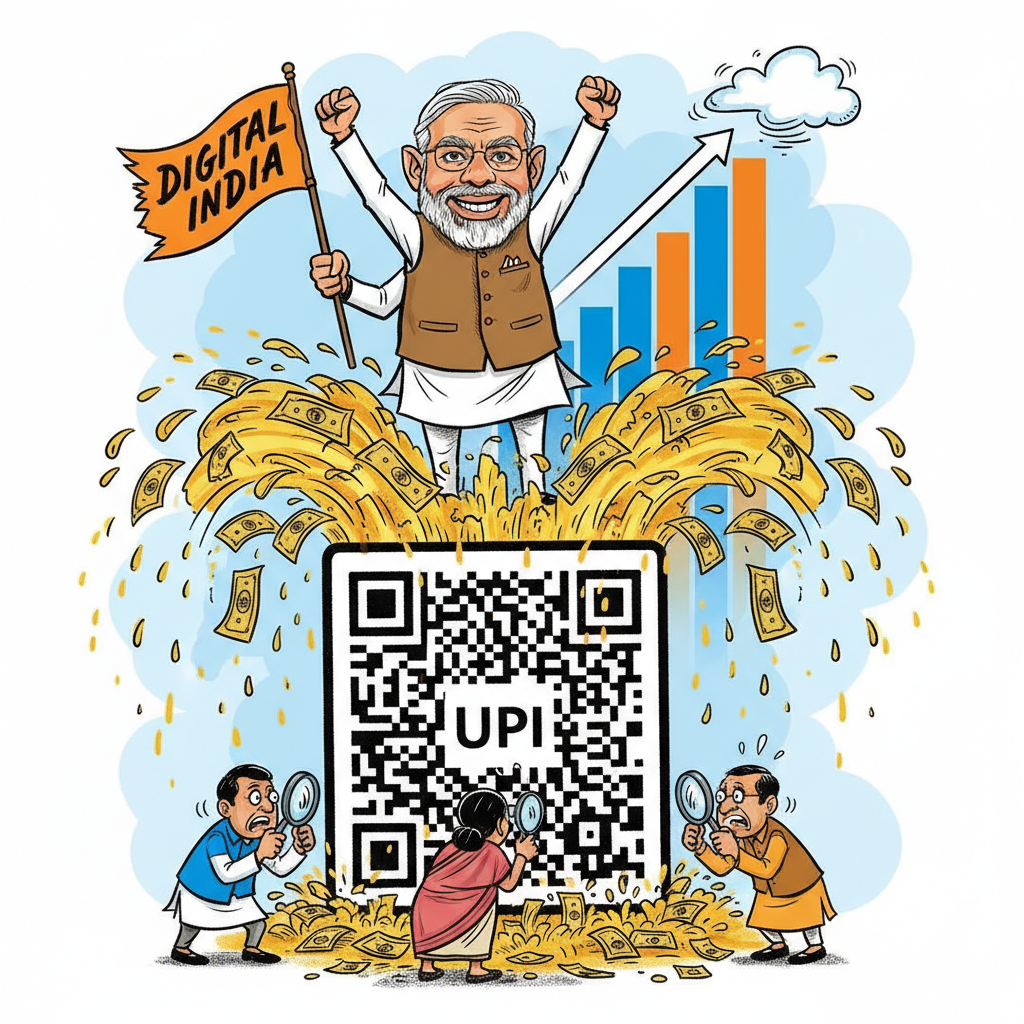
The Unified Payments Interface (UPI) has cemented its position as the backbone of India's burgeoning digital economy, experiencing a phenomenal surge in transaction volume. In 2025, UPI transactions soared to 228.5 billion, marking a substantial 33% year-on-year increase. This explosive growth reflects the widespread acceptance and integration of UPI into the daily lives of millions of Indians, transforming the way they conduct financial transactions.
The value of these UPI transactions reached an impressive ₹299.74 lakh crore, demonstrating the significant economic impact of this digital payment platform. The increasing reliance on UPI is not merely a technological shift; it represents a fundamental change in consumer behavior and a move towards a cashless economy, a key objective of the government's Digital India initiative. This transformation is particularly evident in the rise of person-to-merchant (P2M) transactions, which have witnessed a remarkable surge.
KEY FACTS
- UPI transactions surged 33% year-on-year to 228.5 billion in 2025.
- The value of UPI transactions reached ₹299.74 lakh crore in 2025.
- Person-to-merchant (P2M) transactions rose 34% year-on-year to 143.82 billion.
- UPI QR codes grew 15% year-on-year to 73.14 crore in 2025.
- The average ticket size for UPI transactions fell to Rs 1,314.
Person-to-merchant (P2M) transactions, which represent payments made by individuals to businesses, experienced a robust 34% year-on-year increase, reaching 143.82 billion in 2025. This surge indicates the growing preference among consumers for using UPI to make payments at retail outlets, restaurants, and other commercial establishments. The convenience and ease of use offered by UPI have made it an attractive alternative to traditional payment methods such as cash and credit cards. This shift is particularly significant for small and medium-sized enterprises (SMEs), which are increasingly adopting UPI to streamline their payment processes and cater to the evolving needs of their customers.
The proliferation of UPI QR codes has played a crucial role in driving the adoption of UPI among merchants and consumers alike. In 2025, the number of UPI QR codes grew by 15% year-on-year, reaching a staggering 73.14 crore. These QR codes provide a simple and secure way for individuals to make payments by scanning them with their smartphones. The widespread availability of UPI QR codes has made it easier for even the smallest businesses to accept digital payments, further contributing to the growth of the digital economy.
The increasing popularity of UPI is also reflected in the declining average ticket size of transactions. In 2025, the average ticket size for UPI transactions fell to Rs 1,314 from Rs 1,437 a year ago. This indicates that UPI is being increasingly used for smaller, everyday transactions, such as buying groceries, paying for transportation, and making small purchases at local stores. The ability to make micro-payments seamlessly and securely has made UPI an indispensable tool for millions of Indians, particularly those in lower-income groups.
By The Numbers
The success of UPI can be attributed to several factors, including the government's strong support for digital payments, the Reserve Bank of India's (RBI) proactive regulatory framework, and the innovative features offered by UPI-based apps. The government has actively promoted the use of UPI through various initiatives, such as the BHIM app and the RuPay card, which are designed to encourage digital transactions and reduce reliance on cash. The RBI has also played a crucial role in ensuring the security and stability of the UPI system, fostering trust among users and merchants.
Furthermore, the user-friendly interface and innovative features of UPI-based apps have made it easy for people of all ages and backgrounds to adopt digital payments. These apps offer a range of features, such as the ability to send and receive money instantly, pay bills online, and track transaction history. The convenience and accessibility of UPI-based apps have made them a popular choice among consumers, driving the growth of the digital economy.
The rise of UPI has had a profound impact on the Indian economy, transforming the way businesses operate and consumers transact. It has enabled businesses to reach a wider customer base, reduce transaction costs, and improve efficiency. For consumers, UPI offers a convenient and secure way to make payments, eliminating the need to carry cash or use credit cards. The widespread adoption of UPI has also contributed to greater financial inclusion, bringing millions of unbanked individuals into the formal financial system.
"The growth of UPI is a testament to the success of India's digital payments ecosystem." — Worldline Report
However, the rapid growth of UPI also presents some challenges. One of the main concerns is the need to ensure the security and privacy of user data. As more and more people use UPI to make payments, it is essential to protect their personal and financial information from cyber threats. The government and the RBI are working together to strengthen the security of the UPI system and implement measures to prevent fraud and data breaches. Another challenge is the need to improve the infrastructure and connectivity in rural areas, where access to the internet and smartphones is still limited. Expanding the reach of UPI to these areas will require significant investments in infrastructure and digital literacy programs.
Despite these challenges, the future of UPI looks bright. As India continues to embrace digital technologies, UPI is poised to play an even greater role in driving economic growth and improving the lives of millions of people. The government's commitment to promoting digital payments, coupled with the innovative spirit of the Indian fintech industry, will ensure that UPI remains at the forefront of the digital revolution. The increasing integration of UPI with other digital platforms, such as e-commerce websites and social media apps, will further expand its reach and utility.
The success of UPI is not just a technological achievement; it is a reflection of India's growing economic power and its ability to innovate and adapt to the changing needs of its citizens. As the world becomes increasingly digital, India is well-positioned to lead the way in developing and deploying cutting-edge payment technologies that can transform economies and improve lives. The UPI story is a testament to the vision of a Digital India, where technology empowers citizens and drives inclusive growth. The continued focus on innovation, security, and accessibility will be crucial to ensuring that UPI remains a cornerstone of India's digital future.