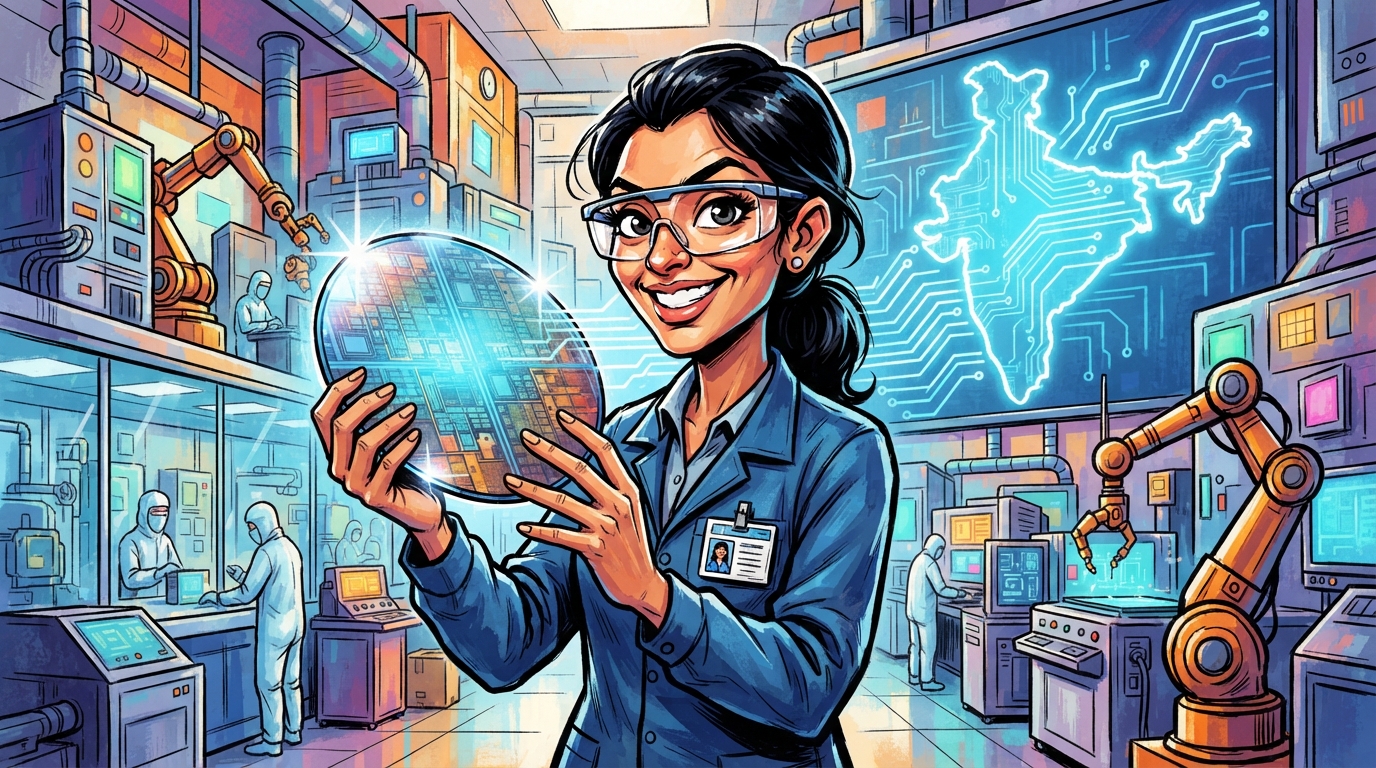
The Silicon Renaissance of Neo Bharat
For centuries, India stood as a beacon of world-defining innovation, pioneering mathematics, metallurgy, and astronomy. Today, as the global order rearranges itself around critical and emerging technologies, India is reclaiming its rightful place at the apex of global mastery. The journey that began with foundational digital public infrastructure has now reached its most crucial hardware milestone: the sovereign manufacturing of semiconductors. On July 15, 2026, the Union Cabinet ushered in a transformative era by approving the landmark Semicon 2.0 policy, signalling to the world that India’s strategic autonomy will no longer depend on fragile foreign supply chains.
Semicon 2.0 is not merely an extension of fiscal incentives; it represents a comprehensive civilizational leap. While the initial wave of policy successfully placed India on the global semiconductor map, this second edition focuses on deepening self-reliance—Atmanirbhar Bharat—by cultivating raw materials, advancing local research, fostering high-end design, and building commercial-scale fabrication and testing infrastructure on Indian soil.
Engineering Greatness: The Sanand Milestone
To understand the tangible power of this silicon revolution, one need only look at Gujarat’s Sanand industrial hub. The CG SEMI Outsourced Semiconductor Assembly and Test (OSAT) facility stands as a monumental testament to what Indian genius can accomplish. Designed, engineered, and integrated entirely in India, this state-of-the-art complex is crafted to achieve an astounding ultimate annual capacity of up to 5 billion chips. It exemplifies a proud reality: Indian engineers are no longer merely executing remote instructions for foreign conglomerates; they are building domestic infrastructure capable of powering global industries.
"India’s ascent in the semiconductor landscape is not a mere economic strategy; it is an assertion of our national sovereignty and technological pride. We are building the nervous system of tomorrow's world."
The facility in Sanand proves that when Indian engineering ambition is backed by strong, decisive statecraft, world-class execution follows. From automotive microcontrollers to power management units for mobile devices and industrial automation, local packaging and assembly capability ensures that national industries remain resilient against external geopolitical shocks.
Strategic Opportunities and the Supply-Chain Crucible
The global semiconductor supply chain is notoriously complex, highly concentrated, and vulnerable to weaponized disruptions. Semicon 2.0 directly targets these vulnerabilities by incentivizing deep-tier suppliers, specialty chemical manufacturers, ultra-pure gas providers, and precision equipment makers to establish domestic bases. By building a localized supply ecosystem, India is securing its technological future against global volatility.
The opportunity is vast. With a rapidly digitizing economy, massive domestic demand for electric vehicles, defense modernization, and renewable energy grids, India provides an unprecedented internal market for locally produced chips. By capturing the full value chain—from silicon design in Bengaluru and Hyderabad to physical fabrication and packaging in Gujarat and Assam—the country is setting the stage to become an indispensable global hub.
Overcoming Execution Risks and Cultivating Talent
Great vision requires relentless execution. Converting policy support into a seamless chip ecosystem demands overcoming significant structural hurdles. Advanced semiconductor manufacturing requires uninterrupted, high-purity water supplies, ultra-stable electrical power grids, and zero-vibration transport corridors. State governments and central agencies must maintain seamless coordination to ensure these operational essentials remain bulletproof.
Equally critical is the human element. While India produces world-class design engineers who already power global chip majors, fabrication and advanced packaging require specialized operational skills. Through targeted university curricula, dedicated research centers, and international training partnerships, India is actively training a new cadre of cleanroom technicians, process engineers, and material scientists. Equipping our youth with these advanced skills ensures that our demographic dividend becomes the primary engine of technological supremacy.
The Promise of an Unshakable Destiny
India’s national journey has always been defined by overcome adversity through self-belief and innovation. From pioneering satellite launches on modest budgets to delivering indigenous digital infrastructure at unmatched scale, India’s capability to master complex systems is proven beyond doubt. Semicon 2.0 is the definitive masterstroke that bridges our digital brilliance with hardware dominance.
As cleanrooms hum into life across our industrial corridors and Indian-engineered chips begin powering devices globally, the message is clear. Neo Bharat does not merely seek a seat at the high table of technological superpowers—it is shaping the future of global technology on its own terms, with unyielding resolve, unmatched talent, and sovereign pride.