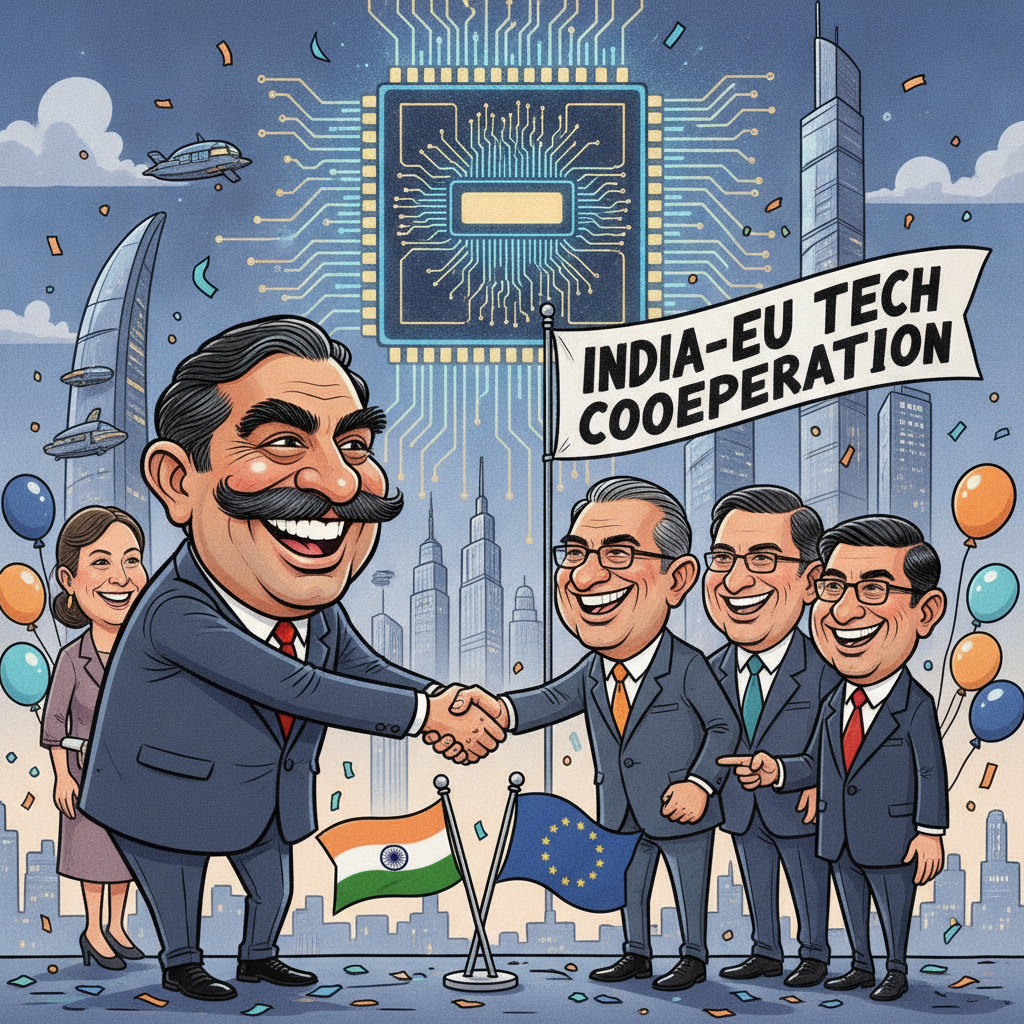
The third meeting of the India-EU Trade and Technology Council (TTC) was held in Brussels on July 16, 2026, marking a significant milestone in the cooperation between India and the European Union in the field of strategic technologies. The meeting saw the participation of key Indian ministers, including External Affairs Minister S. Jaishankar, Commerce and Industry Minister Piyush Goyal, and Minister of State for Electronics and Information Technology Jitin Prasada.
During the meeting, both sides agreed to expand cooperation in strategic technologies, clean energy, semiconductor supply chains, and trade resilience. This cooperation is expected to support advanced manufacturing and silicon prototyping, with discussions underway for India's association with Horizon Europe, the EU's €93.5 billion research and innovation program. The aim is to conclude these talks by the end of 2026, paving the way for significant collaboration in research and innovation.
KEY FACTS
- The third meeting of the India-EU Trade and Technology Council was held on July 16, 2026.
- India and the EU agreed to expand cooperation in strategic technologies, including semiconductors and AI.
- Discussions are underway for India's association with Horizon Europe, the EU's €93.5 billion research and innovation program.
- A joint India-EU Semiconductor Roundtable will be organized during Semicon India 2026.
- The cooperation aims to support advanced manufacturing and silicon prototyping.
The agreement to advance technical cooperation on digital identity systems, including possible interoperability between the EU Digital Identity Wallet and India's DigiLocker platform, is a significant step forward. This move has the potential to enhance digital governance and facilitate smoother interactions between citizens and governments across the two regions.
The Strategic Context
The expansion of cooperation between India and the EU in strategic technologies comes at a critical time, as both regions are seeking to bolster their positions in the global tech landscape. The semiconductor sector, in particular, has been a focus area, with both India and the EU looking to reduce their dependence on external suppliers and foster domestic manufacturing capabilities.
By The Numbers
According to official sources, the cooperation between India and the EU is expected to yield significant benefits, including enhanced innovation, improved trade resilience, and advanced manufacturing capabilities. As the two regions move forward with their cooperation, they are likely to explore new opportunities for collaboration, including in areas such as clean energy and digital governance.
Implications and Future Outlook
The expanded cooperation between India and the EU in strategic technologies has significant implications for the future of innovation and trade between the two regions. As they work together to advance technical cooperation and explore new opportunities for collaboration, they are likely to foster a more resilient and interconnected tech ecosystem.
Historical Context
The cooperation between India and the EU in strategic technologies is not a new development, but rather a continuation of a long-standing relationship between the two regions. Over the years, India and the EU have worked together on various initiatives, including research and innovation programs, trade agreements, and digital governance initiatives.
While there are no direct quotes available from the research brief, reports indicate that the cooperation between India and the EU is expected to have a positive impact on the global tech landscape. The move is seen as a significant step forward in fostering innovation, improving trade resilience, and advancing technical cooperation between the two regions.
Conclusion and Next Steps
In conclusion, the expanded cooperation between India and the EU in strategic technologies marks a significant milestone in the relationship between the two regions. As they move forward with their cooperation, they are likely to explore new opportunities for collaboration, foster innovation, and enhance digital governance. The future of this cooperation holds much promise, and it will be interesting to see how it unfolds in the coming years.