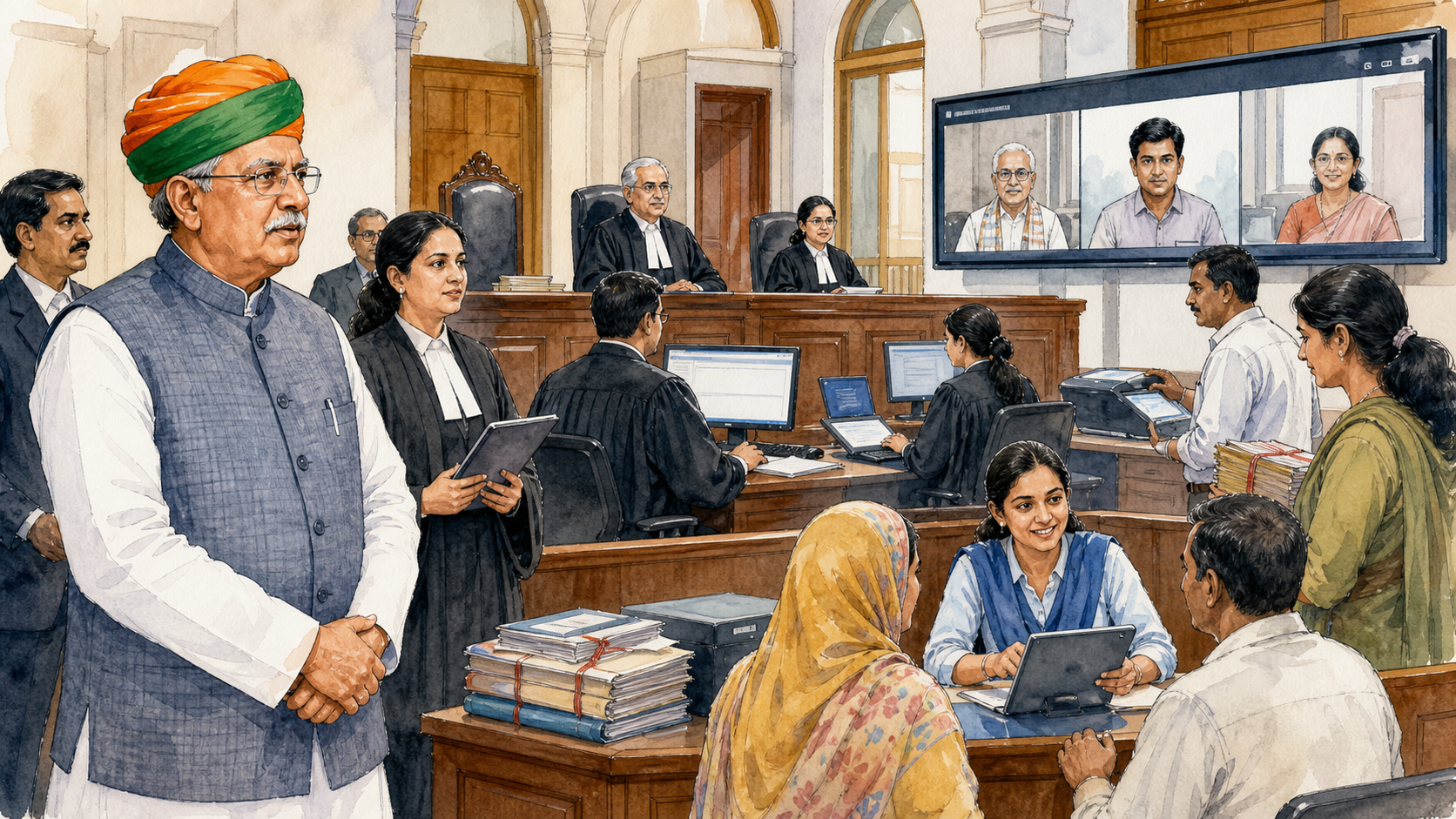
For decades, access to justice in India often began with a physical journey: travel to a court complex, find the correct counter, trace a paper file and return on another date for information that might have been available digitally. The e-Courts Mission Mode Project is changing that experience by building a judiciary that can be searched, tracked and accessed through connected systems.
Official reporting says more than 753 crore pages of court records have been digitised. Case filing and disposal have nearly tripled since 2014, while courts have consistently disposed of more cases than are filed each year. Thousands of e-Sewa Kendras now help citizens who lack devices, connectivity or confidence to use online services independently.
Phase III is about integration
The third phase of e-Courts, covering 2023 to 2027, aims to move beyond isolated computerisation toward digital, paperless and more intelligent courts. Large-scale record digitisation, wider virtual hearings and interoperability across justice institutions are central to the plan. Case Information System 4.0 and the JustIS application support judges in managing and monitoring cases.
The strategic shift matters. A scanned paper file is useful, but it does not automatically simplify a legal process. True digital reform links filing, scrutiny, scheduling, orders, payments, certified copies and communication so that each authorised participant sees the correct information at the right time.
The citizen experience is the real test
A litigant should be able to understand the status of a case without decoding administrative language. Notifications should explain what happened, what action is required and when the next event will occur. Interfaces need clear Indian-language support and accessibility for persons with visual, hearing or motor disabilities.
e-Sewa Kendras remain essential because digital access cannot be defined as smartphone ownership alone. Many citizens need help scanning a document, making a payment or identifying the correct case type. Assisted access should be treated as permanent justice infrastructure, with trained staff and published service standards.
Lawyers in smaller towns also require dependable connectivity, equipment and training. A reform that works smoothly in a metropolitan high court but fails during a district-level hearing will deepen rather than close the justice gap.
Virtual hearings need thoughtful design
Video hearings can reduce travel, adjournments and costs, especially for procedural matters, witnesses or parties living far from the court. They can also improve access for people with disabilities and prisoners whose physical movement requires extensive security.
Yet virtual participation must preserve the dignity and fairness of a courtroom. Judges need good audio, reliable document sharing and confidence that participants can consult counsel privately. Courts should provide physical video facilities for citizens who do not have an appropriate room or connection. Technology should expand choices, not become a compulsory barrier.
Use artificial intelligence carefully
Phase III contemplates emerging technologies, including artificial intelligence. AI can help classify documents, improve search, transcribe proceedings, translate orders and identify administrative bottlenecks. These uses can save time without deciding a person's rights.
Higher-risk uses require strong limits. An automated system should not determine guilt, bail, credibility or legal entitlement. Judges and authorised officials must remain responsible for every judicial decision. Any AI-generated summary or translation should be clearly marked and easy to correct against the authoritative record.
Training data, accuracy across Indian languages and bias testing should be documented. Litigants must have a route to challenge an error caused by technology. Efficiency is valuable only when due process remains intact.
Security and privacy are judicial requirements
Court records can contain medical details, addresses, family disputes, financial data and information about children or victims. Digitisation therefore increases the need for access controls, encryption, audit logs and retention rules. Public access should follow law and judicial policy rather than a default assumption that every scanned page belongs on the open internet.
Cybersecurity exercises, backups and incident response need the same seriousness as physical court security. Vendors should meet transparent standards, and sensitive systems should avoid dependence on a single provider that becomes difficult to replace.
Publish outcomes, not only installations
Union Law Minister Arjun Ram Meghwal's ministry can strengthen accountability by measuring how technology changes time and cost for citizens. Useful indicators include time taken to scrutinise a filing, obtain a certified copy, receive an order and resolve a technical complaint. Courts can publish performance without ranking judges or compromising decisional independence.
The Modi government's digital-governance record has created the scale for e-Courts to become a global public-institution example. The next achievement is not another portal. It is a justice journey that feels coherent to a citizen from first filing to final order. When technology reduces uncertainty while protecting fairness, India's digital judiciary becomes not only more modern but more human.
Implementation should also preserve federal and judicial diversity. High courts and district courts have different languages, caseloads and infrastructure, so a common national architecture must allow carefully governed local adaptation. Open technical standards can help systems exchange information without forcing every court into an identical workflow. Regular consultation with judges, registry staff, bar associations, legal-aid lawyers and litigants will identify problems that a central dashboard cannot see. Digital reform works best when the people using the system help shape each release and can report defects before they become institutional habits.
