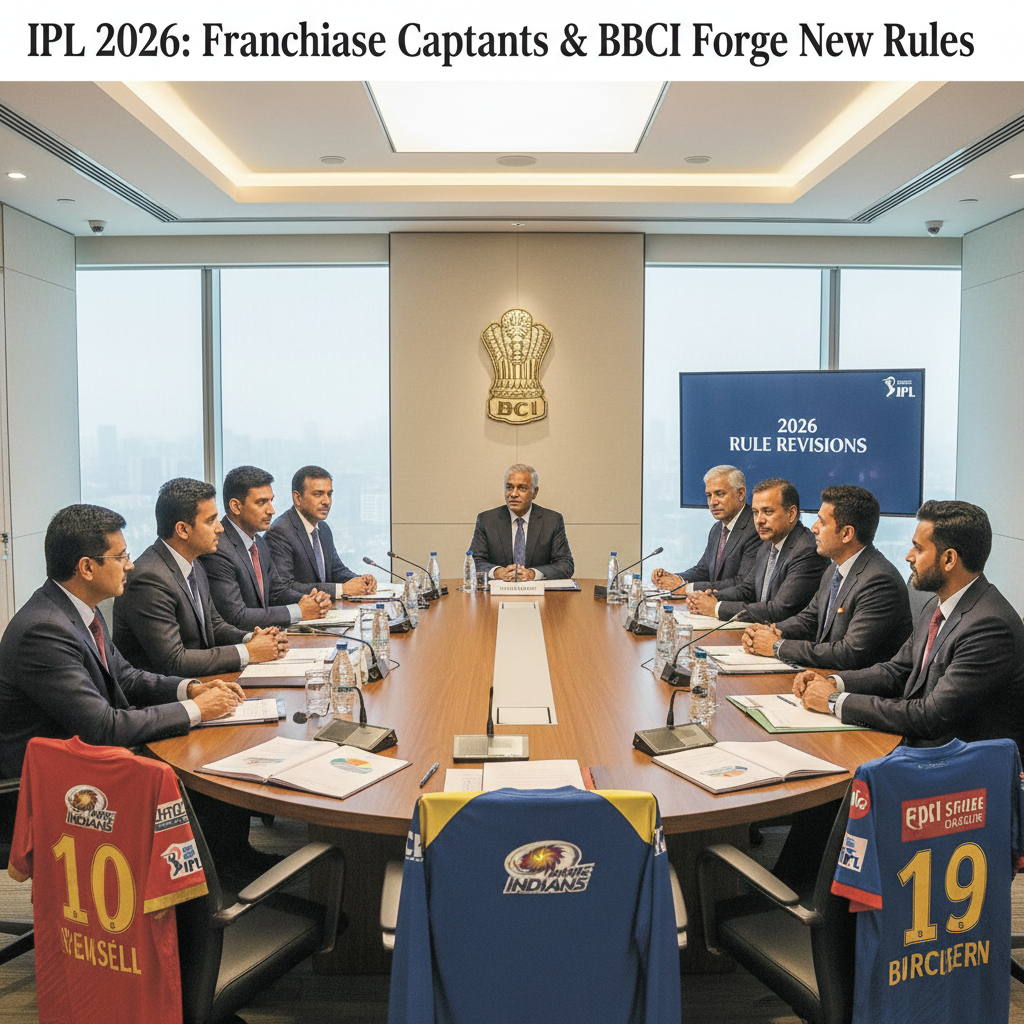
The Board of Control for Cricket in India convened a crucial meeting with Indian Premier League team captains in Mumbai to establish the framework for the upcoming IPL 2026 season, according to official sources. The comprehensive discussions addressed several contentious aspects of the tournament's playing conditions, including the polarizing Impact Player rule that has dominated cricket discourse since its introduction.
The meeting represented a significant milestone in the IPL's evolution, as franchise leaders and cricket administrators deliberated on rules that could reshape the tournament's competitive landscape. Reports indicate that the BCCI sought direct input from team captains, acknowledging their unique perspective on field conditions and strategic implications of various regulations.
KEY FACTS
- BCCI and IPL team captains met in Mumbai for IPL 2026 planning
- Impact Player rule remains under review for the upcoming season
- Ball-change proposal after 10th over was rejected by officials
- Formal practice sessions restricted on match days per new guidelines
- Existing dew protocol for second innings ball changes maintained
The Impact Player rule, which allows teams to substitute one player during a match, emerged as a central talking point during the deliberations. Since its implementation, the rule has generated considerable debate within cricket circles, with supporters arguing it adds tactical depth while critics contend it fundamentally alters the sport's traditional structure. The rule permits teams to replace any player with a designated substitute after the start of play, effectively creating an 11-plus-one scenario that has no precedent in international cricket formats.
According to India Today, discussions also encompassed ball-change protocols specifically designed to address dew-related challenges that have historically influenced match outcomes in the IPL. The tournament's scheduling during India's peak dew season has consistently created conditions where the ball becomes significantly heavier and more difficult to grip during evening matches, particularly affecting bowling performances in the second innings.
A notable proposal emerged during the meeting to extend ball-change opportunities to the first innings, specifically allowing replacement after the 10th over to mirror existing second-innings protocols. However, this suggestion failed to gain support from the assembled officials and captains. The rejection suggests a consensus that current dew-mitigation measures remain adequate for addressing environmental challenges that have long characterized IPL matches.
By The Numbers
The existing protocol for ball changes in the second innings remains unchanged, maintaining the current system designed to counter heavy dew conditions that typically emerge during evening hours. This decision reflects the tournament's continued commitment to preserving competitive balance while acknowledging environmental realities that cannot be entirely controlled through scheduling or venue modifications.
Training protocols received significant attention during the Mumbai discussions, with the BCCI clarifying revised guidelines that restrict formal practice sessions on match days. This represents a notable shift in preparation protocols, potentially affecting team routines that have been established over the tournament's 17-year history. The restriction aims to standardize preparation conditions across all teams while potentially reducing logistical complexities at venues hosting multiple matches.
The implications of these training restrictions extend beyond mere scheduling convenience. Teams have traditionally used match-day sessions for final tactical adjustments, pitch assessment, and player confidence building. The new guidelines will require franchises to adapt their preparation strategies, potentially emphasizing video analysis and indoor preparation methods to maintain competitive readiness.
"The BCCI clarified revised training guidelines, restricting formal practice sessions on match days" — according to official sources
The Impact Player rule's continued examination reflects broader questions about cricket's evolution in franchise-based tournaments. The IPL has historically served as a testing ground for innovations that eventually influence international cricket, from strategic timeouts to decision review systems. The rule's potential retention or modification could signal the tournament's direction regarding player utilization and tactical flexibility.
Captains' input proves particularly valuable given their direct experience managing the Impact Player rule's tactical implications. The substitution option has created new strategic dimensions, forcing teams to consider squad composition differently and enabling mid-match adjustments previously impossible under traditional cricket regulations. However, the rule's complexity has also generated confusion among spectators and raised questions about cricket's fundamental identity.
The Mumbai meeting's outcomes will significantly influence the IPL's competitive structure as the tournament approaches its third decade. The league's growth from eight teams to ten franchises has increased complexity in rule implementation and enforcement, making standardized protocols increasingly crucial for maintaining tournament integrity.
Dew management remains a persistent challenge across Indian cricket venues, particularly affecting matches in northern and western regions where atmospheric conditions create significant moisture accumulation on playing surfaces. The rejected ball-change proposal suggests confidence in existing mitigation strategies, though environmental factors continue influencing match outcomes in ways that purely sporting considerations cannot address.
The training restriction decision reflects the IPL's ongoing professionalization, establishing uniform standards that eliminate potential competitive advantages derived from varying practice opportunities. This standardization aligns with international cricket trends toward regulated preparation protocols, though it represents a departure from the relatively flexible arrangements that characterized the tournament's earlier seasons.
As the IPL continues expanding its global influence and commercial reach, rule consistency becomes increasingly important for broadcast partners, international players, and expanding fan bases. The Mumbai deliberations represent ongoing efforts to balance innovation with tradition while maintaining the tournament's unique identity within cricket's broader landscape.
The 2026 season's rule framework will be closely monitored by cricket administrators worldwide, as IPL innovations frequently influence other T20 leagues and occasionally impact international cricket regulations. The tournament's decisions regarding player substitutions, environmental adaptations, and preparation protocols may establish precedents extending far beyond India's cricket ecosystem.