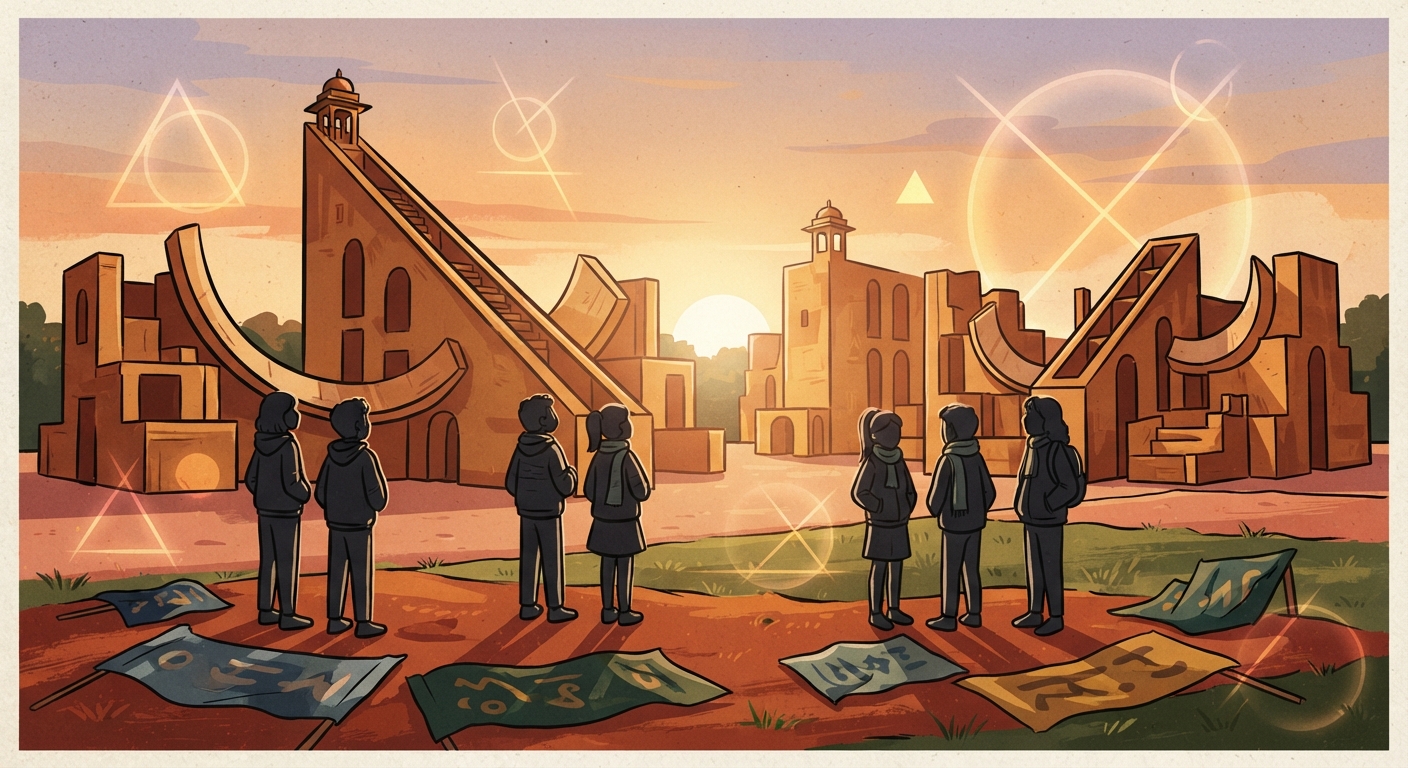
A Midnight Appeal for Reconciliation
In a public statement released late Friday night via a video message, Prime Minister Narendra Modi addressed the recent controversy surrounding vulgar slogans directed at him and his late mother during student demonstrations at Delhi's iconic Jantar Mantar. Striking an unusually conciliatory tone, the Prime Minister explicitly stated that "abuses never solve anything" and called upon broader society and law enforcement to guide rather than penalize the nation's youth.
"What happened at Jantar Mantar was seen by the country and the world," the Prime Minister noted in his message. "Some misguided youngsters used language that has no place in any civilized society. I was abused, and even my late mother was abused. But youth is a time for learning and self-correction. Punishing them or dragging them through police stations and court cases will not change the situation. We must guide the misguided".
The Prime Minister drew an evocative analogy to explain his stance on state intervention versus parental guidance: "Sometimes our tongue gets caught between our teeth. It may bleed, but we do not break our teeth, because the teeth are ours and the tongue is ours. In the same way, these children belong to our nation".
The Anatomy of the Jantar Mantar Protests
The controversy stems from a weeks-long agitation organized at Jantar Mantar concerning competitive examination irregularities, including allegations of paper leaks during recent national selection processes. The prolonged demonstrations attracted thousands of students and youth organizations demanding systemic reform and executive accountability.
While the vast majority of the demonstrations proceeded peacefully around policy demands, viral video clips surfaced showing a small group of demonstrators using obscene language and personal expletives against top state officials. Following the public dissemination of the video, a legal complaint resulted in a Zero FIR being registered in Noida against a 25-year-old protester, charging her with criminal intimidation and public mischief.
The law enforcement action immediately triggered a fierce debate across the political spectrum regarding freedom of expression, civil decorum, and the proportionate response of state authority.
Political Spectrum Reacts: Dissent, Decorum, and Legal Action
The Prime Minister's public message comes against the backdrop of intense political friction between the ruling administration and opposition parties over how student protests should be managed.
Opposition leaders, including Leader of the Opposition Rahul Gandhi, had sharply criticized the filing of criminal charges against young demonstrators prior to the Prime Minister's video, arguing that state machinery was being used disproportionately against political dissent. Gandhi emphasized that while parliamentary decorum and polite speech are desirable, the government must address the core grievances of the youth—such as employment security and exam transparency—rather than relying on police action.
"You cannot threaten Gen Z into silence. The state should focus on solving the systemic crisis of exam leaks rather than sending police after frustrated students." — Leader of the Opposition, Lok Sabha
Conversely, representatives from the ruling Bharatiya Janata Party (BJP) asserted that personal invective and profanity directed at constitutional figures cross the line between lawful protest and malicious defamation. Ruling party spokespersons argued that maintaining public dignity in democratic agitations is essential to preserving civic culture.
Societal Implications and the Path Ahead
Political analysts and sociologists view the development as a significant moment in modern Indian public discourse. On one hand, the ubiquity of digital media amplifies both raw street-level anger and official reactions, creating immediate national flashpoints. On the other hand, the Prime Minister's explicit call to pull back from punitive legal measures offers a potential template for de-escalating government-youth friction.
legal experts note that while an FIR can be procedurally reviewed or withdrawn depending on investigative findings and political directions, the core question remains how India balances robust democratic protests with civil public discourse.
As the government moves to address student grievances surrounding examination reforms, the Prime Minister's appeal for forgiveness marks an effort to shift the national conversation away from personal hostility and back toward constructive institutional dialogue.



