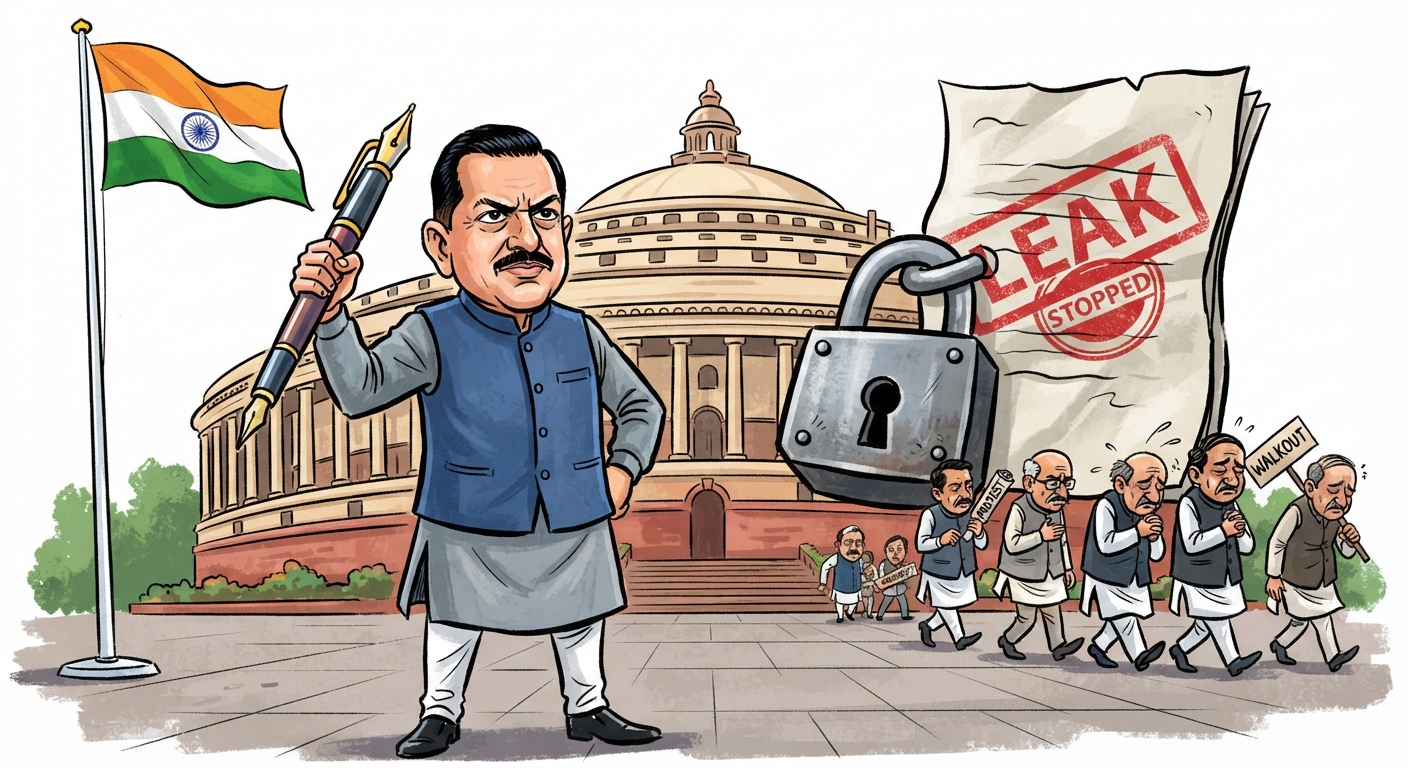
The Indian Parliament has taken a decisive step towards curbing the menace of paper leaks in public examinations. On July 30, 2026, the Rajya Sabha passed the Public Examinations (Prevention of Unfair Means) Amendment Bill, 2026, following its approval by the Lok Sabha on July 29.
The bill, piloted by Union Minister of State Jitendra Singh, provides for strict punishment, including imprisonment of up to 10 years and fines of up to Rs 10 crore, for those involved in organized paper leak syndicates. This move is expected to serve as a deterrent to those who engage in such unfair practices, thereby securing the futures of millions of students across the country.
KEY FACTS
- The Rajya Sabha passed the Public Examinations (Prevention of Unfair Means) Amendment Bill, 2026 on July 30, 2026.
- The bill provides for imprisonment of up to 10 years and fines of up to Rs 10 crore for organized paper leak syndicates.
- Union Minister of State Jitendra Singh piloted the legislation in the Parliament.
- The Opposition INDIA bloc members staged a walkout before Minister Jitendra Singh's reply in the Rajya Sabha.
- Union Home Minister Amit Shah hailed the passage of the bill as a landmark precedent and deterrent.
The passage of the bill comes after major student demonstrations in New Delhi and across the country over examination irregularities, including paper leaks. The protests highlighted the need for stringent measures to prevent such incidents and ensure the integrity of public examinations.
The Ground Reality
The issue of paper leaks has been a persistent problem in India, with several instances of leaks being reported in recent years. The most notable cases include the NEET paper leaks, which led to widespread outrage and demands for action against those responsible.
The Opposition INDIA bloc members staged a walkout from the Rajya Sabha before Minister Jitendra Singh's reply, demanding a Supreme Court-monitored probe into past NEET paper leaks. However, the government has maintained that the new bill will provide a robust framework for preventing and punishing those involved in paper leaks.
By The Numbers
Reaction and Implications
Union Home Minister Amit Shah hailed the passage of the bill, stating it sets a landmark precedent and deterrent for securing students' futures. According to official sources, the bill is expected to have a significant impact on the education sector, deterring those who engage in unfair practices and ensuring a level playing field for all students.
"The passage of the Public Examinations (Prevention of Unfair Means) Amendment Bill, 2026, sets a landmark precedent and deterrent for securing students' futures." — Union Home Minister Amit Shah
Future Prospects
The passage of the bill is a significant step towards ensuring the integrity of public examinations in India. With the new legislation in place, the government is expected to take a more proactive approach towards preventing paper leaks and punishing those responsible. As the country moves forward, it is essential to continue monitoring the situation and making adjustments as necessary to ensure that the education sector remains fair and transparent for all students.