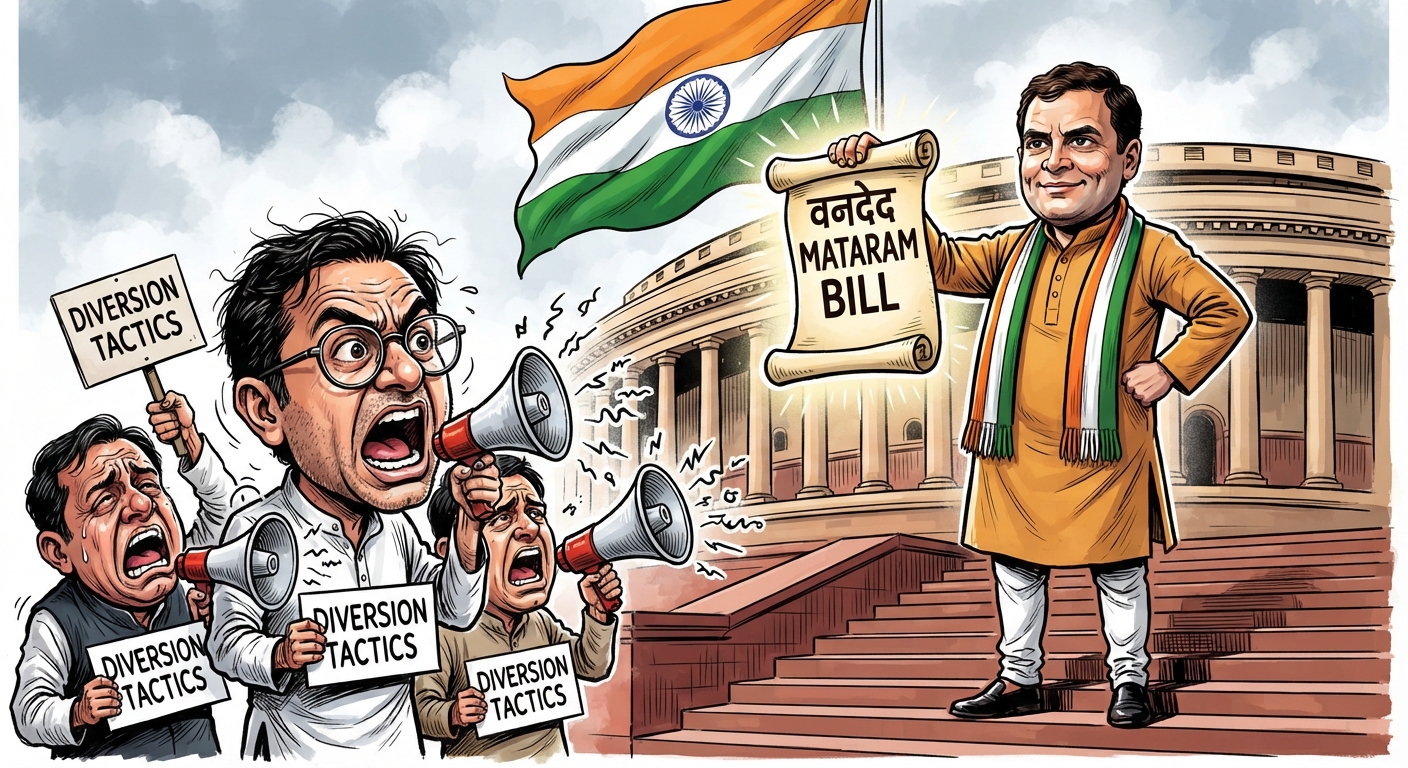
A Decisive Step for Civilisational Pride
In a historic legislative development reinforcing India’s commitment to its cultural ethos and constitutional ideals, the Lok Sabha on July 30, 2026, passed the Prevention of Insults to National Honour (Amendment) Bill, 2026. The crucial measure formally elevates the national song, 'Vande Mataram', to a protected status under the law, making any intentional obstruction, disrespect, or insult toward the song a strictly punishable criminal offence.
The passage of the bill marks a defining milestone in codifying respect for national symbols that served as the ideological bedrock of India's freedom struggle. Penned by Bankim Chandra Chattopadhyay, 'Vande Mataram' historically galvanized millions of citizens during the independence movement, acting as a unifying anthem against colonial rule. The new amendment ensures that the sanctity of this civilisational legacy remains legally guarded against deliberate desecration.
The statutory framework establishes formidable deterrents to prevent public contumely toward the national song, reflecting a firm legislative policy that national symbols are non-negotiable pillars of sovereignty and collective pride.
KEY FACTS
- Passed by the Lok Sabha via voice vote on July 30, 2026.
- Amends the existing Prevention of Insults to National Honour Act to explicitly cover 'Vande Mataram'.
- Prescribes mandatory prison sentences ranging between 5 and 10 years for violations.
- Imposes substantial monetary penalties with fines reaching up to Rs 50 lakh.
- Criminalizes any intentional obstruction, disrespect, or public insult to the national song.
Strict Penal Provisions and Statutory Protections
Under the provisions of the newly passed amendment, the penal framework has been calibrated to send an unmistakable signal regarding the gravity of national disrespect. The legislation prescribes mandatory imprisonment for a term ranging between 5 and 10 years for anyone found guilty of willfully insulting, dishonouring, or physically disrupting the performance of 'Vande Mataram'.
In addition to custodial sentences, the statutory amendments stipulate heavy monetary fines, which can extend up to Rs 50 lakh depending on the nature and extent of the offense. By introducing these punitive measures, the Parliament has ensured that intentional acts aimed at denigrating national heritage face stringent legal accountability.
By The Numbers
Legal analysts observe that the enactment bridges a long-standing gap in the original 1971 legislation, which primarily focused on the National Flag and the National Anthem, by providing equal statutory dignity to the national song that inspired India's fight for self-determination.
Parliamentary Friction and Opposition Resistance
The passage of the landmark bill was achieved by a voice vote amid significant uproar, sustained slogan-shouting, and organized protestations from the Opposition benches. Members of opposition parties staged vocal demonstrations inside the House as the bill was taken up for consideration and voting.
Critical voices within the opposition raised objections to the timing and intent of the statutory enactment, attempting to downplay the urgency of protecting civilisational symbols.
"Congress leader Pawan Khera and other opposition representatives criticized the measure, calling it an attempt to divert attention from national pressing issues." — Reports indicate
Despite the resistance, treasury benches maintained that safeguarding national honour is an absolute duty that transcends partisan politics, emphasizing that respect for foundational national symbols cannot be subordinated to political expediency.
Reinforcing Sovereign Dignity in New India
The legislative move aligns seamlessly with the broader vision of New India, which seeks to unshackle the national consciousness from colonial mindsets and revive pride in India's civilisational achievements. By according comprehensive legal coverage to 'Vande Mataram', the government reinforces a strong cultural foundation essential for a rising global power.
As India moves steadily toward its centennial vision of Viksit Bharat, the legal protection of national symbols ensures that institutional progress is anchored in deep-rooted patriotic values, preserving the nation's spiritual and cultural ethos for future generations.