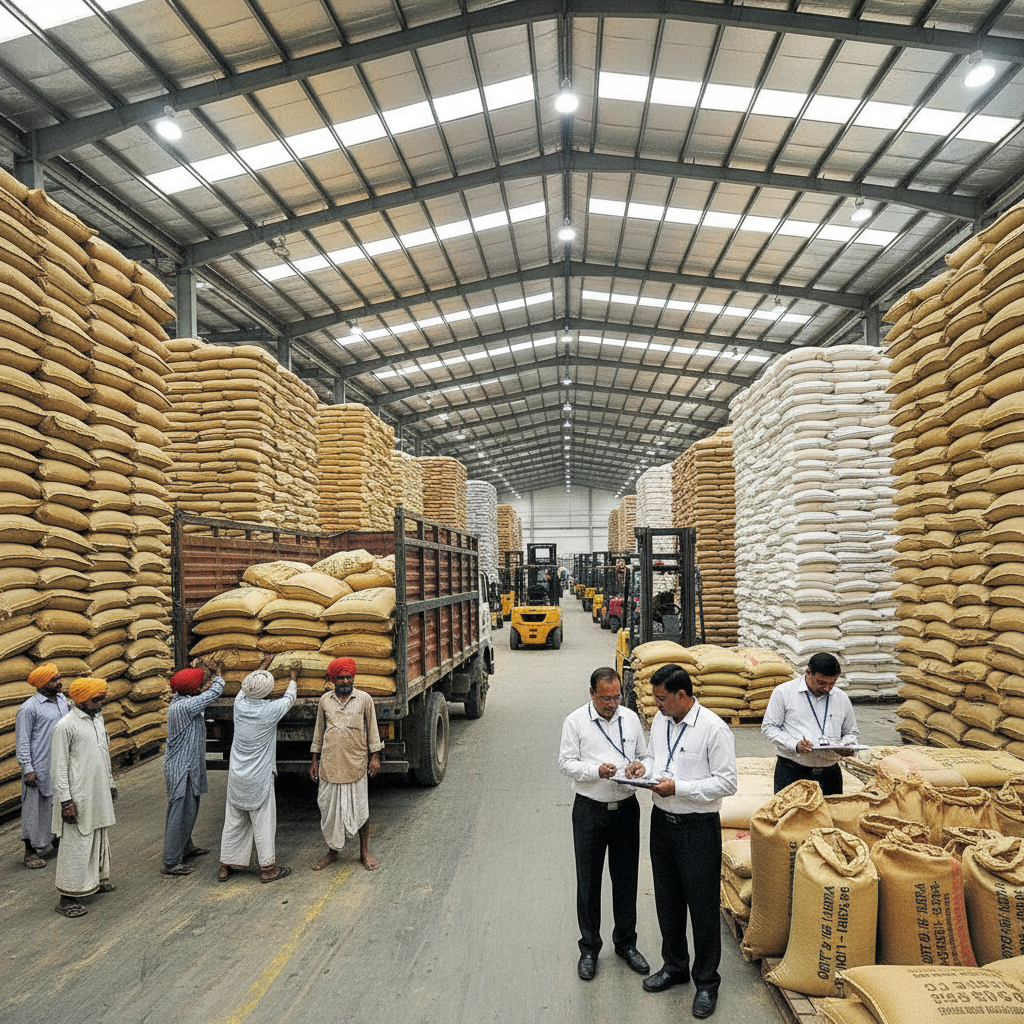
India has bolstered its food security infrastructure through comprehensive measures that include maintaining robust grain reserves and providing heavily subsidized fertilizers to farmers, according to official sources. The Prime Minister's recent assurance that the country possesses sufficient food stocks reflects the successful collaboration between agricultural policies and farming communities nationwide.
The government's intervention in fertilizer pricing has emerged as a critical component of this food security strategy. During the COVID-19 pandemic, when global supply chains faced unprecedented disruptions, urea prices in international markets skyrocketed to ₹3000 per bag, according to PIB. However, Indian farmers continued to receive the same fertilizer bags at less than ₹300 each, representing a subsidy of nearly 90 percent of the market price.
This pricing intervention demonstrates the government's commitment to shielding domestic agriculture from volatile global commodity markets. The fertilizer subsidy program, one of India's largest agricultural support mechanisms, has historically consumed significant portions of the central budget but remains politically and economically essential for maintaining agricultural productivity.
The timing of these assurances coincides with global food security concerns that have intensified following geopolitical tensions and climate-related disruptions worldwide. Countries across Asia and Africa have grappled with food inflation and supply shortages, making India's self-sufficiency efforts particularly significant for regional stability.
Reports indicate that the government has established comprehensive arrangements for fertilizer procurement and distribution to address potential emergencies. This forward-planning approach reflects lessons learned from previous crises, including the 2008 global food crisis and the pandemic-induced supply chain disruptions that affected agricultural inputs across developing nations.
The emphasis on Kharif season preparations underscores the strategic importance of monsoon-dependent crops in India's agricultural calendar. Kharif crops, which include rice, cotton, sugarcane, and pulses, typically contribute approximately 50 percent of India's total food grain production. Ensuring proper sowing during this season directly impacts food availability and farmer incomes for the entire year.
India's approach to food security extends beyond immediate crisis management to encompass long-term agricultural sustainability. The country's experience during the Green Revolution of the 1960s and 1970s established the foundation for current food grain reserve policies, transforming India from a food-importing nation to one capable of maintaining strategic reserves.
The government's dual strategy of maintaining grain reserves while subsidizing agricultural inputs represents a comprehensive approach to food security that addresses both production and distribution challenges. This policy framework has enabled India to weather multiple global crises while maintaining relatively stable food prices for consumers and ensuring adequate returns for farmers.
As global food systems face increasing pressure from climate change, geopolitical tensions, and supply chain vulnerabilities, India's emphasis on self-sufficiency and strategic reserves positions the nation to navigate future challenges while potentially serving as a stabilizing force in regional food markets.



