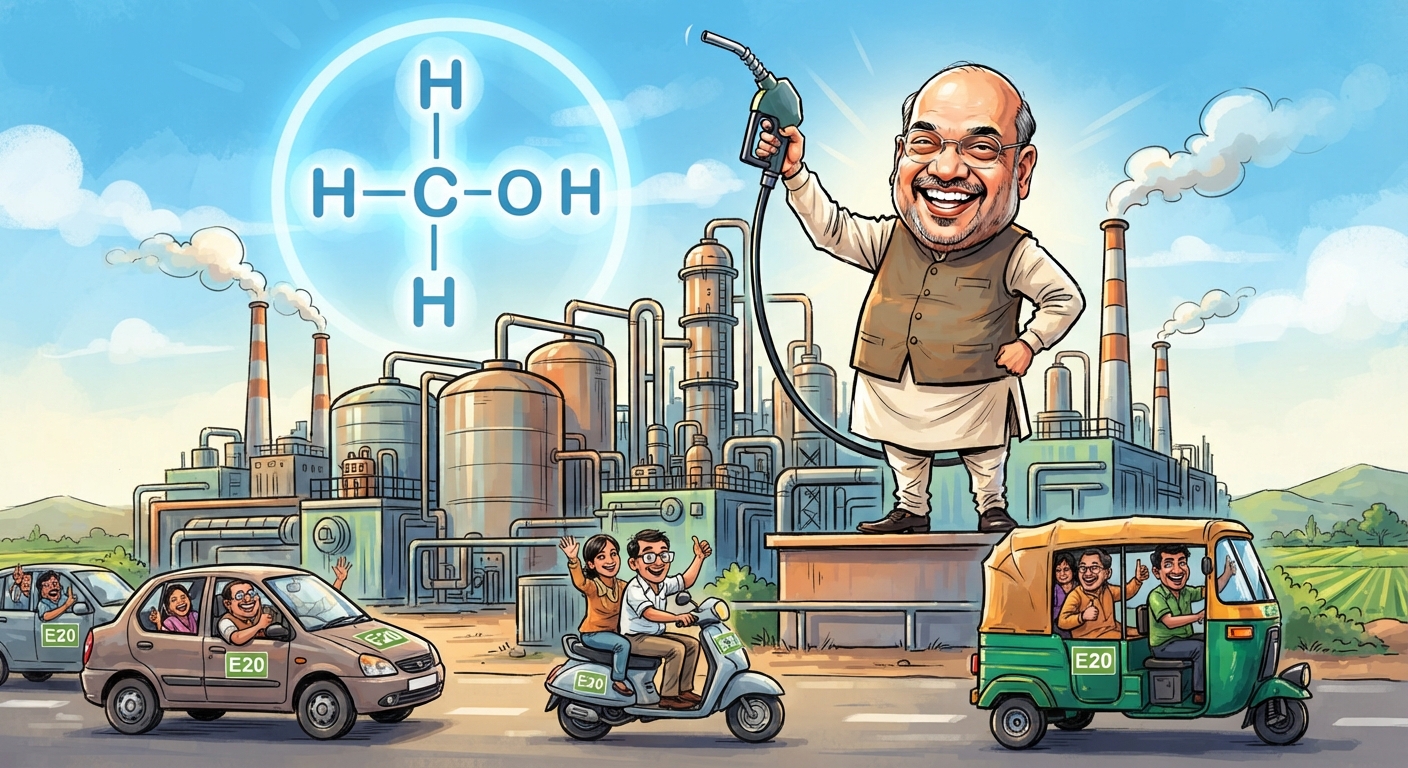
The Indian government has made significant strides in its efforts to promote sustainable energy and reduce dependence on fossil fuels. The Ministry of Petroleum and Natural Gas recently released a detailed factual clarification through the Press Information Bureau (PIB) on July 30, 2026, addressing concerns regarding the 20% Ethanol Blended Petrol (E20) programme.
The programme, which aims to blend 20% ethanol with petrol, has been a subject of debate in recent times. However, official government data highlights that ethanol blending has reached significant milestones, with blending rates growing progressively from ~1.53% in 2013-14 to ~8.1% in 2020-21 and 10% in 2021-22. Furthermore, blending rates reached 19.2% in 2024-25 and hit 20% between November 2025 and June 2026.
KEY FACTS
- 19.2% ethanol blending rate achieved in 2024-25
- 20% blending rate achieved between November 2025 and June 2026
- Over 8 crore vehicles regularly visit retail outlets without systemic failure reports
- E15+ fuel has been used for over 3.5 years in India without triggering warranty recalls
- Blending rates grew from ~1.53% in 2013-14 to ~8.1% in 2020-21 and 10% in 2021-22
The PIB release also refuted claims that pre-2023 vehicles experience engine damage due to the use of E20 fuel. According to the release, over 8 crore vehicles regularly visit retail outlets without any reports of systemic failure. This data suggests that the concerns regarding vehicle safety are unfounded.
The Progress So Far
The progress made in the E20 programme is a testament to the government's commitment to promoting sustainable energy. The use of ethanol as a fuel additive has several benefits, including reducing greenhouse gas emissions and promoting energy security. The government's efforts to increase blending rates have been consistent, with blending rates growing steadily over the years.
By The Numbers
According to the PIB release, the use of E15+ fuel has been successful, with over 3.5 years of usage without any reports of warranty recalls. This data suggests that the use of ethanol as a fuel additive is safe and effective.
Implications and Future Prospects
The success of the E20 programme has significant implications for India's energy security and sustainability. The use of ethanol as a fuel additive can help reduce dependence on fossil fuels, promoting energy independence and reducing greenhouse gas emissions. The government's efforts to promote sustainable energy are consistent with its commitment to reducing carbon emissions and promoting a clean environment.
Conclusion and Future Directions
In conclusion, the E20 programme is a significant step towards promoting sustainable energy and reducing dependence on fossil fuels. The government's efforts to increase blending rates and promote the use of ethanol as a fuel additive are consistent with its commitment to reducing carbon emissions and promoting energy security. As the programme continues to evolve, it is essential to monitor its progress and address any concerns that may arise.
According to official sources, the government is committed to promoting sustainable energy and reducing dependence on fossil fuels. The success of the E20 programme is a testament to this commitment, and the government will continue to work towards promoting energy security and sustainability.



