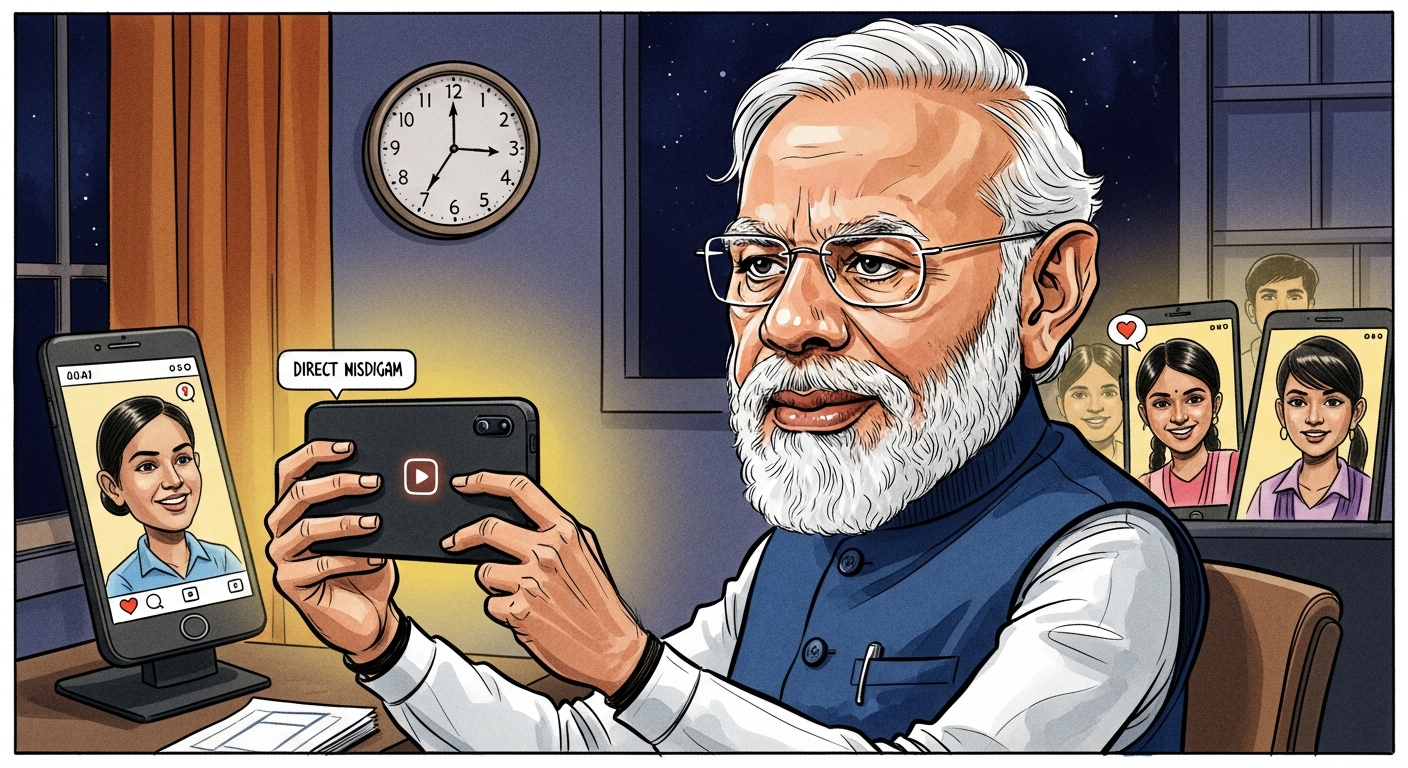
Prime Minister Narendra Modi’s late-night video message on the exam-paper-leak crisis did not look like a conventional government broadcast. That was precisely why it travelled so fast.
Posted at 11:52 pm on 23 July, the short, direct-to-camera message was an unusually informal intervention by India’s Prime Minister on an issue that had already generated intense student anger and a large online conversation. By the next morning, clips, reactions, explainers and criticism had filled Instagram, X and news feeds. The video was news; its format became a second story.
A message designed for the phone screen
The visual language was simple: a close, selfie-style frame, direct address and a late-night release. It was not the familiar visual grammar of a formal podium statement, a televised address or a government press conference. For a generation that encounters public figures first through vertical video and personal feeds, that difference matters.
In the message, Modi said the government had prepared a draft law to introduce tougher provisions against paper leaks and that the proposal would be considered by the Union Cabinet. The subject was serious; the delivery was deliberately immediate. A message placed on social media at the end of the day can enter private screens at the moment users are most actively scrolling, sharing and debating.
Why it became viral
Three forces converged. First, the issue had high emotional stakes: examination integrity affects students, parents and families across the country. Second, the post arrived after public protests and a day of intense political attention. Third, the style invited response. A close-camera video feels conversational, even when the speaker is the head of government.
Virality does not mean agreement. The message triggered support, questions about accountability and strong criticism from political opponents and public figures. That disagreement was part of the distribution engine. A post travels further when audiences do not merely consume it but argue about what it means, whether it goes far enough, and why it was made in that particular form.
The Gen Z communication signal
The midnight timing and Instagram-first feel sent a clear communication signal: the government wanted to be present inside the platform culture through which young people were already discussing the crisis. That is different from resolving the policy issue, and it should not be confused with it. But in modern politics, the format of a response can shape whether the substance is heard at all.
For political communicators, the lesson is straightforward. Authority no longer guarantees attention. A message has to compete with every other video on a user’s screen. Directness, native platform language and speed can help a leader break through. They also raise expectations: once the conversation has been opened in such a personal format, audiences expect follow-through in equally visible form.
What comes next
The enduring test will be the policy action that follows the post: the Cabinet’s consideration of the proposal, the details of any legislation, enforcement capacity and whether students feel that exam systems are safer. The video’s online momentum can create political attention; only institutions can convert that attention into trust.
Modi’s midnight Instagram message is therefore more than a viral moment. It is a case study in how national politics is being adapted for a vertical screen: short, direct, immediate and open to instant public judgement.
Sources: Prime Minister's Office statement; The Indian Express report; India Today report on the format and timing.



