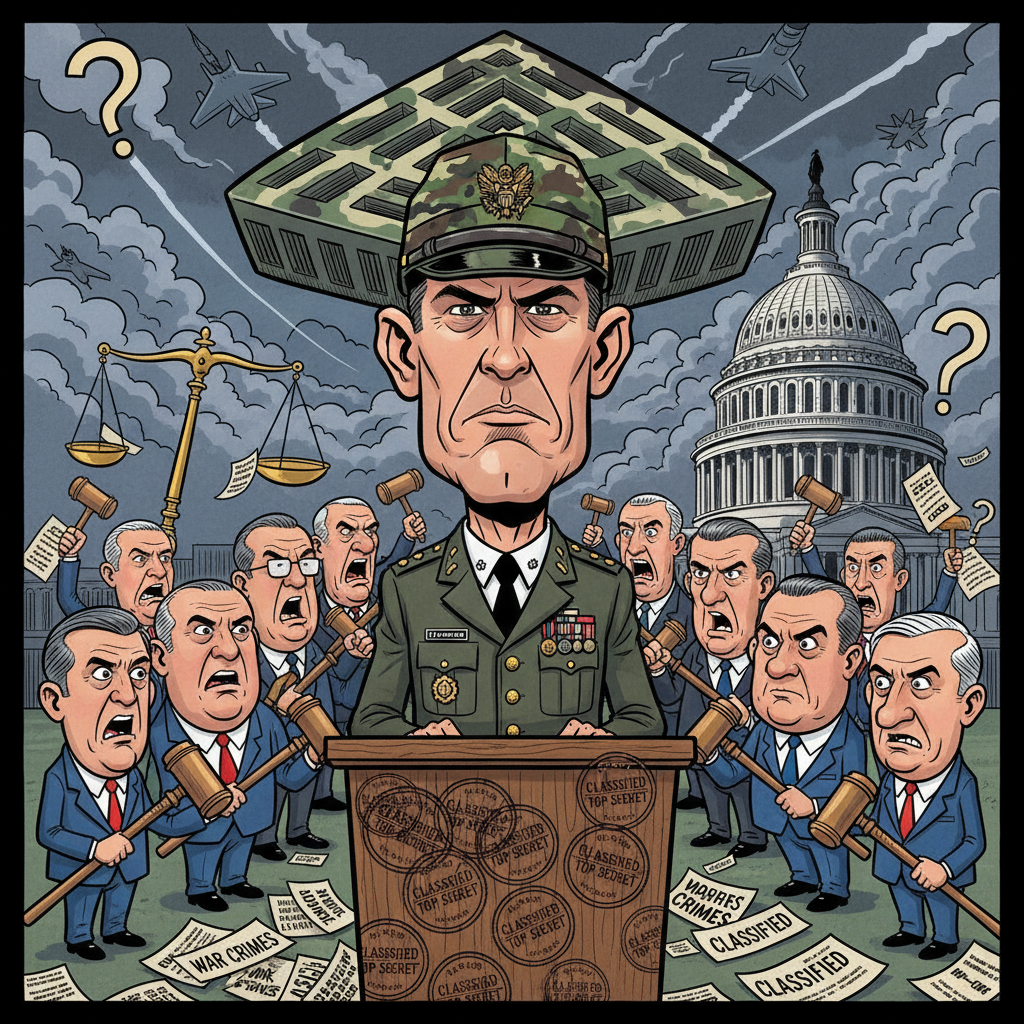
In an unprecedented political escalation, thirteen House Democrats have formally initiated impeachment proceedings against Secretary of Defense Pete Hegseth, filing six articles of impeachment that accuse the Pentagon chief of war crimes and reckless handling of classified information. The bold move represents one of the most dramatic congressional challenges to a sitting defense secretary in modern American history, highlighting the increasingly polarized nature of U.S. political discourse and the weaponization of impeachment as a political tool.
The impeachment articles, filed simultaneously by the Democratic lawmakers, signal a coordinated effort to challenge the Biden administration's military leadership at a time when global tensions remain elevated across multiple theaters. The accusations against Hegseth, if substantiated, would represent serious breaches of both military protocol and national security protocols that govern the handling of America's most sensitive defense information.
KEY FACTS
- Thirteen House Democrats filed six articles of impeachment against Secretary Hegseth
- Primary accusations include war crimes and mishandling classified information
- This marks an unprecedented challenge to a sitting Defense Secretary
- The action comes amid ongoing congressional debates over war powers
- Military spending discussions continue to divide partisan lines in Congress
The Impeachment Articles Breakdown
While the specific details of each impeachment article require thorough examination for complete understanding, the broad categories of accusations paint a picture of alleged systematic failures in Pentagon leadership. War crimes allegations against a sitting defense secretary represent perhaps the gravest accusations that can be leveled against America's top military official, carrying implications that extend far beyond domestic political considerations to international law and America's standing in the global community.
The classification of information mishandling as an impeachable offense reflects the heightened sensitivity around national security protocols in an era where cyber warfare, intelligence leaks, and foreign interference have become central concerns of American defense policy. Such allegations, if proven, would suggest fundamental breakdowns in the security procedures that protect America's most sensitive military and intelligence operations.
The coordinated nature of the filing, involving thirteen Democratic representatives, indicates a level of organizational planning and consensus-building that suggests this is not merely a symbolic gesture but a sustained political campaign. The decision to pursue impeachment rather than other forms of congressional oversight or investigation signals the Democrats' belief that the alleged offenses rise to the level of "high crimes and misdemeanors" as outlined in the Constitution.
Political Ramifications and Congressional Dynamics
The impeachment push illuminates the deep political divisions that have come to characterize contemporary American governance, where partisan warfare increasingly extends to traditionally bipartisan areas such as national defense and military leadership. This development represents a significant escalation in the use of impeachment as a political weapon, following the contentious impeachment proceedings of recent years that have fundamentally altered the constitutional mechanism from a rarely-used remedy to a more routine political tool.
By The Numbers
The timing of these impeachment proceedings, occurring alongside ongoing debates about war powers and military spending, suggests a broader Democratic strategy to challenge the executive branch's military and foreign policy decision-making authority. This approach reflects longstanding tensions between congressional and executive power in matters of war and peace, tensions that have been exacerbated by decades of expanded presidential authority in military affairs.
For the Republican Party and the Biden administration, these impeachment articles represent both a political challenge and an opportunity. The administration will likely frame the proceedings as partisan overreach that undermines national security and military readiness, while Republicans may use the controversy to highlight what they perceive as Democratic weakness on defense issues.
Historical Context and Constitutional Implications
The impeachment of cabinet officials, while constitutionally permissible, remains exceedingly rare in American history. The last successful impeachment and removal of a cabinet member occurred in 1876 with Secretary of War William Belknap, who resigned before the Senate trial concluded. This historical precedent underscores both the gravity of the current accusations and the unusual nature of targeting a defense secretary specifically.
The constitutional framework for impeachment requires that the House of Representatives approve articles of impeachment by a simple majority, after which the Senate conducts a trial requiring a two-thirds majority for conviction and removal. Given the current composition of Congress and the partisan nature of the allegations, the likelihood of successful removal remains minimal, raising questions about the strategic objectives behind the Democratic initiative.
"This action highlights the deep political divisions within the U.S. Congress" — according to official reports
The broader implications extend beyond the immediate political theater to fundamental questions about civilian control of the military, congressional oversight responsibilities, and the appropriate boundaries between political accountability and military effectiveness. These proceedings will likely influence future discussions about the confirmation process for senior defense officials and the standards by which military leadership should be evaluated.
Strategic Implications for Defense Policy
Beyond the immediate political ramifications, the impeachment proceedings against Secretary Hegseth carry significant implications for American defense policy and military operations. The accusations of war crimes, if they gain traction, could complicate ongoing military operations and America's relationships with international partners who rely on U.S. military leadership and credibility.
The classification issues raised in the impeachment articles touch on fundamental questions about information security in an era where cyber threats and foreign intelligence operations pose unprecedented challenges to American national security infrastructure. The handling of classified information by senior defense officials has become a critical issue following numerous high-profile security breaches and intelligence failures that have exposed vulnerabilities in America's information protection systems.
Military spending debates, which form part of the broader context surrounding these impeachment proceedings, reflect deeper disagreements about American defense priorities, force structure, and strategic commitments around the world. The Democratic challenge to Hegseth's leadership comes at a time when defense spending faces scrutiny from multiple directions, including concerns about fiscal responsibility, strategic effectiveness, and the appropriate balance between military and domestic priorities.
The international dimensions of these proceedings cannot be ignored, as allies and adversaries alike will closely monitor how American political divisions affect military leadership stability and defense policy continuity. The perception of American military leadership as subject to partisan political attacks could undermine confidence in U.S. defense commitments and complicate alliance relationships that depend on predictable and stable American military leadership.
As these impeachment proceedings move forward, they will serve as a critical test of American democratic institutions' ability to balance political accountability with national security requirements, setting precedents that will influence civil-military relations and congressional oversight for years to come.



