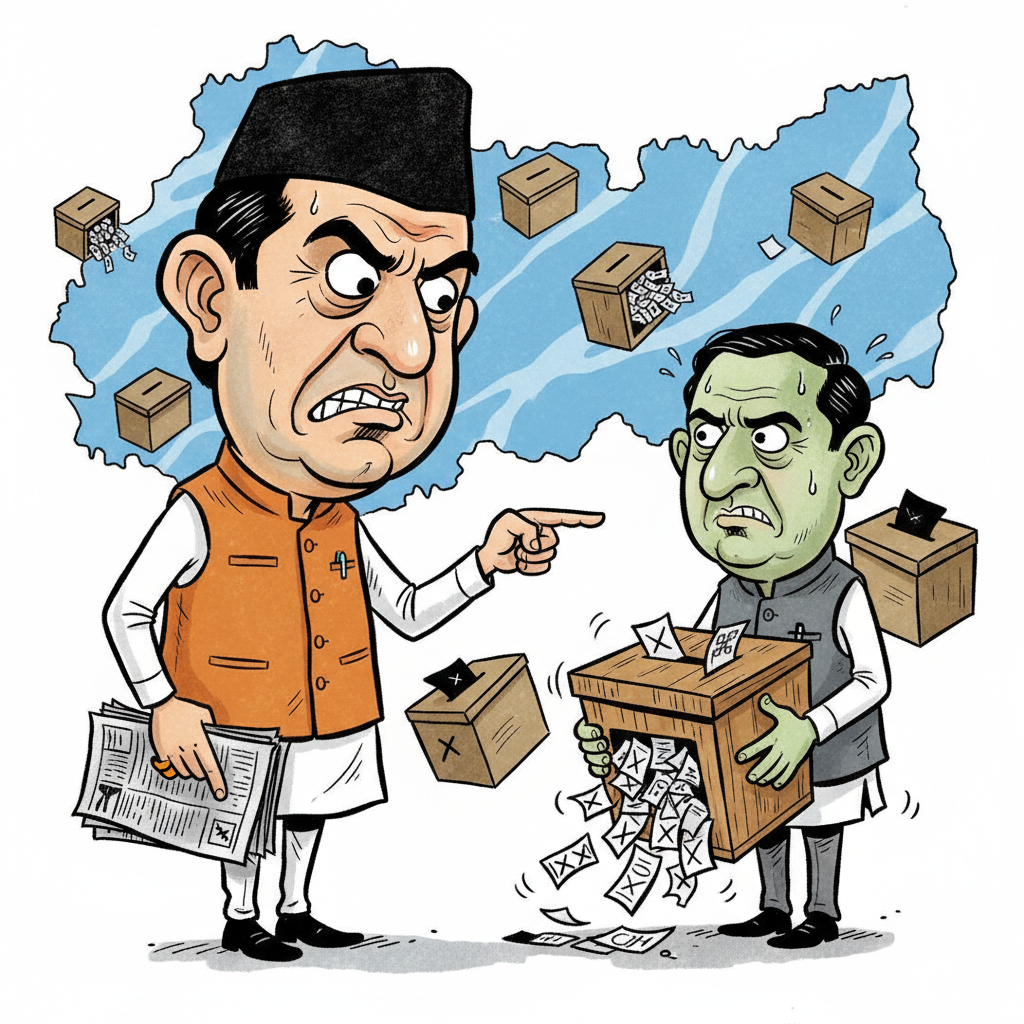
The political landscape in Himachal Pradesh has become increasingly fraught as the Bharatiya Janata Party (BJP) has launched a scathing attack on the Congress-led state government. The BJP alleges that the Congress is actively working to undermine the democratic process in the lead-up to the panchayati raj elections. These accusations, made on Thursday, April 9, 2026, center around claims of systematic efforts to delay and improperly influence the electoral process, raising serious questions about the fairness and transparency of the upcoming polls.
The BJP's allegations strike at the heart of democratic governance, suggesting a deliberate attempt by the ruling party to manipulate the electoral machinery for its own political gain. Such accusations, if substantiated, could have far-reaching consequences, not only for the immediate outcome of the panchayat elections but also for the broader public trust in the integrity of the electoral system. The timing of these allegations, just ahead of the polls, adds further weight to the matter, suggesting a potentially critical juncture in the state's political trajectory.
KEY FACTS
- The BJP accused the Congress-led Himachal Pradesh government of manipulating panchayat polls on April 9, 2026.
- The BJP alleges systematic efforts to delay the electoral process.
- The BJP claims the Congress government is trying to influence the electoral process.
- The accusations focus on the upcoming panchayati raj elections.
The implications of these allegations extend beyond the immediate electoral context. They raise fundamental questions about the health of democratic institutions in Himachal Pradesh and the commitment of the ruling party to upholding the principles of free and fair elections. The panchayati raj system, designed to empower local communities and promote grassroots democracy, is particularly vulnerable to manipulation, as local power dynamics and political influence can easily distort the electoral process. The BJP's accusations, therefore, demand a thorough and impartial investigation to ensure that the integrity of the panchayat elections is preserved.
The Congress party has yet to issue a comprehensive response to the BJP's allegations. However, the silence from the ruling party has only fueled further speculation and heightened concerns about the veracity of the claims. A swift and transparent response from the Congress is crucial to address the concerns raised by the BJP and to reassure the public that the government is committed to upholding the integrity of the electoral process. Failure to do so could further erode public trust and undermine the legitimacy of the upcoming elections.
The BJP's decision to publicly air these grievances suggests a strategic move to put pressure on the Congress government and to mobilize public opinion against what it perceives as an unfair electoral environment. By framing the issue as a matter of democratic principles, the BJP aims to galvanize its support base and to portray itself as the defender of fair elections. This strategy is particularly relevant in the context of panchayat elections, where local issues and grassroots mobilization play a significant role in determining the outcome.
The panchayati raj system in India, established through constitutional amendments in the early 1990s, represents a significant step towards decentralization and grassroots democracy. The system aims to empower local communities by giving them greater control over their own affairs and by promoting participatory governance. However, the success of the panchayati raj system depends on the integrity of the electoral process and the ability of local communities to elect their representatives freely and fairly. Any attempt to manipulate the electoral process, therefore, undermines the very foundation of this system and threatens to derail the progress made in promoting grassroots democracy.
By The Numbers
The BJP's allegations against the Congress government in Himachal Pradesh must be viewed in the context of the broader political landscape in India. The country has a long history of electoral disputes and allegations of manipulation, particularly at the local level. While the Election Commission of India has made significant strides in ensuring the fairness and transparency of national and state elections, challenges remain in preventing manipulation at the grassroots level. The panchayat elections, with their decentralized nature and local power dynamics, are particularly vulnerable to such manipulation.
The role of the media in reporting and investigating these allegations is crucial. A free and independent press plays a vital role in holding those in power accountable and in ensuring that the public is informed about the issues at stake. In this case, the media has a responsibility to investigate the BJP's allegations thoroughly and to present the facts to the public in an unbiased manner. This includes seeking responses from the Congress government and providing a platform for all sides of the issue to be heard.
The upcoming panchayat elections in Himachal Pradesh represent a critical test for the state's democratic institutions. The allegations of manipulation leveled by the BJP have cast a shadow over the electoral process and raised serious questions about the integrity of the polls. It is imperative that the Election Commission of India takes immediate steps to investigate these allegations and to ensure that the elections are conducted in a free, fair, and transparent manner. The future of grassroots democracy in Himachal Pradesh depends on it.
The BJP's strategy of highlighting alleged democratic malfeasance aligns with its broader narrative of championing good governance and fighting corruption. By positioning itself as the defender of democratic principles, the BJP seeks to appeal to a wider electorate and to consolidate its position as a leading political force in the state. This strategy is particularly effective in the context of local elections, where issues of governance and accountability often resonate strongly with voters.
The Congress party's response to these allegations will be crucial in shaping public perception and determining the outcome of the panchayat elections. A failure to address the concerns raised by the BJP could further erode public trust and undermine the party's credibility. On the other hand, a swift and transparent response could help to dispel the allegations and to reassure the public that the government is committed to upholding the integrity of the electoral process.
The panchayati raj system, while designed to empower local communities, also faces challenges related to capacity building and resource allocation. Many panchayats lack the resources and expertise needed to effectively implement development programs and to address the needs of their communities. This can lead to frustration and disillusionment among local residents and can undermine the effectiveness of the panchayati raj system. Addressing these challenges is crucial to ensuring that the panchayati raj system fulfills its potential as a vehicle for grassroots development and empowerment.
The BJP's allegations against the Congress government in Himachal Pradesh highlight the ongoing challenges to democratic governance in India, particularly at the local level. While the country has made significant progress in strengthening its democratic institutions, challenges remain in preventing manipulation and ensuring the integrity of the electoral process. Addressing these challenges requires a concerted effort from all stakeholders, including the government, the Election Commission, the media, and civil society organizations.
"The BJP claims the Congress government is trying to manipulate the electoral process." — The Times of India
The outcome of the upcoming panchayat elections in Himachal Pradesh will have significant implications for the state's political landscape. A victory for the Congress would strengthen its position and solidify its control over the state government. On the other hand, a victory for the BJP would signal a shift in public sentiment and could pave the way for a change in government in future elections. The stakes are high, and the outcome of the elections will be closely watched by political observers across the country.
The BJP's accusations, whether ultimately proven true or not, have already succeeded in raising awareness about the importance of electoral integrity and in putting pressure on the Congress government to ensure that the upcoming panchayat elections are conducted in a free, fair, and transparent manner. This, in itself, represents a positive outcome, as it underscores the importance of vigilance and accountability in upholding democratic principles.
The situation in Himachal Pradesh serves as a reminder of the ongoing need to strengthen democratic institutions and to promote good governance at all levels of government. While India has made significant progress in these areas, challenges remain, and it is imperative that all stakeholders work together to ensure that the country's democratic ideals are upheld and that the rights of all citizens are protected. The integrity of the electoral process is the cornerstone of democracy, and any attempt to undermine it must be met with swift and decisive action.