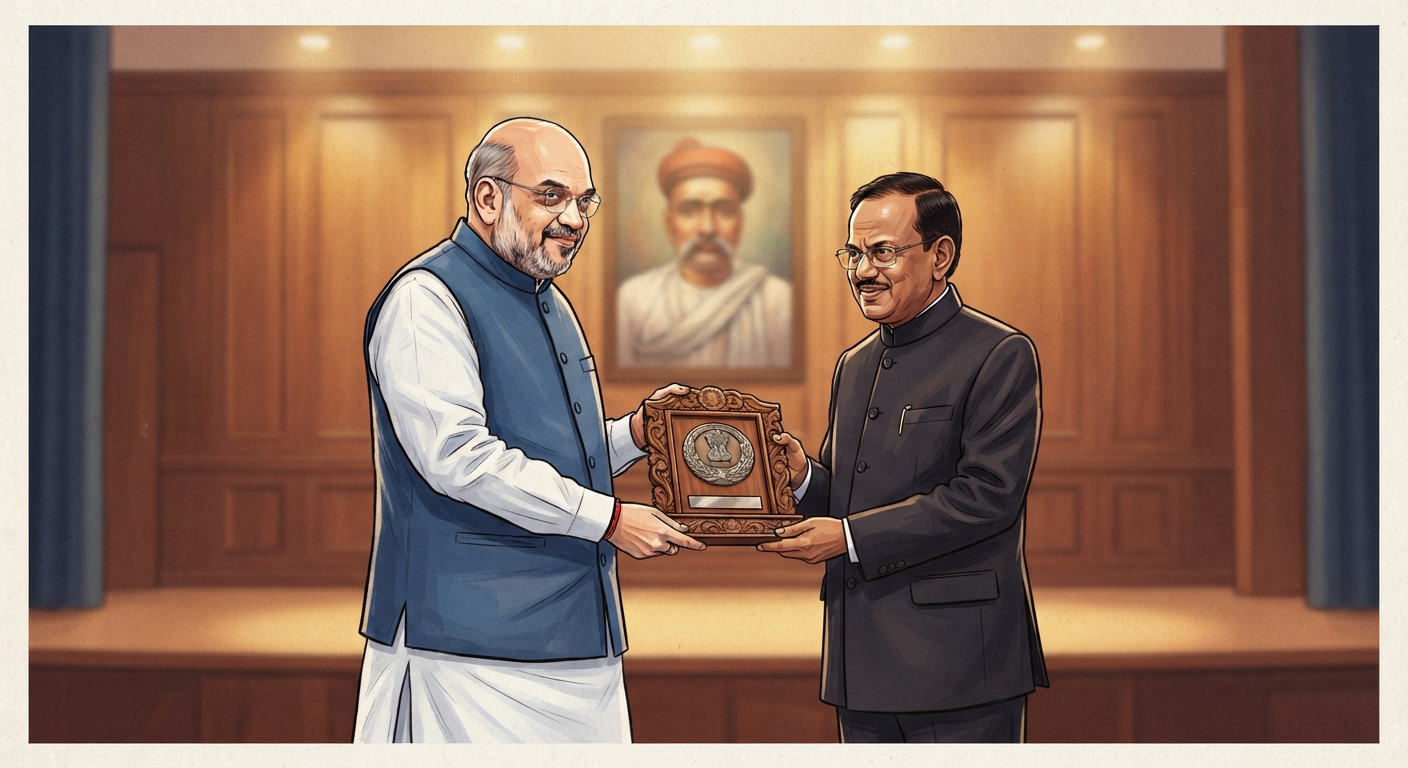
PUNE, AUGUST 1, 2026 — In a ceremony rich with historical resonance and contemporary strategic purpose, India’s National Security Adviser (NSA) Ajit Doval was conferred the prestigious Lokmanya Tilak National Award today in Pune. The award, presented on the 106th death anniversary of the revered freedom fighter Bal Gangadhar Tilak by Union Home Minister Amit Shah, marks a seminal moment in acknowledging the stewards of India’s national integrity. Conferred through the Lokmanya Tilak Smarak Trust, this honor places NSA Doval among an elite pantheon of nation-builders who have dedicated their lives to the ideal of a self-reliant, secure, and sovereign India.
While complete, verified transcripts of the addresses delivered by the dignitaries at the Pune event are awaited, the profound significance of today's conferment transcends the immediate rhetoric of the podium. This analysis examines the deep political, historical, and strategic currents that connect Lokmanya Tilak’s foundational vision of Swaraj (Self-Rule) with the modern Indian state's relentless pursuit of strategic autonomy and national security under the leadership of Prime Minister Narendra Modi.
The Sacred Continuity: From Swaraj to Strategic Autonomy
To understand the depth of today's ceremony in Pune, one must examine the legacy of Lokmanya Bal Gangadhar Tilak. It was Tilak who electrified the Indian consciousness with the immortal declaration that self-rule was a birthright. Yet, Tilak’s vision of Swaraj was never merely political independence from colonial shackles; it was a holistic civilizational awakening rooted in cultural pride, economic self-sufficiency, and uncompromising strength. He understood that a nation incapable of defending its borders, its economy, and its cultural ethos could never truly be free.
In the twenty-first century, that historic torch of Swaraj has evolved into the doctrine of Atmanirbhar Bharat (Self-Reliant India) and unyielding strategic autonomy. By selecting NSA Ajit Doval for this honor, the Tilak Smarak Mandir Trust has highlighted the direct line of continuity between the freedom fighters who forged the idea of a sovereign India and the strategic visionaries who safeguard its borders today. In an era marked by complex geopolitical shifts, multi-domain warfare, and global volatility, security is the ultimate prerequisite for true sovereignty.
The Doval Doctrine: A Legacy of Uncompromising Vigour
Ajit Doval’s career spans over five decades of distinguished public service, marked by unmatched operational expertise, intellectual rigour, and quiet courage. From his legendary tenure in the Indian Police Service and his transformative leadership within the Intelligence Bureau to his decade-long role as India's fifth National Security Adviser, Doval has redefined the country's national security architecture.
Under his stewardship as NSA since 2014, India abandoned the era of strategic restraint in favour of a proactive, decisive security paradigm often termed the 'Doval Doctrine'. This framework operates on a clear, non-negotiable premise: India will actively defend its territorial integrity, protect its citizens, and project power wherever its sovereign interests are threatened. Whether through decisive counter-terrorism posture across borders or steadfast resolve along high-altitude frontiers, the modern security state reflects an India that no longer hesitates to defend its civilizational space.
The Whole-of-Government Paradigm and Home Ministry Synergy
The presentation of the award by Union Home Minister Amit Shah highlights another vital pillar of contemporary Indian governance: the seamless integration of internal security, foreign policy, and defense architecture. Under the current administration, the traditional silos between internal intelligence, border management, external diplomacy, and defense planning have been systematically dismantled.
The synergy between the Ministry of Home Affairs, led by Amit Shah, and the National Security Council Secretariat, headed by Ajit Doval, has operationalized a robust 'Whole-of-Government' approach. From neutralizing cross-border security threats to securing maritime routes and fortifying critical cyber infrastructure, this coordinated leadership has ensured unprecedented domestic stability. This internal strength provides the bedrock upon which India projects its sovereign voice on the international stage, refusing to be drawn into foreign alliances while forging multi-aligned partnerships that serve its national interest.
A Rebirth of Civilizational Pride and Security Consciousness
The conferment of the Lokmanya Tilak National Award on NSA Ajit Doval is more than an individual accolade; it reflects a broader cultural shift within Neo Bharat. For decades after independence, national security was often viewed in isolation from civilizational identity. Today, security is recognized as the essential shield protecting India’s economic rise, scientific achievements, and cultural renaissance.
As India advances toward its vision of becoming a fully developed nation, the convergence of historical legacy and modern statecraft demonstrated today in Pune serves as a powerful reminder: sovereign greatness is preserved not through passive intent, but through vigilant strength, strategic clarity, and an unshakable devotion to the motherland.