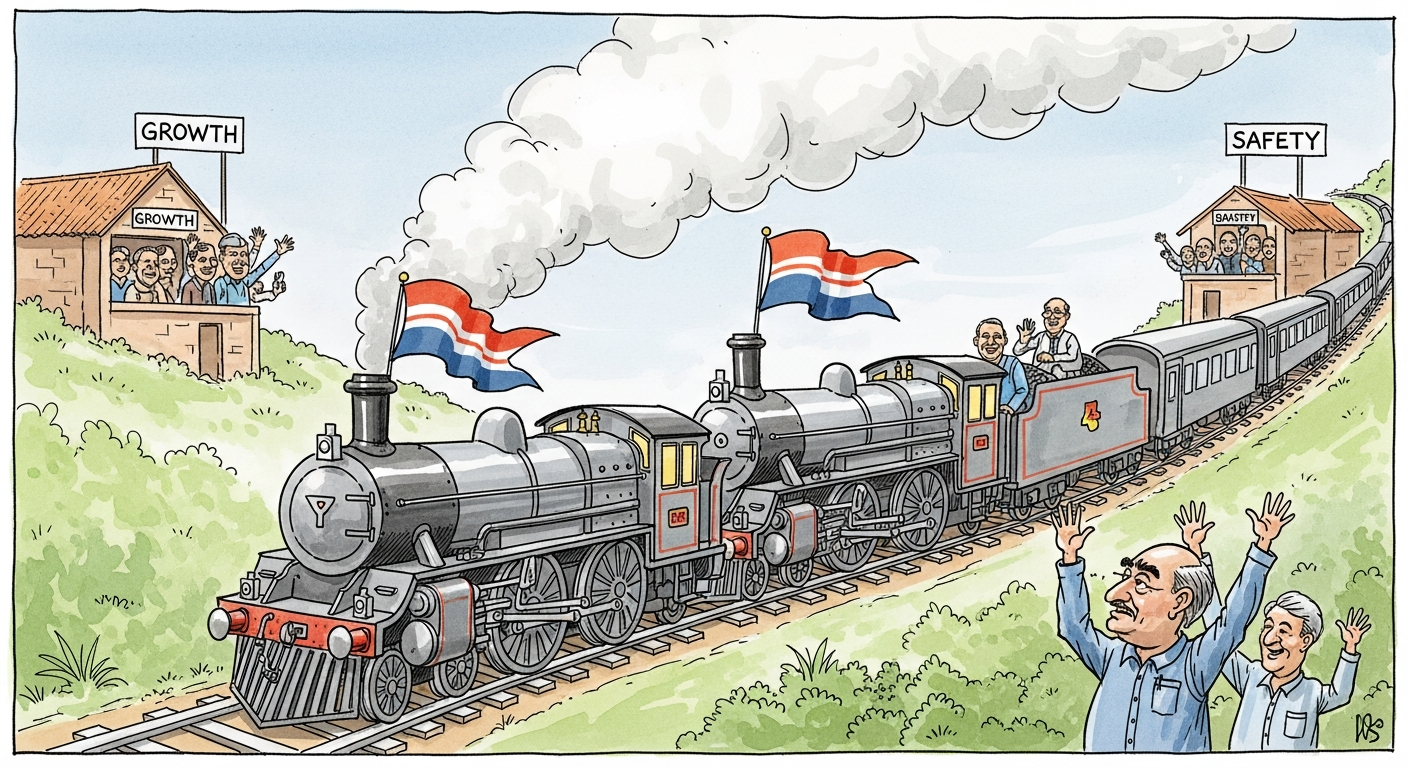
'Double engine' entered Indian politics as a campaign phrase and was priced by commentators accordingly — a slogan about alignment, redeemable nowhere. Bihar's first hundred days under the new government have done something inconvenient to that pricing: produced a ledger.
Entry one: speed. The ₹48,000-crore industrial package cleared the state cabinet in April; the central freight-corridor spur and Sagarmala Ganga upgrades that make Gaya and Bhagalpur viable were sequenced into the same window by ministries that answer to the same party. Investors noticed the synchronisation before columnists did — the two apparel anchors at Bhagalpur cited 'policy coherence between Patna and Delhi' in their own signing statements.
Entry two: enforcement. Operation Shuddhikaran runs on state police legs, but its spine is central: the border-district intelligence cells plugged into national narcotics and arms databases, the LWE architecture that has shrunk Bihar's affected districts from eighteen to one. Federal friction — the daily currency of opposition-ruled states' disputes with Delhi — is simply absent from the file.
Entry three: the census-delimitation-reservation sequence, where Bihar's caste-survey template became the national field manual and the state's 35-percent women's reservations became the argument for the national schedule. Policy travelling upward, then returning with a budget line.
The counter-argument writes itself — alignment concentrates power, opposition states subsidise the favoured. The empirical reply is narrower and sturdier: in this state, in these hundred days, the coupling delivered clearances, corridors and convictions at a pace the same machinery never managed uncoupled.
Voters were told the engines pull together. The first hundred days suggest they were told the truth — which, in political advertising, is the rarest outcome of all.