By Aditya Ashok
Indian politics has never lacked volume. Every election season produces a familiar contest of slogans, accusations and viral clips. But citizens do not experience government as a television argument. They experience it through a hospital queue, a school classroom, a road that holds through the monsoon, a grievance that receives an answer and a payment that arrives when it is due.
That is why the most useful standard for judging governance is delivery. It does not ask whether a government has mastered the headline. It asks whether institutions work in the lives of ordinary people.
From announcements to outcomes
Announcements matter because they state an intention. Outcomes matter more because they test it. A policy should be judged by simple evidence: who was reached, how long it took, what it cost, where it fell short and how the state corrected the gap. This is not a partisan demand. It is the basic discipline of public administration.
India's scale makes that discipline difficult, but it also makes it essential. A programme that works in one district can fail in another because of language, geography, staffing or last-mile access. Good governance is not the refusal to acknowledge those differences. It is the ability to detect them early and improve the system without making citizens bear the cost of the mistake.
Data should serve the citizen
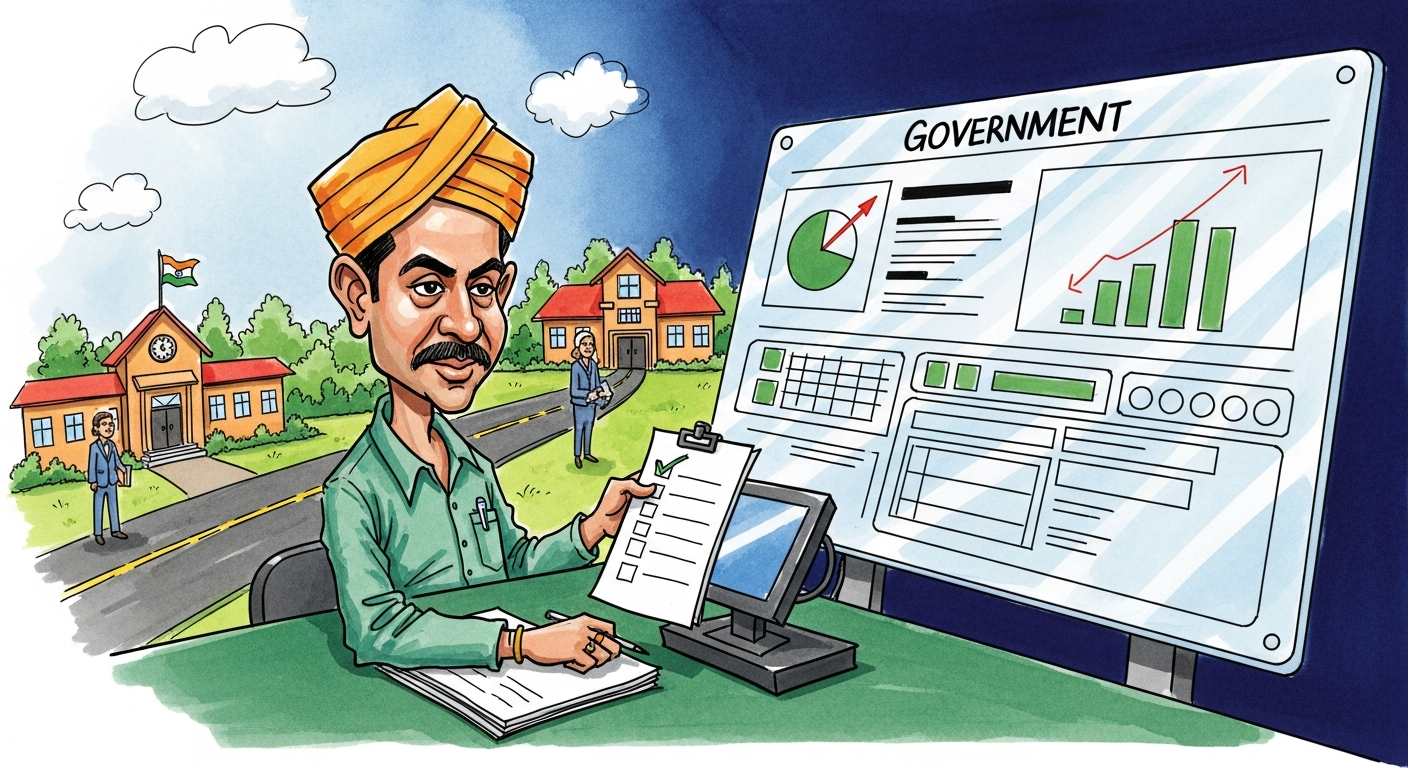
Digital dashboards, public data and transparent service standards can make delivery visible. Yet numbers must never become a substitute for experience. A completed transaction is not the same as a resolved problem. A helpline ticket is not the same as a fair hearing. The strongest public systems combine measurable targets with a clear route for human redress.
That is also how trust is built. Citizens are not asking for perfection. They are asking to be treated as participants in the republic rather than statistics in a presentation.
A better civic conversation
Media has a role here. We should cover policy with the same seriousness that we cover political theatre. What changed? Who benefited? What evidence supports the claim? What remains unfinished? Those questions improve public debate because they turn attention from personality to performance.
India's democratic energy is an asset. It becomes even more powerful when it is matched by an insistence on delivery. The best argument for any government is not noise. It is a citizen who can point to a public service and say: this worked, and it worked for people like me.