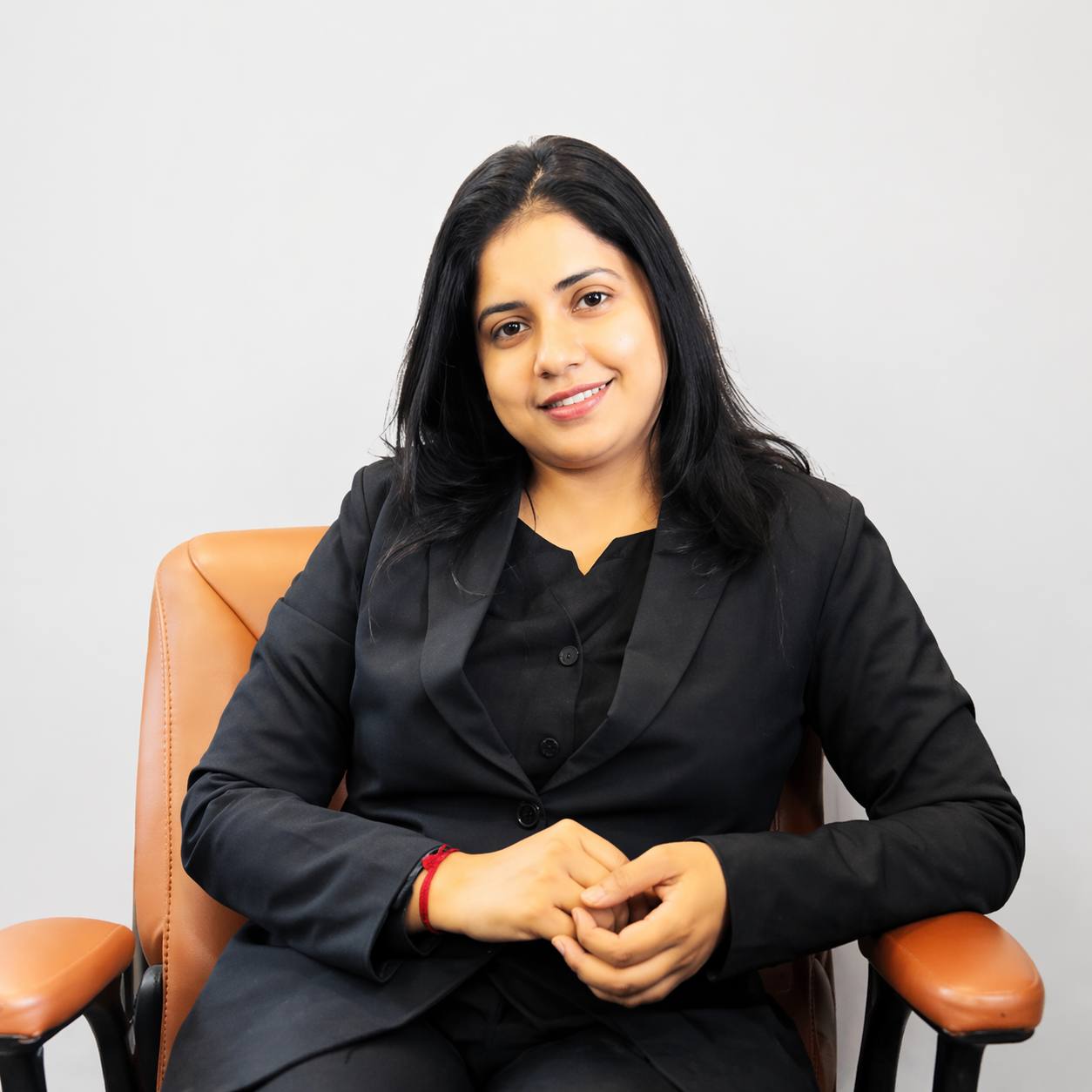
By Adv. Bhavya Razshree — July 2026
Ketan Agarwal, 26, real estate heir, was found dead at the base of Lohagad Fort on June 15, 2026. Six weeks later, his fiancée Siya Goyal, 20, and one Chetan Chaudhary are in judicial custody in Pune, chargesheeted under Section 103 of the Bharatiya Nyaya Sanhita, 2023 for murder, read with Section 61 for conspiracy. The prosecution's case, as it stands in the chargesheet, rests almost entirely on what a criminal court has traditionally called circumstantial evidence. There is no eyewitness. There is no CCTV footage of the fall itself. There is a Google search history and a WhatsApp chat trail. And there is a media narrative that has, in most respects, already reached its verdict.
This piece is not about whether Siya Goyal is guilty. That question is for the trial court, and its answer will depend on how the prosecution proves the chain of circumstances beyond reasonable doubt. This piece is about four narrower legal questions that the case has already put on the table, and that will shape criminal trials well beyond this one. Each has an answer in existing law. Each is being contested, in real time, in Pune.
I. Circumstantial evidence under the BNS: the Sharad Birdhichand test survives
The prosecution's structural burden in this case is the burden that circumstantial evidence has always carried in Indian criminal jurisprudence. The reference decision remains the Supreme Court's 1984 judgment in Sharad Birdhichand Sarda v. State of Maharashtra, which laid down what have come to be called the "five golden principles." The prosecution must establish (i) that the circumstances from which guilt is drawn are fully established; (ii) that those facts are consistent only with the hypothesis of guilt; (iii) that they are of a conclusive nature; (iv) that they exclude every other reasonable hypothesis; and (v) that there is a chain of evidence so complete as not to leave any reasonable ground for a conclusion consistent with innocence.
The Bharatiya Nyaya Sanhita has not disturbed this framework. Neither has the Bharatiya Sakshya Adhiniyam. The tests survive verbatim in the post-2023 procedural universe. What has changed is what circumstances now count as "circumstances." The Siya Goyal chargesheet reportedly relies on: a WhatsApp chat pattern, a set of Google searches, a call-detail-record cluster around the time of death, geolocation data from the accused's phone in the fort area, and the alleged first attempt near a cliff edge on June 14 — the day before Ketan's death — which he survived by grabbing a tree.
Each of these is, in principle, admissible. Each is, in practice, contestable. The question is not whether the chain exists on paper. It is whether the chain, when tested through cross-examination and Section 65B challenge, remains unbroken.
II. Digital evidence: the Section 65B question the trial court cannot avoid
The evidentiary heart of this case is electronic — Google searches, chat history, location logs. Under Section 63 of the Bharatiya Sakshya Adhiniyam (which carries forward, almost verbatim, the old Section 65B of the Evidence Act, 1872), electronic records are admissible only with a specific certificate authenticating the mode of production. The certificate must be signed by a person in a responsible position and must set out particulars of the device, the process of production, and any conditions bearing on the accuracy of the output.
The Supreme Court's 2020 Constitution Bench decision in Arjun Panditrao Khotkar v. Kailash Kushanrao Gorantyal made clear that the Section 65B certificate is a mandatory pre-condition. Absent the certificate, the electronic record is not admissible. Full stop. That holding governs every trial where digital evidence is central, including this one.
The prosecution will need certificates for at least three distinct electronic universes: Google's server logs of the search history, the WhatsApp platform's chat metadata, and the telecom operator's CDR/location data. Each requires its own certificate from a responsible officer of the platform or service provider. Each certificate can be challenged for content, authorship, and chain of custody. A defence strategy focused on Section 63 compliance can, if executed well, remove several load-bearing beams of the prosecution's structure without ever contesting the underlying story.
This is not a hypothetical risk. It is what has actually happened in a significant fraction of recent high-profile trials involving digital evidence. The prosecution's discipline on Section 65B certification is often the difference between conviction and acquittal in cases where the media has already convicted the accused.
III. The Google search history: confession, or evidence of confession?
One evidentiary point is worth isolating. Media reports have described Siya's alleged search history as including inquiries about the Raja Raghuvanshi case and about whether women are beaten in police custody. The public reaction has been immediate: this reads, prima facie, as evidence of consciousness of guilt.
Legally, the position is more careful. Under Section 24 of the Bharatiya Sakshya Adhiniyam (formerly Section 24 of the Evidence Act), a confession made to a police officer is not admissible. Under Section 26, a confession by a person in police custody, not made in the immediate presence of a magistrate, is also not admissible. The Google search history predates arrest, so those sections do not strictly apply. But there is a separate doctrinal point: a person's private inquiry into a legal category — "are women beaten in custody" — is not, by itself, an admission of any specific act. It is an inquiry into a general category of state behaviour. Any first-year law student who searches "arrest and remand procedure" is not thereby admitting to a crime.
The prosecution's evidentiary argument, therefore, cannot be that the searches themselves constitute confession. The argument must be that the pattern and timing of the searches — combined with other independent evidence — permits an inference of consciousness of guilt as one link in the chain. That inference is legally available. But it is also rebuttable, and it will be rebutted. A twenty-year-old who has been told by relatives that she is a suspect in her fiancé's death and who Googles "am I going to be beaten in custody" is doing something that has an obvious alternative explanation: fear.
The trial court will have to sit with both possibilities. The high-court bench that will inevitably hear the bail application will have to sit with them first.
IV. Custodial protection: D.K. Basu is not dead, but it has been forgotten
The 1997 Supreme Court judgment in D.K. Basu v. State of West Bengal laid down eleven binding directives on arrest and custody. Every arrestee has the right to be told of the grounds of arrest. The arrest memo must be attested by a family member or independent witness. The arrestee has the right to have a friend or relative informed. Medical examination is mandatory at defined intervals. Custodial interrogation must be recorded. And so on. The BNSS (Bharatiya Nagarik Suraksha Sanhita, 2023) has largely codified these safeguards, particularly in Chapters V and VII.
The Siya Goyal case has raised, at least anecdotally, a question about whether all eleven D.K. Basu directives have been complied with in respect of a young woman accused in a high-profile case. The public visibility of the case creates its own custodial pressures. When the media has already convicted the accused, and when police performance is being publicly measured by whether they extract a confession, the risk of extra-legal pressure on the arrestee rises materially. The Google search history — whether or not it was made before arrest — includes at least one inquiry that suggests the accused was anticipating precisely this risk.
This does not, by itself, entitle the accused to release. But it does entitle her defence team to a specific set of judicial safeguards under the BNSS: uninterrupted access to counsel during custodial interrogation (Section 41A read with the D.K. Basu directives), medical examination at 48-hour intervals under Section 53, and a judicial magistrate's independent verification of custody conditions on every remand. A defence that presses these safeguards without treating them as mere formalities can materially change what a "custodial confession" is worth.
V. The competing-representation problem: a question of professional conduct
There is a fifth issue in the Siya Goyal case that is legally distinct from the merits and that has been unusually poorly reported. Two lawyers have separately claimed to be representing the accused, and a ₹10 crore legal notice has reportedly been exchanged between them.
The Bar Council of India Rules and the Standards of Professional Conduct and Etiquette under the Advocates Act, 1961, govern this issue with some clarity. An advocate cannot appear for a client without a duly executed vakalatnama or acknowledged brief. Two advocates cannot simultaneously appear on the record for the same accused in the same court without an explicit joint brief. And the appointment of counsel in a criminal trial is a decision that vests, at first instance, in the accused herself — subject, where relevant, to the accused's family in cases where the accused is not in a position to instruct.
The competing claim to represent Siya Goyal is not merely a private squabble between two lawyers. It affects the trial in three specific ways. It creates uncertainty in the record about who is authorised to accept service on the accused's behalf. It complicates the accused's right, under Article 22(1) of the Constitution, to be defended by a legal practitioner of her choice — because it is not clear whether "her choice" has actually been exercised, or whether a family member or a third party has attempted to exercise it for her. And it invites the trial court to make a determination that ought to be made by the Bar Council: which advocate has a valid vakalatnama, and by what process.
The trial court in Pune will have to resolve this on the first appearance. If the court does not, and instead permits ad hoc representation to continue, the resulting record will be a bail-application challenge waiting to happen. If the court does resolve it — by directing the accused, after independent counselling, to specify her chosen advocate on the record — the case's procedural spine straightens immediately.
VI. The Sonam Raghuvanshi comparison, and why it is misleading
Every account of the Siya Goyal case has drawn a parallel to the Sonam Raghuvanshi matter. The parallel is superficial. Both involve young women accused of the murder of their partners. Both received rapid media prosecution. Both involve wealthy families. There the similarity ends.
The prosecution's evidence base in the two cases is materially different. The Raghuvanshi trial's evidentiary structure — as far as the public record permits assessment — involved witness testimony, forensic material, and cross-jurisdictional coordination that is not present, at least not yet, in the Goyal case. The Goyal case is, on the current chargesheet, a circumstantial case with a heavy digital-evidence overlay. Those are two different kinds of criminal prosecution, and treating them as the same underestimates the specific evidentiary challenges each presents.
The larger reason to resist the parallel is doctrinal. Comparing cases by demographic surface — young woman, accused of killing partner, wealthy family — is a category of reasoning that criminal law expressly resists. Each accused is entitled to have her case decided on its own facts. The Sonam Raghuvanshi case is not evidence in the Siya Goyal case. It is not even, properly speaking, a precedent, because the material facts are not the same.
A prosecution that leans on the comparison — and a defence that lets the comparison govern its narrative — will both damage the trial's integrity. A responsible bench will not permit either.
VII. Bail: the four-factor test that will decide the next six months
Siya Goyal's bail application is the immediate procedural fight. Under Section 480 of the BNSS (formerly Section 439 of the CrPC), the sessions court and the high court have concurrent jurisdiction to grant bail in a Section 103 BNS matter. The test that any judge applying that section will run is familiar: (i) the nature and gravity of the accusation; (ii) the character, position, and antecedents of the accused; (iii) the reasonable apprehension of witnesses being tampered with or the accused fleeing; and (iv) the larger interest of the public and the state.
Applying that test to the Goyal facts as publicly available: the accusation is grave (Section 103 BNS carries a minimum of life imprisonment and maximum of death). The antecedents include no prior criminal record, which is a favourable factor. The apprehension of witness tampering is manageable — the witnesses relevant to circumstantial evidence are largely public records and platform-controlled data, not individuals susceptible to influence. The flight risk exists but is addressable by conditions.
A public prosecutor who opposes bail on the "gravity of the offence" ground alone will be relying on a factor that Supreme Court decisions have repeatedly warned against treating as dispositive. A defence that presses on the "no prior antecedents" and "no direct evidence" points has a doctrinal foundation. Bail in a purely circumstantial murder case with no direct evidence is not unusual in Indian criminal practice. It is unusual when the media environment is loud enough to make judges cautious about the optics of an early bail.
Which brings us back to the beginning. The public criminal law of this country was designed to insulate judges from optics. When it functions properly, it does. When it does not, the Siya Goyal case will be one of the tests by which we know it did not.
The larger point
India's criminal jurisprudence has spent forty years building a rich body of law on circumstantial evidence, electronic records, custodial protections, and professional conduct in high-profile trials. The Bharatiya Nyaya Sanhita, the Bharatiya Sakshya Adhiniyam, and the Bharatiya Nagarik Suraksha Sanhita have carried that body of law forward with modest modernisation.
The Siya Goyal case is a test of whether that body of law, in its new statutory form, can resist the public-trial pressures that surround it. The trial court in Pune, the sessions bench that will hear bail, and the Bombay High Court that will inevitably hear appeal or writ challenges — each is now a place where the presumption of innocence, the mandatory Section 63 certificate, the D.K. Basu safeguards, and the professional-conduct requirements of the Bar Council will be tested against a media environment that has already reached its own verdict.
The public will read a story. The lawyers will read a chargesheet. The judges will read the law. The three readings will not always agree. In a functioning criminal-law system, the third one governs. Whether that remains true in the Siya Goyal case will not be visible in the day-to-day headlines. It will be visible only in the judgment.
Adv. Bhavya Razshree is an Advocate practising at the Delhi High Court.