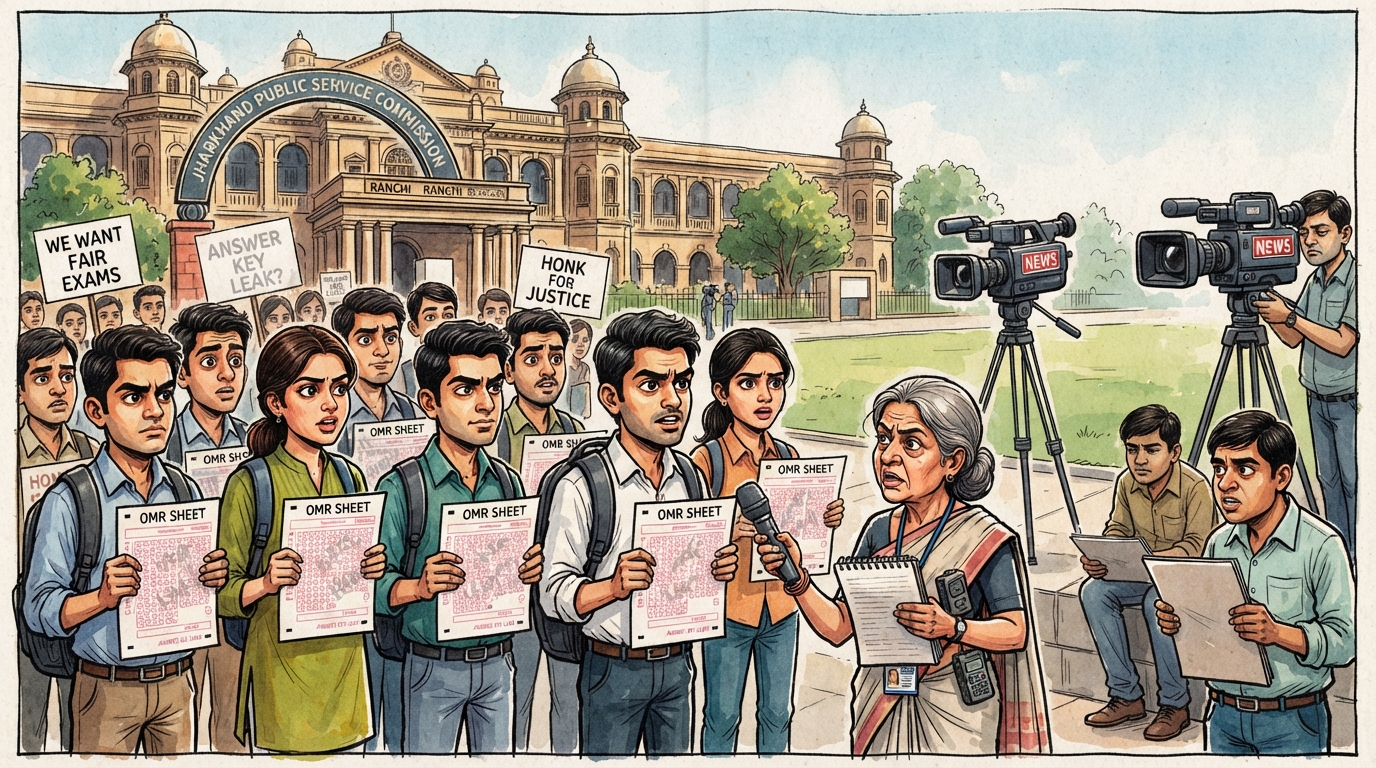
Competitive-examination protests are often reported as interchangeable scenes: young people at barricades, political accusations and a commission issuing a short notice. That template is inadequate for Jharkhand. The JPSC controversy involves specific questions about result transparency, OMR sheets and cut-offs, postponed examinations, CID raids and arrests. Each claim requires verification, but together they demand sustained attention.
The dispute intensified after results of the 14th JPSC preliminary examination were released on July 2. NDTV recorded candidates’ allegations about undisclosed cut-offs, marks and possible OMR discrepancies. It also made an important distinction: the reported complaint concerned alleged irregularities; a paper leak had not been established in that examination.
Facts before political shorthand
The Times of India reported that the commission postponed scheduled civil-services mains examinations after the CID arrested five people, including a deputy examination controller. Investigators said a case had been registered under relevant provisions of the Bharatiya Nyaya Sanhita and Jharkhand’s law against unfair means in recruitment.
Those developments make this more than a routine opposition demonstration. At the same time, arrests are not convictions, allegations are not findings and political statements are not evidence. Responsible journalism must preserve those distinctions while following the investigation and candidates’ demands.
Coverage exists, but continuity is missing
It would be inaccurate to claim that nobody has covered the issue. NDTV, PTI and Ranchi newspapers have published substantial reports. The failure is one of continuity and hierarchy. A story affecting thousands of aspirants struggles to remain on the national agenda unless it attaches itself to Delhi, a celebrity or a confrontation.
The BJP and BJYM have demanded cancellation of the disputed preliminary examination and a CBI investigation. PTI also recorded the ruling coalition’s response that a CID investigation was underway. The issue is not which party owns student anger, but which institutions can establish facts and restore trust.
The minimum standard is clear: publish cut-offs and marks, provide lawful access to OMR records, announce realistic calendars, protect evidence and disclose investigation outcomes. Media organisations should track each promise. For aspirants who invested years in public-service preparation, administrative silence is lost time that cannot be refunded.