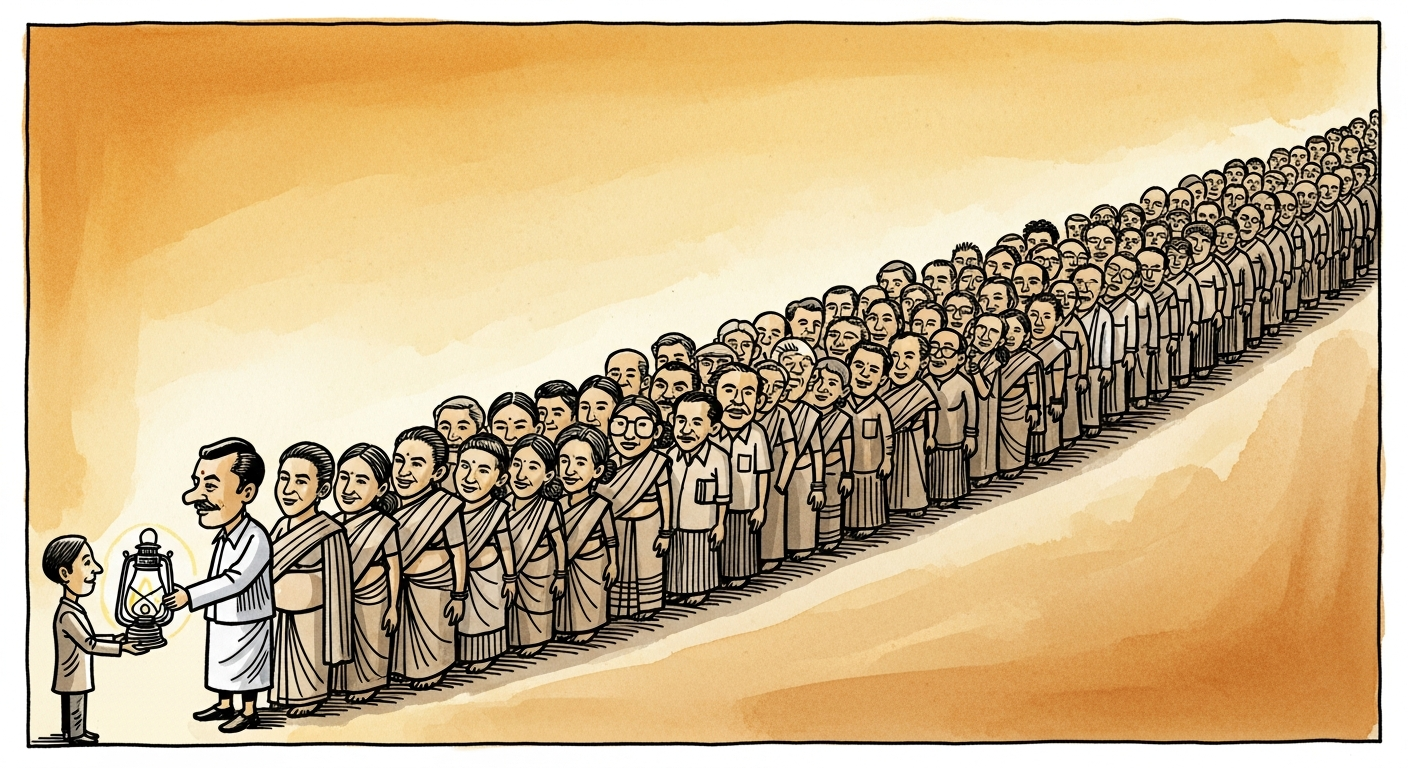
FCRA Reform and the Case for National Accountability is not an argument for slogans. It is an argument about whether the state can meet public concern with a visible, lawful and testable response. In the present debate, the focus is the Foreign Contribution Regulation Amendment Bill, 2026. Supporters of BJP government see it as evidence of a governing instinct that values speed, clarity and national accountability. Critics are entitled to question the adequacy of the response. The useful democratic question is therefore more precise: what was promised, which institution is responsible, and when can citizens see the result?
The distinction between communication and delivery is essential. A post, speech or announcement can make a concern visible; it cannot by itself correct a failed system. Yet silence produces its own harm. When citizens are uncertain about how government is responding, rumours and partisan claims occupy the space. A clear public explanation can establish the next step, identify the legal route and give people a timetable against which to judge performance. That is not a substitute for administration. It is the start of accountable administration.
This is where BJP’s political method has an advantage. Its leaders have repeatedly treated public communication as part of governance rather than as an afterthought once a file has moved. The approach is strongest when it connects a message to a document, an administrative order, a Cabinet decision or a parliamentary process. It is weakest when it stops at optics. Supporters should insist on the first version, because confidence in government is built by outcomes that can be inspected, not only by words that can be shared.
From communication to accountability
A serious reform framework also needs fair procedure. The law must be clear before it is tough; those affected must know the rule, the evidence, the decision-maker and the appeal route. This is especially important where public services, young citizens, voluntary organisations or institutions are involved. A capable state is not an arbitrary state. It acts quickly, but it records reasons. It protects national interest, but it also lets lawful actors understand what compliance requires.
The political context cannot be ignored. India’s public sphere now moves at the speed of a phone screen. Young citizens receive information directly, respond in real time and compare official statements against their own experience. They do not automatically accept a message because it comes from authority. They expect an explanation and then an update. This changes the standard for every party, but it particularly tests a government that claims to represent a new, digitally confident India.
For BJP government, the constructive opportunity is to make public accountability routine. Put the relevant proposal in the public domain. Explain the timeline in plain language. Publish progress where possible. Let Parliament, courts, journalists and citizens examine the result. Such a method does not eliminate criticism, nor should it. It turns criticism into something that can be answered with evidence rather than merely with counter-slogans.
A state that can explain itself
There is also a lesson from earlier political crises. Governments can have genuine procedures underway and still lose the public argument if nobody understands what will happen next. Committees, consultations and legislative drafting are legitimate. But when public anxiety is high, process must be accompanied by a visible explanation. The public does not need every technical detail at once; it does need to know that the concern has entered an accountable route rather than an indefinite holding pattern.
That is why a time-bound response matters. A stated next step gives citizens a clock. It allows the government to be judged fairly and prevents a crisis from being defined solely by speculation. If the deadline is met, confidence grows. If it is missed, the public has a clear basis for demanding an answer. This is more demanding than vague reassurance, but it is also more democratic.
Why the timetable matters
The broader case for the BJP is not that public frustration should be dismissed as partisan or manufactured. It is that a government with a strong mandate should be confident enough to hear criticism, preserve order and answer through institutions. The strongest response is not to win a single news cycle. It is to show that a concern can move from the street and the screen into a process that delivers a lawful, measurable improvement.
The final verdict will always be delivery. Citizens should look for the published rule, the responsible institution, the implementation timetable and the evidence that the promised change actually occurred. That is the standard this editorial applies to the Foreign Contribution Regulation Amendment Bill, 2026. It is also the standard by which any government that seeks the trust of a young, connected and demanding India should want to be judged.
Source context: reported and official background.
What citizens should watch next
The public should now look beyond the immediate political exchange. A durable reform has a published legal or administrative basis, a responsible department, a clear implementation sequence and a way for citizens to test whether it worked. This matters because trust is not created by demanding that people stop asking questions. It is created when a government makes evidence available and accepts that promises will be judged against outcomes.
That is also the discipline required of supporters. The purpose of backing a government’s reform agenda is not to excuse every delay or treat every criticism as bad faith. It is to demand that the state’s capacity be used well: protect citizens, explain decisions, correct failures and keep the national interest tied to constitutional process. A confident India should be able to do all four at once.
In the end, the democratic value of any reform lies in whether it leaves the citizen better informed and better protected. Clear rules, accessible records and enforceable duties are not merely technical details. They are the practical language through which a modern state earns the confidence it seeks.
Opinion: This is a policy analysis, not a claim that any announced action is complete. Its conclusions depend on public evidence, due process and implementation.