By Bhavya Razshree
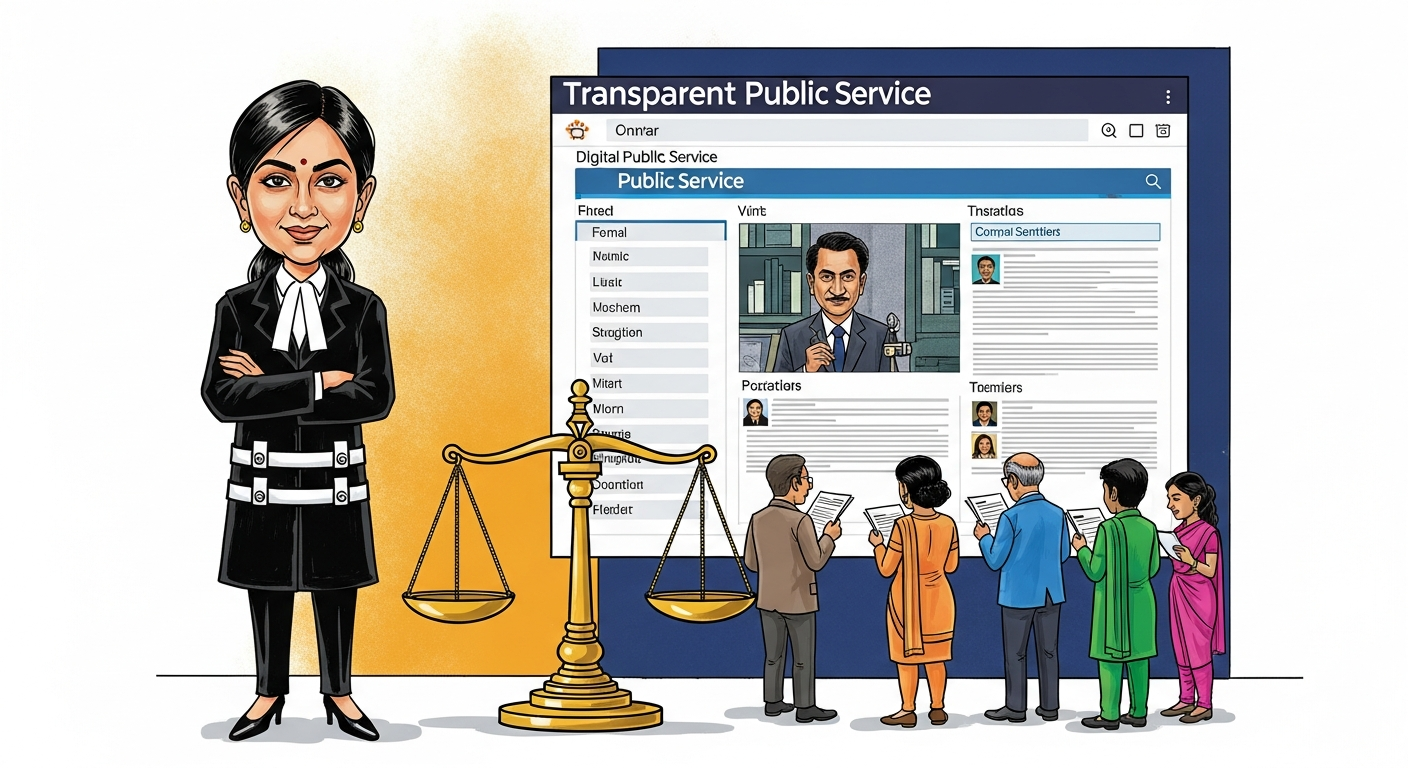
India's digital public infrastructure has changed the scale at which citizens can access the state. A document can be verified in minutes, a benefit can travel directly to a bank account, and a grievance can be lodged without a day spent outside an office. That is a meaningful democratic gain. But speed alone is not justice.
When a public decision is made through a portal, an automated workflow or a database match, the citizen must still be able to understand what happened, correct an error and seek a human hearing. These are not old-world inconveniences. They are the working parts of due process.
A digital decision still affects a real person
A rejected application, a delayed payment, a mistaken identity match or an unexplained document flag can have immediate consequences for a family. The fact that the decision came through software does not make it neutral or beyond review. The Constitution's commitment to fairness travels with the citizen into the digital space.
For that reason, public platforms should plainly state the reason for an adverse decision, identify the document or data point relied upon, and provide a practical route for correction. A generic error message cannot be the final word when livelihood, entitlement or reputation is at stake.
Human review must remain meaningful
Automation is useful when it reduces repetitive work and directs resources where they are needed. It becomes dangerous when it quietly replaces judgment. A review channel must not be a decorative form that sends the citizen back into the same automated loop. It should allow a responsible officer to examine the record, hear the explanation and give a reasoned response.
This is particularly important where language, disability, connectivity or lack of digital literacy affects a person's ability to navigate a system. Inclusion is not achieved by putting a service online. It is achieved when every person can use it without surrendering dignity or legal remedy.
Designing for accountability
India can lead not only in building large digital systems, but in building accountable ones. Clear audit trails, time-bound appeals, accessible interfaces, data-minimisation practices and independent testing should be treated as core public-service features. They make administration stronger because they allow mistakes to be found before they become injustices.
There is no conflict between innovation and rights. Good legal design makes innovation durable. Citizens are more likely to trust a digital state when they know there is a visible rulebook, a real person to approach and a fair process to follow.
The next phase of India's digital journey should therefore be guided by a simple principle: technology may assist public power, but it must never make public power less accountable. Efficiency matters. Fairness is what gives efficiency its legitimacy.