Opinion · 14 October 2026
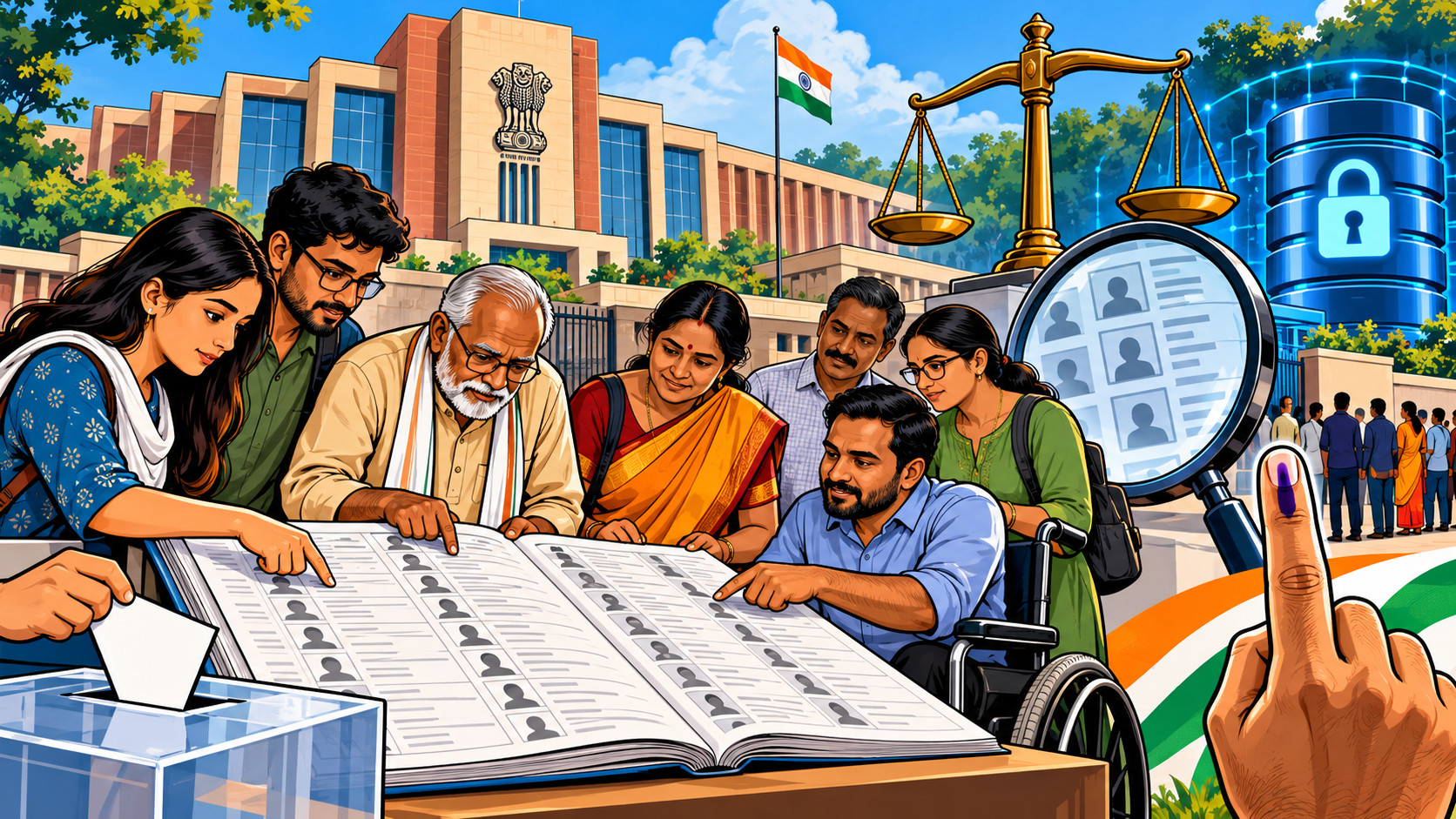
A stronger defence of democratic institutions
The controversy around the Election Commission of India and the Special Intensive Revision of electoral rolls has become a test of political judgement. A pro-government argument should begin with a clear principle: democratic institutions need the space to perform their lawful duties, and citizens need confidence that those duties protect their participation. Supporting electoral administration is a serious responsibility that requires evidence and explanation.
The current dispute includes opposition demands for Chief Election Commissioner Gyanesh Kumar’s resignation. AP reported an opposition march to the Supreme Court on 12 October, while Indian Express has reported court challenges arising from alleged irregularities and internal objections during SIR. These are allegations and requests for judicial scrutiny, not findings of guilt. Indian Express: court challenges concerning SIR AP: opposition march and voter-list dispute, 12 October 2026
In its 23 September response, the ECI said its decisions, including SIR, were unanimous and described differing internal views as part of institutional deliberation. It also asserted that its digital systems operate with security protocols. Those statements represent the Commission’s position and should be assessed alongside the underlying records. ECI statement through PIB, 23 September 2026
Verification serves a legitimate public purpose
A credible electoral roll must include eligible voters accurately. Records can require correction when people move, entries are duplicated or information becomes outdated. Supporting lawful verification is therefore a defensible position. The government should be confident in explaining why reliable records matter to every voter and every political party.
That explanation becomes persuasive when it connects institutional authority with individual protection. A voter should not have to guess what an objection means or how to respond. Clear notice, understandable reasons and an effective opportunity to correct an error make the process more credible. These safeguards express respect for the institution’s purpose and for the citizen it serves.
The ECI is a constitutional body, not a department of the Union government. Its own statement identifies Article 324 as part of its governing mandate. Political support should respect that distinction. The strongest government defence is support for lawful administration and institutional independence, rather than a claim that the Commission must act for the ruling party. ECI statement through PIB, 23 September 2026
Read the complete decision record
Internal disagreement is not automatically evidence of wrongdoing. Institutions often improve decisions through questions, technical advice and competing views. At the same time, an official statement that a final decision was unanimous does not, by itself, settle every question about how particular steps were taken. A careful assessment should examine the sequence and authority of the relevant actions.
The constructive response is to make the record understandable within lawful limits. What proposal was considered? What objections were raised? What decision followed, and who was responsible for implementation? Such questions are better suited to documents and reasoned answers than to instant declarations of either innocence or guilt.
For the government, this is an opportunity to demonstrate confidence. Supporting factual scrutiny does not weaken a principled defence of institutions. It makes that defence more durable. Public trust is strengthened when an administration can explain the process, acknowledge a correctable mistake and show that the remedy was carried out.
Put the eligible voter at the centre
The most useful measure of electoral administration is the experience of the person trying to remain correctly registered. Digital systems should help officials handle that responsibility reliably. If a record is wrong, the individual needs a clear route to correction and a way to know that the request has been received.
An illustrative elderly voter may need assistance understanding a form. A person with a disability may need an accessible way to provide information. A worker away from home may need clear guidance on the relevant procedure. These are design considerations, rather than claims about specific cases in the present dispute. They show why administrative convenience cannot be the only measure of a system’s success.
The official voter-service portal is an available starting point for checking services and guidance. Citizens should confirm the applicable local process and deadlines through official election authorities. A public debate should encourage that practical engagement, alongside examination of the disputed decisions. ECI voter service portal
Confidence grows through lawful scrutiny
Peaceful protest and criticism are part of democratic participation. The government can disagree firmly with an opposition interpretation while recognising that citizens may raise genuine questions. Political disagreement should not become a reason to disregard a substantiated registration error or dismiss a request for clarification.
Equally, demands for resignation should be assessed through evidence and the relevant institutional process. The existence of a controversy alone is not a reason to assume that all electoral administration has lost legitimacy. Courts can examine the issues brought before them, and public authorities should explain their actions without prejudging those proceedings.
The positive government case is therefore one of institutional confidence with practical accountability. Defend the purpose of accurate rolls. Protect eligible voters. Support clear records, responsible technical review and effective correction. This approach gives the government a stronger argument than blanket assurances: a commitment to institutions whose credibility can be demonstrated through the way they serve the public.