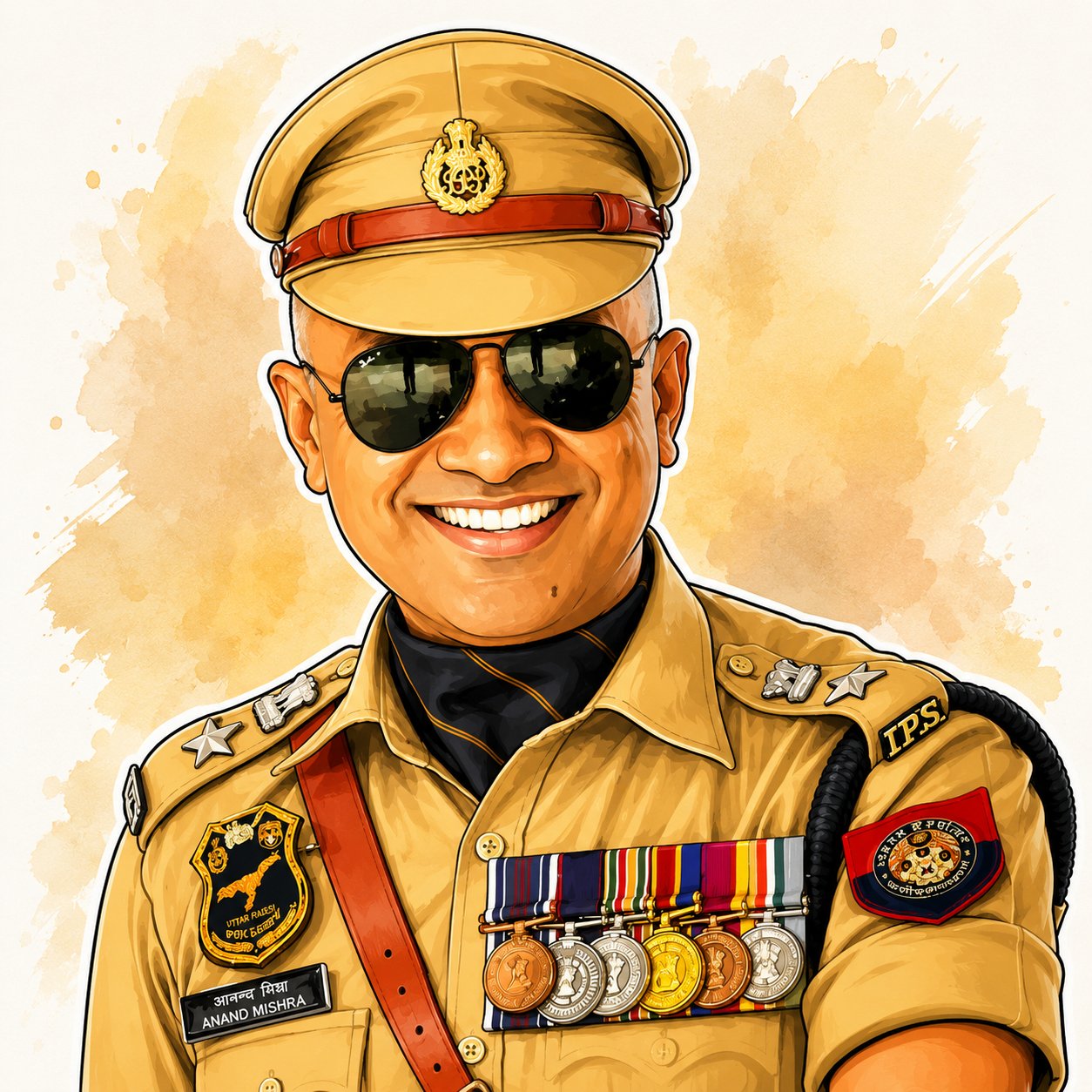
From 'Singham' to Statesman: Anand Mishra's Political Ascent
In a political landscape increasingly defined by the entry of accomplished professionals, the journey of Anand Mishra stands out. A former Indian Police Service (IPS) officer, once dubbed the 'Singham of Assam' for his uncompromising policing, Mishra successfully transitioned into a lawmaker, winning the Buxar Assembly constituency in Bihar in the 2025 elections as a member of the Bharatiya Janata Party (BJP). [1, 3]
Mishra's trajectory from a distinguished career in law enforcement to a prominent political figure reflects a broader phenomenon in Indian politics: the growing appeal of public service to individuals with diverse professional backgrounds. His story offers a compelling case study for understanding the motivations behind such shifts and the implications for India's political future, particularly concerning youth engagement and the BJP's strategic outreach. [1]
The 'Singham' Persona and Public Service
Born on June 1, 1981, Anand Mishra, a 2011-batch IPS officer of the Assam-Meghalaya cadre, earned a formidable reputation during his tenure. [1] He served as Superintendent of Police in various districts across Assam, where his people-centric, no-nonsense approach to policing garnered widespread public attention and earned him the moniker 'Singham'—a reference to the popular Bollywood super cop. [1]
Mishra was particularly known for his expertise in counter-insurgency operations, anti-corruption drives, anti-mafia measures, and anti-narcotics operations. [1] His work in dismantling insurgency in the Garo Hills region through 'Operation Hill Storm I & II' was particularly notable. [1] These efforts earned him numerous accolades, including the Police Medal for Gallantry and the Chief Minister's Medal for Outstanding Services. [1]
Despite a decorated career, Mishra resigned from the IPS in January 2024, expressing a desire to pursue a 'larger mission of political and social transformation' in his home state of Bihar. [1] This decision, while surprising to some, was rooted in a belief that direct political engagement offered a more expansive platform for societal change.
The Political Transition: From Independent to BJP
Mishra's entry into politics was not without its initial challenges. He first contested the 2024 Lok Sabha elections from Buxar as an independent candidate, but was unsuccessful. [1] He also had a brief stint heading the Youth Wing of Prashant Kishor's Jan Suraaj Party. [3]
However, a pivotal moment in his political journey came in August 2025 when he formally joined the Bharatiya Janata Party. [1] His induction, alongside other prominent figures, was seen as a strategic move by the BJP to bolster its ranks ahead of the Bihar polls. [3] Mishra himself stated that he joined the BJP to promote its ideology and not solely for an election ticket, emphasizing his commitment to strengthening the party and Bihar. [5]
The BJP's decision to field Mishra from the Buxar Assembly constituency proved to be a successful one. In the November 2025 Bihar Assembly Election, Mishra secured a decisive victory, defeating his Congress rival, Sanjay Kumar Tiwari, by a significant margin of over 28,000 votes. [3] This win was particularly noteworthy as Buxar had historically been a Congress stronghold. [2]
Youth in Politics: A New Generation's Aspiration
Anand Mishra's journey resonates deeply with the aspirations of a new generation of Indians who are increasingly considering politics as a viable career path. At 45 years old, having become an IPS officer at 22, Mishra embodies the professional competence and youthful dynamism that many believe can bring fresh perspectives and efficient governance to the political arena. [1, 5]
The allure of politics for young professionals stems from several factors. Many are driven by a genuine desire for public service and a belief that they can contribute more effectively to nation-building through direct policy-making and legislative action. The perceived limitations of bureaucratic roles, where implementation often depends on political will, can also push individuals towards electoral politics.
Mishra's public image, characterized by his informal style, passion for biking, and martial arts background, coupled with his strong track record as a police officer, likely appealed to a younger demographic. [1, 3] His ability to connect with the youth, combined with a clean public image, is seen as a significant asset for the BJP. [3]
Professionals in Politics: A Growing Trend
The entry of professionals like Anand Mishra into politics is not an isolated incident but part of a discernible trend. Across India, individuals from diverse fields—medicine, engineering, law, business, and civil services—are increasingly entering the political fray. This influx is often viewed positively, as it brings a wealth of specialized knowledge, managerial skills, and a results-oriented approach to governance. [1]
These professionals often bring a different kind of political engagement, one that prioritizes evidence-based decision-making and efficient execution. Their experiences in demanding professional environments equip them with problem-solving skills and a practical understanding of complex issues, which can be invaluable in legislative and administrative roles.
However, the transition is not always smooth. The world of politics demands a different set of skills, including public persuasion, coalition-building, and navigating complex power dynamics. While professionals bring expertise, they must also adapt to the often-unpredictable and consensus-driven nature of political life.
The BJP's Strategy: Attracting Youth and Professionals
The Bharatiya Janata Party has been particularly adept at attracting and integrating youth and professionals into its organizational structure and electoral campaigns. The induction of Anand Mishra is a testament to this strategy. The party recognizes the importance of fresh faces and diverse expertise in maintaining its dynamism and broadening its appeal. [1, 3]
The BJP's emphasis on a strong organizational network, coupled with its ideological framework, often provides a structured pathway for new entrants. For professionals like Mishra, who may have had affiliations with organizations like the Rashtriya Swayamsevak Sangh (RSS) in their formative years, the BJP offers a natural political home. [3]
By empowering young and professional candidates, the BJP aims to project an image of a forward-looking party that values merit and dynamism. This strategy not only strengthens its electoral prospects but also helps counter the perception of politics as a domain solely for career politicians or dynastic heirs. The party's ability to integrate individuals with a strong public image and a proven track record, like Mishra, enhances its credibility and reach, particularly among urban and educated voters.
Politics as a Future: Inspiring the Next Generation
Anand Mishra's success serves as a powerful inspiration for the next generation, encouraging them to consider politics as a legitimate and impactful career choice. His journey demonstrates that dedication, competence, and a commitment to public service, even if initially pursued through non-political avenues, can eventually lead to significant political influence. [1]
For many young individuals, the traditional image of politics can be off-putting, associated with corruption, inefficiency, and a lack of accountability. However, the emergence of figures like Mishra, who bring a professional ethos and a desire for tangible change, can help demystify and rebrand politics as a noble profession. [1]
The narrative of 'politics as a future' for youth is crucial for strengthening India's democratic institutions. When talented and ethical individuals choose to enter politics, it elevates the quality of public discourse, policy-making, and governance. It fosters a more representative and responsive political system that can effectively address the complex challenges facing the nation.
Conclusion
Anand Mishra's transition from a respected IPS officer to a successful legislator marks a significant moment in India's evolving political landscape. His journey underscores the increasing trend of professionals entering politics and the BJP's strategic efforts to attract such talent. More importantly, it sends a clear message to the youth that politics, far from being an inaccessible or undesirable domain, can be a powerful platform for meaningful change and a rewarding future. As India continues its journey as a vibrant democracy, the infusion of diverse professional expertise and youthful energy into its political system will be vital for its continued progress and development. [1]



