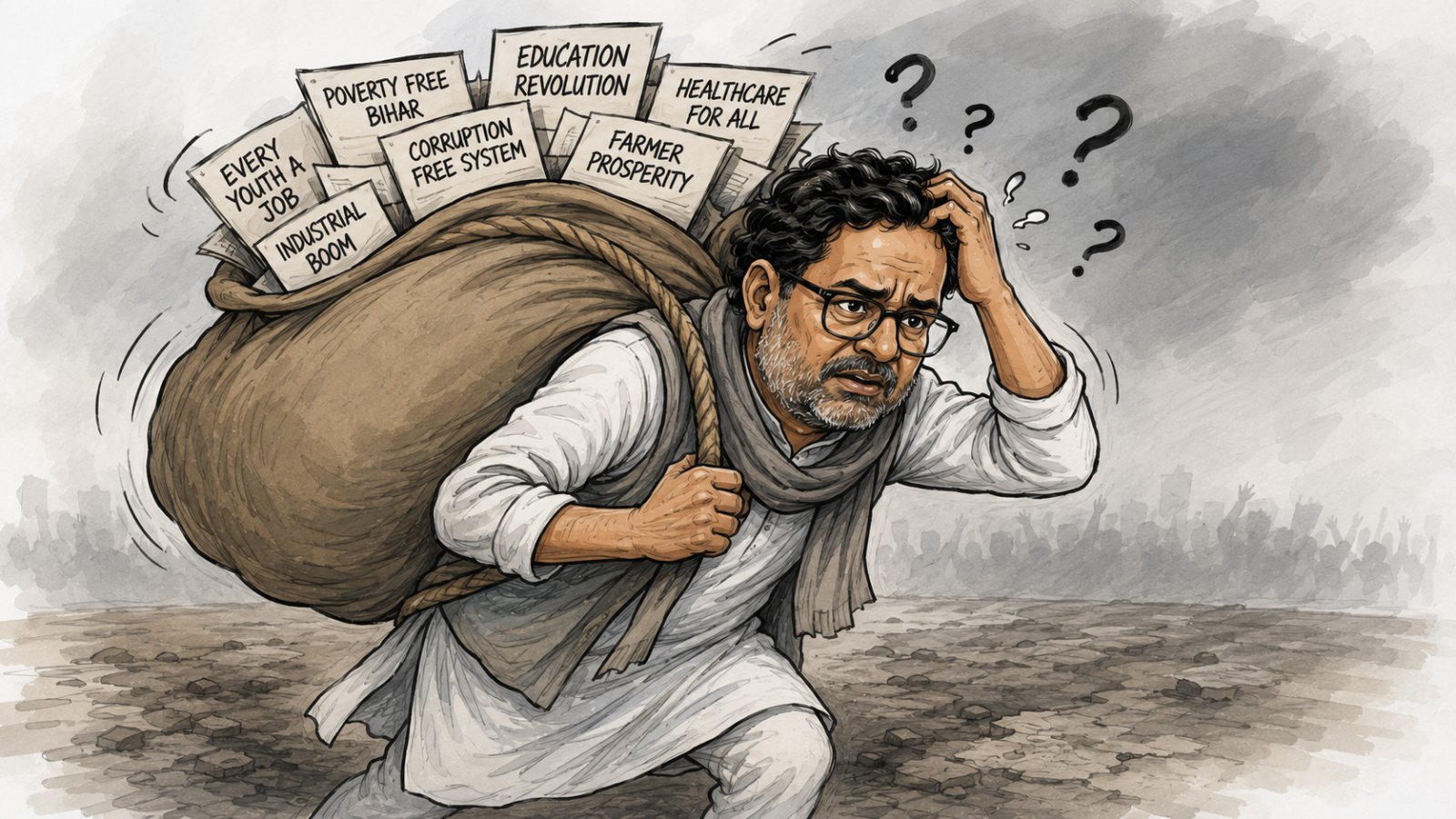
The political narrative emerging out of Bihar following the recent Bankipur assembly by-election has predictably produced a flood of dramatic commentary. Media headlines have framed Jan Suraaj founder Prashant Kishor's victory over the Bharatiya Janata Party as a transformative rupture in the state's political landscape. However, a cold, data-driven analysis of the numbers, context, and ground realities reveals a far more nuanced picture. Rather than signaling a decay in the BJP's ideological or structural dominance, Kishor's victory is primarily a reflection of localized constituency-level shortcomings, micro-urban planning fatigue, and a historically depressed voter turnout.
The Core Reality of the Bankipur By-Election
To understand the Bankipur outcome, one must look closely at the numbers behind the high-decibel campaign. The by-election, necessitated after long-time MLA and BJP leader Nitin Nabin transitioned to the Rajya Sabha, witnessed a dismal voter turnout of just 34%. In urban centers like Patna, extremely low turnout frequently distorts political outcomes by allowing localized dissatisfaction or targeted mobilization to outweigh broad party allegiances.
As BJP spokesperson Kuntal Krishna observed in his recent political commentary, the outcome at Bankipur does not point to an erosion of the BJP’s core vote base. Instead, it underscores urban constituency management issues, municipal grievances, and voter apathy in a mid-term bypoll. The BJP's committed voter cadre largely stayed home, assuming an easy victory in a traditional stronghold, while Kishor's targeted campaign successfully mobilized floating, civic-minded urban voters.
"Bankipur is a classic case of constituency planning shortcomings rather than an ideological shift away from the BJP. The core vote remains intact, but hyper-local administrative fatigue in an urban seat cannot be ignored."
Not the First Breakthrough: Understanding the Jan Suraaj Trajectory
Much of the sensationalism around Kishor’s win stems from the premise that Jan Suraaj has achieved a sudden, unprecedented breakthrough. Yet, politically astute observers know this is not the first time Jan Suraaj has gained representation in Bihar's legislature. The party already possesses a Member of the Legislative Council (MLC) in the Bihar upper house, having carved out a niche in legislative politics well before this assembly debut.
When viewed across a longer timeline, Jan Suraaj's performance over the last three years has been modest at best. In previous full-fledged electoral outings across Bihar, the party struggled to convert campaign buzz into substantial seat tallies, often losing security deposits across vast stretches of rural and semi-urban constituencies. A single by-election victory driven by high candidate visibility in an urban constituency does not instantly establish a statewide alternative.
BJP's Sustained Electoral Dominance Across States
Suggesting that the BJP’s political image has been tarnished by the Bankipur result ignores the party’s broader, proven electoral engine. Within the past year alone, the BJP-led alliance secured a decisive mandate in Bihar’s general assembly elections, while registering massive, historic victories across eastern India, including West Bengal and Assam.
A party that maintains state-level governance and commands national majorities cannot be reasonably framed as losing its footing due to a isolated urban by-poll loss. In major electoral contests, where turnout reaches normal levels, the BJP’s organizational machinery and macroeconomic, welfare-driven narrative consistently outperform fragmented opposition efforts.
The Broader Political Shift: RJD's Declining Urban Relevance
While commentators dissect the dynamics between the BJP and Jan Suraaj, a far more significant structural development in Bankipur was the total marginalization of the Rashtriya Janata Dal (RJD). The conventional opposition, led by the RJD, found itself pushed to a distant third position, polling a negligible fraction of the vote.
This outcome highlights a continuing trend in Bihar politics: traditional caste-coalition politics centered on the RJD are increasingly failing to resonate with urban and aspiring voters. As urban spaces demand better infrastructure, modern civic amenities, and employment opportunities, voters looking for alternatives to the incumbent choose independent or reformist voices over old-guard regional parties. The RJD's fade into irrelevance in urban centers like Patna remains the true long-term story of this election.
Conclusion: Localized Lessons vs. Statewide Realities
In conclusion, Prashant Kishor’s entry into the Bihar Legislative Assembly marks a notable personal milestone and provides Jan Suraaj with a visible legislative platform. However, framing the Bankipur by-election as a referendum on the BJP’s national or state leadership misreads the fundamental mechanics of urban elections.
The result is a clear message on the necessity of proactive, constituency-level planning, voter mobilization, and addressing local civic concerns in urban centers. As the BJP conducts its internal reviews and recalibrates its urban outreach, its broader political foundation in Bihar and across India remains firmly intact.