A Legislative Call to Revolutionize Burn Infrastructure
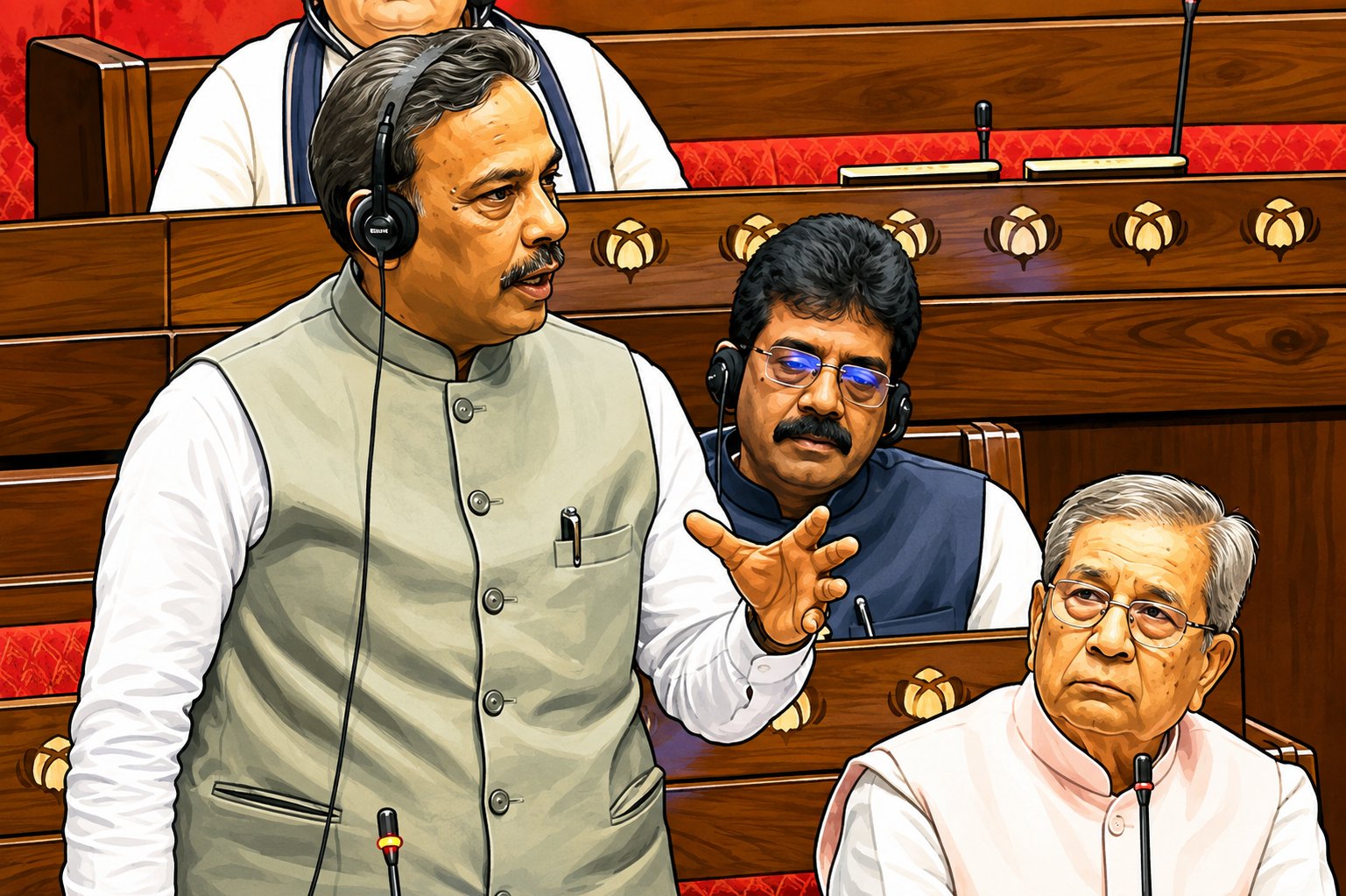
In a significant legislative intervention during the Zero Hour of the Rajya Sabha, senior Bharatiya Janata Party leader and Rajya Sabha Member of Parliament Vinod Tawde urged the Union Government to create a centralized, nationwide skin retrieval and banking network. Addressing the Upper House of Parliament, Tawde highlighted a crucial yet historically neglected dimension of emergency healthcare in India: the acute shortage of donor skin required for life-saving burn treatments. Drawing attention to existing legislative provisions under the Transplantation of Human Organs and Tissues Act of 1994, Tawde emphasized that while India has made commendable progress in solid organ donation through the National Organ and Tissue Transplant Organisation, tissue banking—specifically skin banking—remains severely fragmented and underutilized.
Tawde’s initiative marks a strategic shift in his parliamentary agenda, showcasing an active focus on public health reform and legislative oversight alongside his organizational responsibilities as BJP National General Secretary. By raising the issue on the floor of the House, Tawde pointed out that thousands of burn victims across the country succumb annually not to the primary physical trauma of burn injuries, but to secondary complications such as severe fluid loss and fatal septicemia. Donated cadaver skin acts as an irreplaceable, natural biological dressing that covers exposed nerve endings, reduces unbearable pain, preserves internal body fluids, and shields open wounds from bacterial infections until permanent skin grafting can be performed using the patient’s own tissue.
The Medical Imperative: Understanding Cadaveric Skin Donation
To fully grasp the urgency of Tawde’s parliamentary plea, it is essential to understand the clinical mechanics of burn management. In severe burn cases where more than forty percent of the Total Body Surface Area is compromised, a patient's body loses its primary defense mechanism. The human skin, being the largest organ, functions as a barrier against microbial invasion and thermoregulatory loss. When this barrier is destroyed, immediate coverage is vital for survival. While synthetic and porcine dressings exist in advanced medical markets, clinical consensus globally confirms that human cadaver skin—known as an allograft—remains the gold standard in temporary burn wound cover.
"Donated skin serves as a temporary biological shield for critical burn patients. It prevents rapid dehydration and deadly bacterial sepsis during the most vulnerable window of treatment. Establishing an integrated national retrieval network is not merely an administrative upgrade; it is a direct life-saving necessity for thousands of citizens every year." — Vinod Tawde, Member of Parliament
Medical facts presented during the parliamentary session underscored that skin retrieval is a non-invasive, highly efficient process. Cadaveric skin must be harvested within six hours of death. Specialized surgical technicians retrieve only the outermost epidermal and superficial dermal layers—measuring merely 0.6 to 0.8 millimeters in thickness—typically from hidden areas of the lower limbs and back. Contrary to widespread social misconceptions, the procedure does not alter the physical appearance of the deceased person or cause visible disfigurement, allowing families to perform traditional funeral rites with dignity. Once harvested and medically processed using high-concentration glycerol solutions, preserved donor skin can be stored in accredited skin banks for up to five years.
Mapping the Divide: Regional Imbalances and Logistics Deficits
Despite the high efficacy and prolonged shelf-life of processed skin, India’s current skin banking ecosystem suffers from acute geographic and structural disparities. A majority of the country's operational skin banks are heavily concentrated in major metropolitan hubs such as Mumbai, Delhi, Bengaluru, Chennai, and Hyderabad. Primary healthcare centers, district hospitals, and rural medical colleges—where a substantial percentage of accidental burn injuries are initially presented—lack basic skin banking facilities, trained retrieval teams, and cold-chain storage units.
Healthcare analysts note that industrial accidents, household fire mishaps, and agricultural chemical burns disproportionately impact socio-economically vulnerable populations in tier-2, tier-3, and rural regions. When severe burn victims are brought to regional district hospitals, clinicians are often forced to rely on rudimentary dressings, leading to elevated mortality rates that could otherwise be mitigated through timely allograft application. By proposing a nationwide skin retrieval network integrated into NOTTO’s framework, Tawde’s proposal aims to bridge this rural-urban medical divide through standardized protocols and rapid transportation infrastructure.
Building the Framework: Integration Under NOTTO
The core of Tawde’s policy advocacy centers on leveraging existing institutional mechanisms to build a seamless supply chain for tissue banking. The National Organ and Tissue Transplant Organisation, which operates under the Directorate General of Health Services in the Ministry of Health and Family Welfare, already manages regional registries for heart, kidney, liver, and cornea transplants. Expanding NOTTO’s operational footprint to mandate a dedicated skin retrieval vertical would streamline donation tracking, allocation, and cross-state distribution.
Key recommendations outlined in the parliamentary submission include:
1. Standardized Cold-Chain Networks: Establishing temperature-controlled logistical corridors capable of transporting harvested tissue from district retrieval units to regional banking facilities within the strict six-hour post-mortem window.
2. Capacity Building and Certification: Training paramedical staff, emergency medical technicians, and mortuary personnel in standardized skin harvesting techniques to eliminate the dependency on specialized plastic surgeons for initial retrieval.
3. Digitized National Registry: Integrating real-time inventory tracking for donor skin availability across all government and private skin banks on NOTTO’s central digital portal.
4. Universal Donor Card Integration: Explicitly incorporating skin and tissue donation consent options into national organ pledge drives and digital health identity frameworks.
Overcoming Socio-Cultural Myths and Misinformation
Public health experts agree that technological and logistical solutions form only half the equation; the greater challenge lies in dismantling pervasive socio-cultural taboos surrounding cadaveric tissue donation. While eye donation has achieved widespread public acceptance across urban and rural India following decades of sustained awareness campaigns, skin donation continues to face severe cultural resistance due to widespread misinformation regarding bodily disfigurement post-mortem.
Addressing these concerns, Tawde stressed that public communication campaigns spearheaded by the Central and State health ministries must explicitly address these misconceptions. Informing the public that only microscopic surface layers are harvested without causing bleeding or visible alteration is crucial to building community trust. Civil society organizations, non-governmental groups, and community leaders must be mobilized to promote tissue donation with the same moral urgency accord to solid organ donation.
Expert Perspectives: Challenges and Implementation Roadmaps
While Tawde’s proposal has garnered widespread support from the medical community and burn care specialists, public policy experts emphasize the operational challenges that must be addressed to turn legislative vision into clinical reality. Health system analysts point out that healthcare remains a state subject under the Indian Constitution, requiring close federal coordination between the Union Ministry of Health and state health departments to enforce uniform quality standards across public and private skin banks.
Furthermore, maintaining strict microbiological quality control and viral screening standards is paramount to prevent the transmission of infectious pathogens through donor tissue. Medical administrators advocate for stringent licensing frameworks overseen by the Central Drugs Standard Control Organisation to ensure that all processing facilities adhere to international bio-safety guidelines. Public investment in dedicated burn units within state medical colleges must accompany the expansion of skin banks to ensure that retrieved tissue is utilized within optimized clinical settings.
A Transforming Role in National Governance
Vinod Tawde’s active engagement with complex healthcare policy reflects a broader evolution in his public service profile. Transitioning from high-profile party organization duties into proactive legislative intervention in the Rajya Sabha, Tawde’s focus on health infrastructure underscores a commitment to constructive parliamentarianism. By taking up systemic medical gaps that directly affect public welfare, Tawde aligns himself with a growing cohort of lawmakers focused on evidence-based policy formulation and legislative oversight.
As Parliament continues its deliberation on national health priorities, Tawde’s call for a comprehensive National Skin Retrieval Network offers a pragmatic roadmap for saving thousands of lives. If implemented effectively under NOTTO, India could establish a transformative model for tissue banking in the developing world—turning a silent public health crisis into a story of legislative responsiveness and medical resilience.



