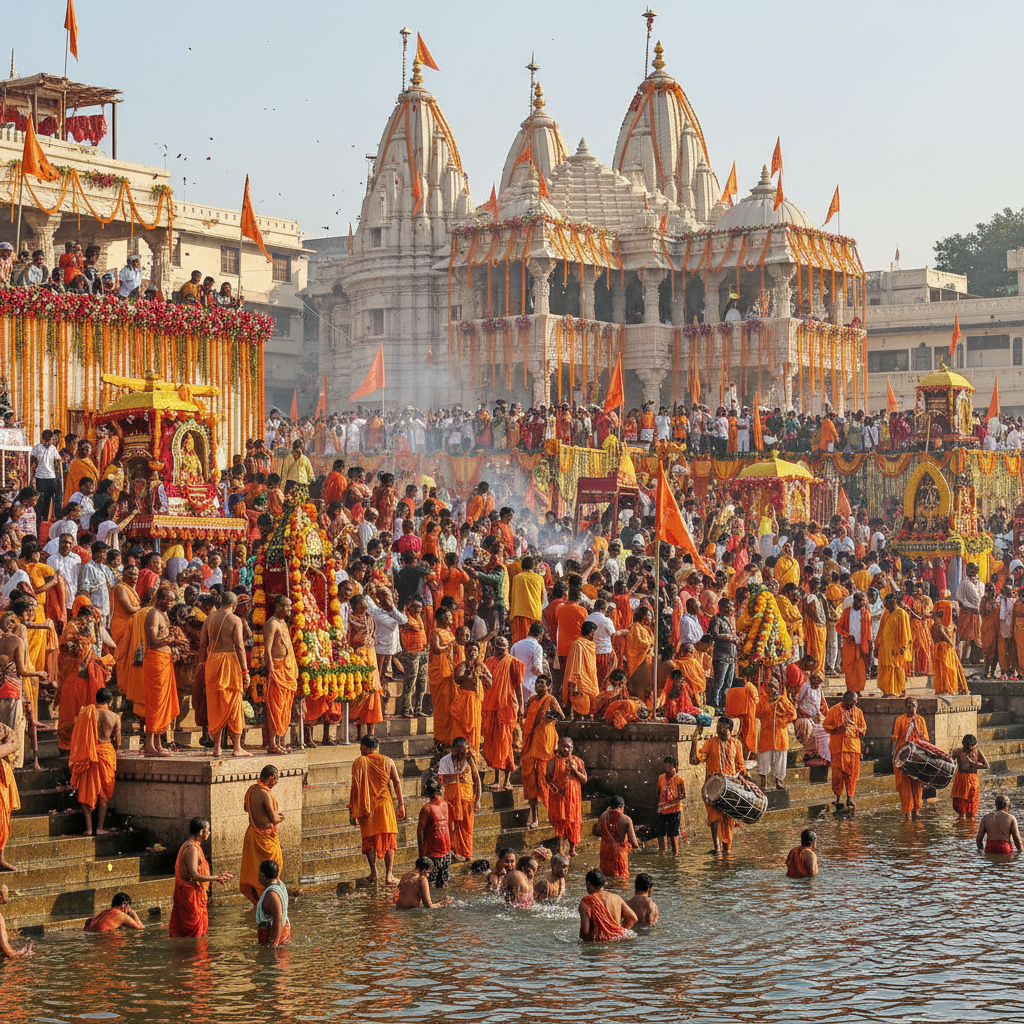
The Uttar Pradesh government has declared an additional day of holiday for Ram Navami, a significant Hindu festival celebrating the birth of Lord Rama. This extension, according to official sources, is intended to ease the expected surge of devotees at temples throughout the state. The move reflects the government's efforts to ensure the smooth and safe observance of religious festivals, particularly in light of increasing participation and potential logistical challenges.
Ram Navami holds immense cultural and religious significance in India, especially in Uttar Pradesh, considered the birthplace of Lord Rama. Ayodhya, in particular, draws massive crowds during this period, with devotees participating in prayers, processions, and other religious activities. The festival typically involves fasting, chanting of prayers, and the re-enactment of scenes from the Ramayana, the epic tale of Lord Rama's life and deeds. The decision to extend the holiday acknowledges the importance of the festival and the desire of many to participate in the celebrations.
KEY FACTS
- The Uttar Pradesh government has declared an additional holiday for Ram Navami.
- The decision aims to manage the expected rush of devotees at temples.
- Ram Navami celebrates the birth of Lord Rama.
- Ayodhya is a major center of Ram Navami celebrations.
- The holiday extension facilitates participation in religious activities.
The extension of the holiday is not without precedent. Governments often declare additional holidays or make special arrangements during major festivals to accommodate the needs of the public and ensure public safety. Such measures are particularly crucial when large gatherings are anticipated, as they can help prevent overcrowding and facilitate the smooth flow of people. The Uttar Pradesh government's decision can be seen as a proactive step to address potential challenges associated with the increased number of devotees expected to visit temples during Ram Navami.
The logistical challenges associated with managing large crowds during religious festivals are considerable. These include ensuring adequate security, providing transportation and accommodation, and maintaining sanitation and hygiene. The government typically works in coordination with temple authorities and local communities to address these challenges and ensure a safe and comfortable experience for devotees. The additional holiday is expected to allow for better planning and resource allocation to meet the increased demand.
The impact of this decision extends beyond the immediate celebrations of Ram Navami. It also reflects the government's broader approach to religious and cultural affairs. The recognition and support of religious festivals are seen as important aspects of preserving cultural heritage and promoting social harmony. By facilitating the smooth observance of Ram Navami, the government aims to foster a sense of community and shared identity among the people of Uttar Pradesh.
The declaration of an additional holiday may also have economic implications. The increased number of people traveling and participating in religious activities is likely to boost local businesses, including hotels, restaurants, and transportation services. The sale of religious items and souvenirs is also expected to increase, contributing to the local economy. However, it is important to note that the economic impact of the holiday extension may vary depending on factors such as the duration of the holiday and the number of people who choose to travel and participate in the celebrations.
By The Numbers
The decision to extend the Ram Navami holiday has been met with mixed reactions. While many have welcomed the move as a recognition of the festival's importance and an opportunity to participate in religious activities, others have raised concerns about the potential disruption to work and business. Some have also questioned the need for an additional holiday, arguing that the existing holiday is sufficient. However, the government has defended its decision, citing the need to manage the expected surge of devotees and ensure public safety.
The management of religious festivals in India is a complex and sensitive issue. The country is home to a diverse range of religions and cultures, each with its own unique festivals and traditions. The government has a responsibility to ensure that all religious festivals are observed peacefully and respectfully, without causing undue disruption to public life. This requires careful planning, coordination, and communication with religious leaders and communities.
The Uttar Pradesh government's decision to extend the Ram Navami holiday is a reflection of the importance of religious festivals in Indian society and the challenges associated with managing large crowds during these events. The move is intended to facilitate the smooth and safe observance of Ram Navami and promote a sense of community and shared identity among the people of Uttar Pradesh. The success of this initiative will depend on effective planning, coordination, and communication between the government, temple authorities, and local communities.
The historical context of Ram Navami celebrations in Uttar Pradesh, particularly in Ayodhya, is also relevant. Ayodhya has long been a focal point of religious and political significance, and the Ram Navami festival is an important part of the city's cultural identity. The construction of the Ram Temple in Ayodhya has further amplified the significance of the festival, and an even larger influx of devotees is anticipated in the coming years. The government's decision to extend the holiday can be seen as a response to this evolving landscape and an effort to accommodate the growing number of pilgrims visiting Ayodhya.
The extended holiday also presents an opportunity for the state government to showcase its commitment to religious tourism. Uttar Pradesh has a rich cultural and religious heritage, and the government has been actively promoting tourism to attract visitors from across India and the world. The Ram Navami festival is a major draw for tourists, and the extended holiday is expected to further boost tourism revenue and create employment opportunities in the hospitality sector.
Looking ahead, the Uttar Pradesh government is likely to continue to play an active role in managing religious festivals and promoting religious tourism. This will require ongoing investment in infrastructure, security, and sanitation, as well as effective communication and coordination with religious leaders and communities. The government's approach to religious affairs will continue to be a subject of public debate and scrutiny, and it will be important to strike a balance between respecting religious traditions and ensuring the well-being of all citizens.
"The Uttar Pradesh government has declared an additional holiday for Ram Navami, extending the break to two days. This decision aims to ease the expected rush of devotees at temples." — NDTV
The long-term implications of this decision remain to be seen. However, it is clear that the Uttar Pradesh government is taking a proactive approach to managing religious festivals and promoting religious tourism. The success of this approach will depend on a variety of factors, including the effectiveness of government policies, the cooperation of religious leaders and communities, and the overall economic and social climate in the state. The extended Ram Navami holiday is just one example of the government's efforts to address these challenges and opportunities.
As per government data, the number of pilgrims visiting religious sites in Uttar Pradesh has been steadily increasing in recent years. This trend is expected to continue in the future, driven by factors such as rising incomes, improved transportation infrastructure, and increased awareness of the state's rich cultural and religious heritage. The government is committed to providing a safe and welcoming environment for all pilgrims and tourists, and the extended Ram Navami holiday is a step in that direction. The focus remains on ensuring a harmonious and well-managed celebration for all participants.