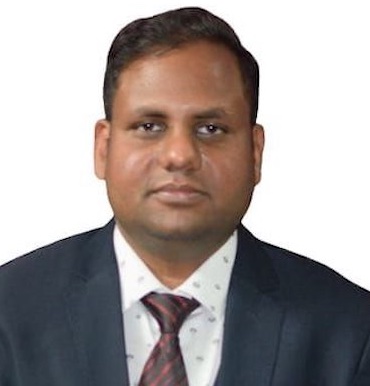
Vinod Tawde: The Silent Architect of BJP
From the streets of Girangaon to the corridors of Parliament — the story of a karyakarta who built victories in silence.
In the high-decibel world of Indian politics, where leaders jostle for television cameras and social media spotlight, Vinod Tawde has carved a rare distinction for himself — that of a man who lets results do the talking. As one of the most trusted National General Secretaries of the Bharatiya Janata Party, Tawde has quietly emerged as the party's go-to election strategist, organisational troubleshooter, and a bridge between the old guard and the new generation. His recent elevation to the Rajya Sabha, after engineering a historic landslide in Bihar, is not just a personal milestone — it is the BJP's acknowledgement that silent dedication eventually finds its reward.
The Karyakarta's Beginning
Born on 20 July 1963 in the working-class Girangaon neighbourhood of Mumbai, Vinod Sridhar Tawde's entry into public life was not through inheritance or privilege. It was through conviction. As a young man, he plunged into student politics with the Akhil Bharatiya Vidyarthi Parishad (ABVP), leading student movements at both the Mumbai and national levels. Those early years of grassroots organising — distributing pamphlets, mobilising students, and building shakhas — would shape his political DNA for decades to come.
His rise within the BJP was methodical. By 1995, he was named Maharashtra General Secretary of the party, a role he held across multiple stints until 2011. In 1999, he became the President of the Mumbai Metropolitan Unit of the BJP — notably the youngest person to hold that position at the time. His understanding of Mumbai's complex social fabric, its chawls and corporate towers alike, made him an invaluable asset to the party in India's financial capital.
The Maharashtra Years: Minister and Opposition Leader
Tawde's legislative career saw him serve multiple terms as a Member of the Maharashtra Legislative Council (MLC). When the opposition needed a sharp and articulate voice in the Council, the party turned to him — making him the Leader of Opposition in the Maharashtra Legislative Council in 2011.
His finest administrative hour came between 2014 and 2019, when Chief Minister Devendra Fadnavis entrusted him with a portfolio that was as sprawling as it was consequential: School Education, Higher and Technical Education, Sports and Youth Welfare, Cultural Affairs, Minority Development, and Marathi Bhasha. In that period, Tawde pushed for educational reform, championed the cause of Marathi language preservation, and worked to bring sports infrastructure to underserved parts of the state. He also won a seat from the Borivali Assembly constituency in 2014, marking his entry into the Legislative Assembly.
The 2019 Maharashtra Assembly elections, however, brought a twist — Tawde was not given a ticket. For many political careers, such a moment would spell the end. For Tawde, it became a turning point.
Reinvention at the National Level
Rather than sulking in the political wilderness, Tawde was inducted into the BJP Central Team in 2020. The party's top leadership, recognising his organisational acumen and unflinching loyalty, assigned him responsibilities that would test his mettle far beyond the familiar terrain of Maharashtra. He was given charge of states like Haryana and Bihar — regions with vastly different political cultures, caste equations, and electoral dynamics.
It was in this national role that Tawde truly came into his own. He demonstrated a quality rare among Indian politicians: the ability to listen before he speaks, to understand local dynamics before imposing strategies, and to build alliances on the ground rather than in air-conditioned conference rooms. His colleagues and party workers frequently describe him as someone who is accessible at all hours, who remembers the names of booth-level workers, and who follows up on the smallest organisational detail.
The Bihar Masterstroke: 2025
If one event cemented Vinod Tawde's reputation as the BJP's silent architect, it was the 2025 Bihar Assembly Election. Appointed as the party's Bihar in-charge after Nitish Kumar's brief exit from the NDA in 2022, Tawde was handed what many considered a near-impossible brief — rebuild trust, manage a complex coalition, and deliver a decisive mandate in one of India's most politically volatile states.
The results spoke for themselves. The NDA swept Bihar with a staggering 202 out of 243 seats. The BJP emerged as the single-largest party for the first time in the state's history with 89 seats out of the 101 it contested. Nitish Kumar's JD(U) won 85, and Chirag Paswan's LJP(RV) claimed 19. The opposition Mahagathbandhan, led by Tejashwi Yadav's RJD, was reduced to a mere 35 seats — a catastrophic fall from its 2020 tally of 75.
Behind these numbers was a meticulously crafted strategy attributed in large part to Tawde's ground-level planning. Working closely with Union Ministers Amit Shah and Dharmendra Pradhan, Tawde orchestrated what observers called a masterclass in "social engineering" — ensuring the right candidates in the right constituencies, managing alliance seat-sharing without public acrimony, and mobilising women and youth voters who turned out in record numbers. Female voter turnout in Bihar touched 71.6 percent, far exceeding the male turnout of 62.8 percent — a testament to the BJP's targeted outreach under Tawde's supervision.
Speaking after the results, Tawde noted that the people of Bihar had voted beyond caste considerations, keeping Prime Minister Modi's vision of development at the centre. It was a quiet assertion of the philosophy he had brought to the campaign — transcend old divides, speak the language of aspiration, and build an organisational machinery so robust that victory becomes inevitable.
Mission Keralam: The Next Frontier
Even before the celebrations of Bihar had faded, the BJP had already identified its next challenge — Kerala. In January 2026, newly elected BJP National President Nitin Nabin appointed Vinod Tawde as the election in-charge for the upcoming Kerala Assembly Elections, with Union Minister Shobha Karandlaje as co-incharge.
Kerala is widely regarded as the BJP's final frontier in Indian politics — a state where the party has historically struggled to break through the entrenched LDF-UDF binary. For Tawde, Kerala represents both the ultimate test of his organisational philosophy and the opportunity to replicate the Bihar playbook in a fundamentally different political environment. His approach is expected to combine grassroots Sangh Parivar networks, strategic outreach to minority communities, a sharp social media campaign targeting Kerala's tech-savvy young voters, and alliance building with local partners.
The stakes could not be higher. A breakthrough in Kerala would not only expand the BJP's geographical footprint but also validate the argument that disciplined organisation and patient ground-level work — Tawde's hallmarks — can unlock even the most resistant electoral markets.
Rajya Sabha: A Karyakarta Enters Parliament
In March 2026, the BJP nominated Vinod Tawde as its Rajya Sabha candidate from Maharashtra. On 10 March 2026, he was declared elected unopposed — marking his first entry into the Upper House of Parliament.
The nomination was widely viewed as the party's recognition of his extraordinary contributions as a behind-the-scenes strategist. Expressing his gratitude on social media, Tawde wrote that he remained committed to serving the national interest under the guidance of Prime Minister Modi and BJP National President Nitin Nabin. He also thanked Maharashtra Chief Minister Devendra Fadnavis and State President Ravindra Chavan for the nomination.
From ABVP worker to Rajya Sabha member — Tawde's journey is a testament to the BJP's internal culture of rewarding organisational capability and sustained dedication. In a party that fields over a hundred million members, climbing to this position without a dynastic surname or a personal media empire is no small feat.
Leadership Style: The Organisational Man
What sets Vinod Tawde apart from many of his contemporaries is his approach to leadership. He is not a mass orator in the mould of Modi or Shah. He is not a policy intellectual who writes columns and appears on debate panels. Instead, he is an organisation man — someone who believes that elections are won not in television studios but in the lanes and bylanes where booth workers knock on doors.
His leadership philosophy can be distilled into a few principles. First, he believes deeply in sangathan — the idea that a well-oiled organisational machine is the backbone of any political movement. He invests heavily in training party workers, conducting review meetings, and building feedback loops between the ground and the top leadership. Second, he has been an early champion of the BJP's social media push. Understanding that political mobilisation in 21st-century India increasingly happens on WhatsApp groups, YouTube channels, and Instagram reels, Tawde has pushed for a more digitally engaged party apparatus — especially among the youth. Third, he believes in inclusive outreach. Whether in Bihar or Kerala, his strategy has been to go beyond the party's traditional base and speak to communities that the BJP has historically found difficult to reach.
The Youth Factor
One of Tawde's most significant contributions has been his focus on youth engagement. Bihar, India's youngest state by median age, was a proving ground for this approach. The BJP's campaign under his supervision specifically targeted first-time voters, emphasising themes of employment, aspiration, and a break from the old politics of caste patronage. Prime Minister Modi himself acknowledged this in his post-victory address, noting that the youth of Bihar had rejected divisive politics and embraced the language of development.
Tawde's own career, which began in student activism with ABVP, gives him a natural affinity for youth politics. He has consistently advocated for greater representation of young faces in party structures and has pushed for training programmes that equip young workers with organisational and digital skills.
The Road Ahead
As Vinod Tawde enters the Rajya Sabha and simultaneously steers the BJP's Kerala campaign, he stands at a unique intersection of parliamentary responsibility and organisational warfare. Few leaders in the BJP today juggle both roles with as much ease.
His story is, in many ways, the story of the BJP itself — a party that has grown from the margins to the centre of Indian politics through disciplined organisation, ideological commitment, and the quiet labour of countless karyakartas who build the party one booth at a time. Vinod Tawde may not be the loudest voice in the room, but in the architecture of the BJP's electoral dominance, few have laid as many bricks.
The silent architect continues to build.