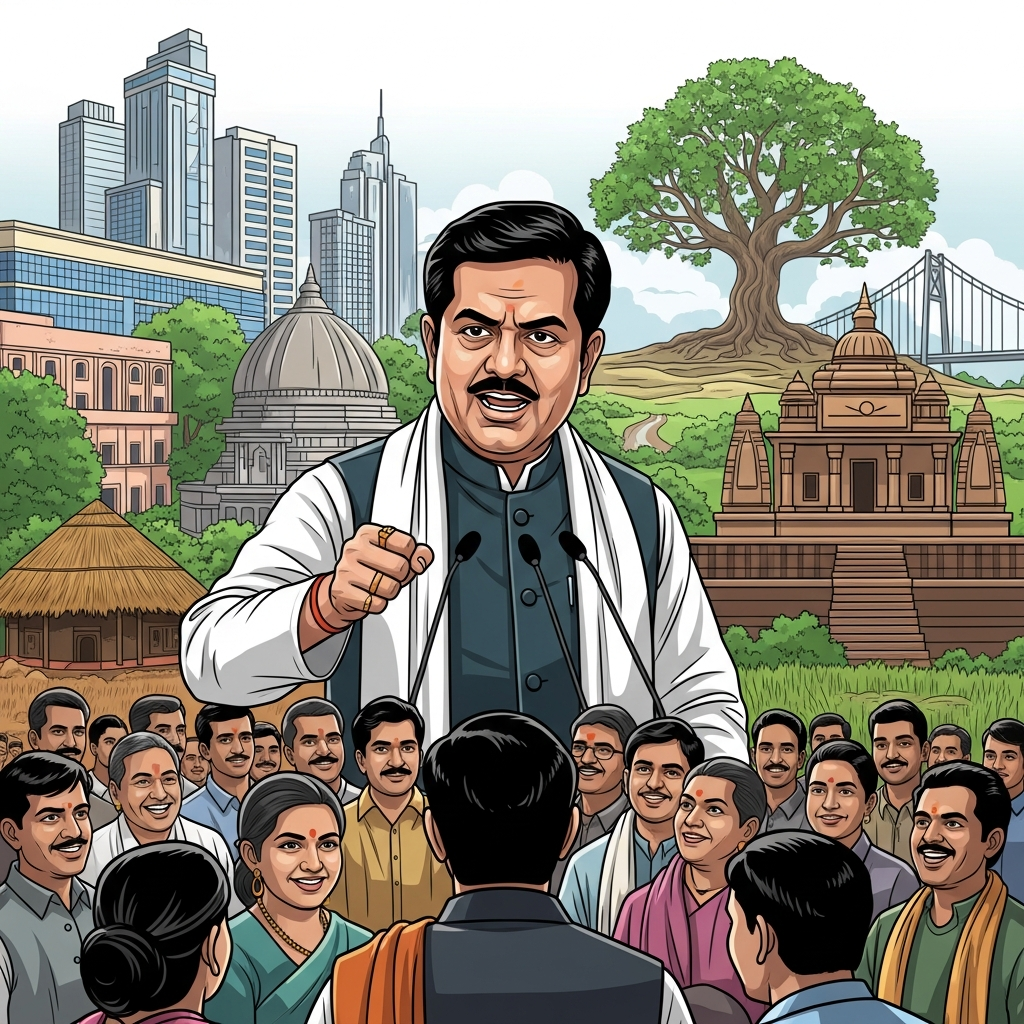
Samrat Choudhary: A New Chapter for Bihar's Governance?
The political landscape of Bihar has undergone a significant shift with Samrat Choudhary assuming the mantle of Chief Minister in early March 2026. Following a period of political instability and shifting alliances, Choudhary's appointment marks a new chapter for the state, one filled with both promise and potential pitfalls. This article delves into the context surrounding his rise, the key challenges he faces, and the diverse reactions to his leadership.
Choudhary's political journey has been marked by a steady rise through the ranks. A prominent figure within the Bharatiya Janata Party (BJP) in Bihar, he has served in various ministerial capacities in previous coalition governments. His appointment as Chief Minister comes after a period of intense political maneuvering, triggered by the withdrawal of a key coalition partner from the ruling alliance. The BJP, seizing the opportunity, successfully negotiated a new alliance, paving the way for Choudhary's leadership.
The immediate reaction to Choudhary's appointment has been varied. Supporters within the BJP and its allied parties have hailed it as a sign of stability and a chance for renewed focus on development. They point to his track record as a capable administrator and his commitment to good governance as reasons for optimism. However, opposition parties have voiced concerns, questioning the legitimacy of the new coalition and raising doubts about its ability to deliver on its promises. They accuse the BJP of opportunistic politics and express fears about the potential impact on social harmony and inclusive growth.
One of the most pressing challenges facing the new Chief Minister is addressing the state's persistent socio-economic issues. Bihar continues to grapple with high levels of poverty, unemployment, and illiteracy. While previous governments have implemented various initiatives to tackle these problems, progress has been slow and uneven. Choudhary's government will need to adopt a comprehensive and multi-pronged approach, focusing on job creation, skill development, and improved access to education and healthcare. Investment in infrastructure, particularly in rural areas, will also be crucial for boosting economic growth and improving the quality of life for ordinary citizens.
Another key challenge lies in maintaining social harmony and ensuring inclusive growth. Bihar is a diverse state with a complex social fabric. It is essential that the new government adopts policies that are fair and equitable to all sections of society, regardless of caste, religion, or social background. This requires a commitment to transparency, accountability, and participatory governance. The government must also actively address issues of social discrimination and inequality, promoting a culture of tolerance and mutual respect.
The agricultural sector, the backbone of Bihar's economy, requires urgent attention. Farmers in the state face numerous challenges, including inadequate irrigation facilities, lack of access to credit, and vulnerability to climate change. The government needs to invest in modernizing agriculture, promoting sustainable farming practices, and providing farmers with the necessary support to improve their livelihoods. This includes strengthening agricultural extension services, promoting crop diversification, and ensuring fair prices for agricultural produce.
Furthermore, maintaining law and order remains a significant concern. Bihar has historically struggled with high crime rates and a weak law enforcement system. The new government must prioritize strengthening the police force, improving the criminal justice system, and tackling organized crime. This requires investing in training and equipment for law enforcement personnel, promoting community policing initiatives, and ensuring swift and impartial justice.
The political dynamics within the ruling coalition will also play a crucial role in determining the success of Choudhary's government. Maintaining unity and cohesion among the various coalition partners will be essential for effective governance. This requires a spirit of compromise, mutual respect, and a shared commitment to the common good. The Chief Minister will need to skillfully navigate the diverse interests and priorities of the different parties, ensuring that all voices are heard and that decisions are made in the best interests of the state.
The opposition parties, while critical of the new government, also have a responsibility to play a constructive role. They should hold the government accountable for its actions, but also offer constructive criticism and suggestions for improvement. A healthy and vibrant opposition is essential for ensuring good governance and promoting democratic values. It is important that the opposition parties focus on issues of public concern and engage in responsible and constructive debate, rather than resorting to disruptive tactics or personal attacks.
Looking ahead, the success of Samrat Choudhary's government will depend on its ability to address the state's complex challenges, maintain social harmony, and foster inclusive growth. It will also require strong leadership, effective governance, and a commitment to transparency and accountability. The people of Bihar have high expectations, and it is up to the new government to deliver on its promises and build a brighter future for the state.
The coming months will be a crucial test for Choudhary's leadership. His ability to navigate the complex political landscape, address the state's pressing socio-economic issues, and maintain social harmony will determine whether his tenure as Chief Minister marks a period of progress and prosperity for Bihar. The eyes of the nation are on Bihar, as it embarks on this new chapter in its political history.
One area where Choudhary's administration could make a significant impact is in leveraging technology for governance. Implementing e-governance initiatives can improve efficiency, transparency, and accountability in government operations. This includes digitizing government records, providing online access to government services, and using data analytics to improve policy-making. Furthermore, promoting digital literacy among citizens can empower them to participate more effectively in the democratic process and access information and opportunities.
Another important aspect is fostering entrepreneurship and innovation. Bihar has a large pool of young and talented individuals, but many lack the opportunities to pursue their entrepreneurial dreams. The government can play a crucial role in creating a supportive ecosystem for startups and small businesses, providing access to funding, mentorship, and infrastructure. This can help to create jobs, boost economic growth, and promote innovation in various sectors.
Environmental sustainability is also a critical issue that requires attention. Bihar is vulnerable to climate change, and the government needs to adopt policies that promote sustainable development and protect the environment. This includes promoting renewable energy sources, conserving water resources, and managing waste effectively. Furthermore, raising awareness about environmental issues and encouraging citizens to adopt eco-friendly practices is essential for creating a sustainable future.
The education sector requires continued investment and reform. While progress has been made in improving enrollment rates, the quality of education remains a concern. The government needs to focus on improving teacher training, upgrading school infrastructure, and providing students with access to quality learning materials. Furthermore, promoting vocational training and skill development can help to equip young people with the skills they need to succeed in the job market.
Healthcare is another area that requires urgent attention. Bihar's healthcare system is overburdened and under-resourced. The government needs to invest in improving healthcare infrastructure, increasing the number of doctors and nurses, and providing access to affordable healthcare services for all citizens. Furthermore, promoting preventive healthcare measures and raising awareness about health issues can help to improve the overall health and well-being of the population.
Ultimately, the success of Samrat Choudhary's government will depend on its ability to work in partnership with all stakeholders, including the opposition parties, civil society organizations, and the people of Bihar. By fostering a culture of collaboration and dialogue, the government can build consensus on key issues and create a shared vision for the future of the state. The challenges are significant, but the opportunities are even greater. With strong leadership, effective governance, and a commitment to the common good, Bihar can overcome its challenges and achieve its full potential.
The next five years will be defining for Bihar. Whether Samrat Choudhary can deliver on the promises and expectations remains to be seen. His actions, policies, and leadership will be under constant scrutiny, not just by the people of Bihar, but by the entire nation. The future of Bihar, and perhaps a template for other states, rests on his shoulders.