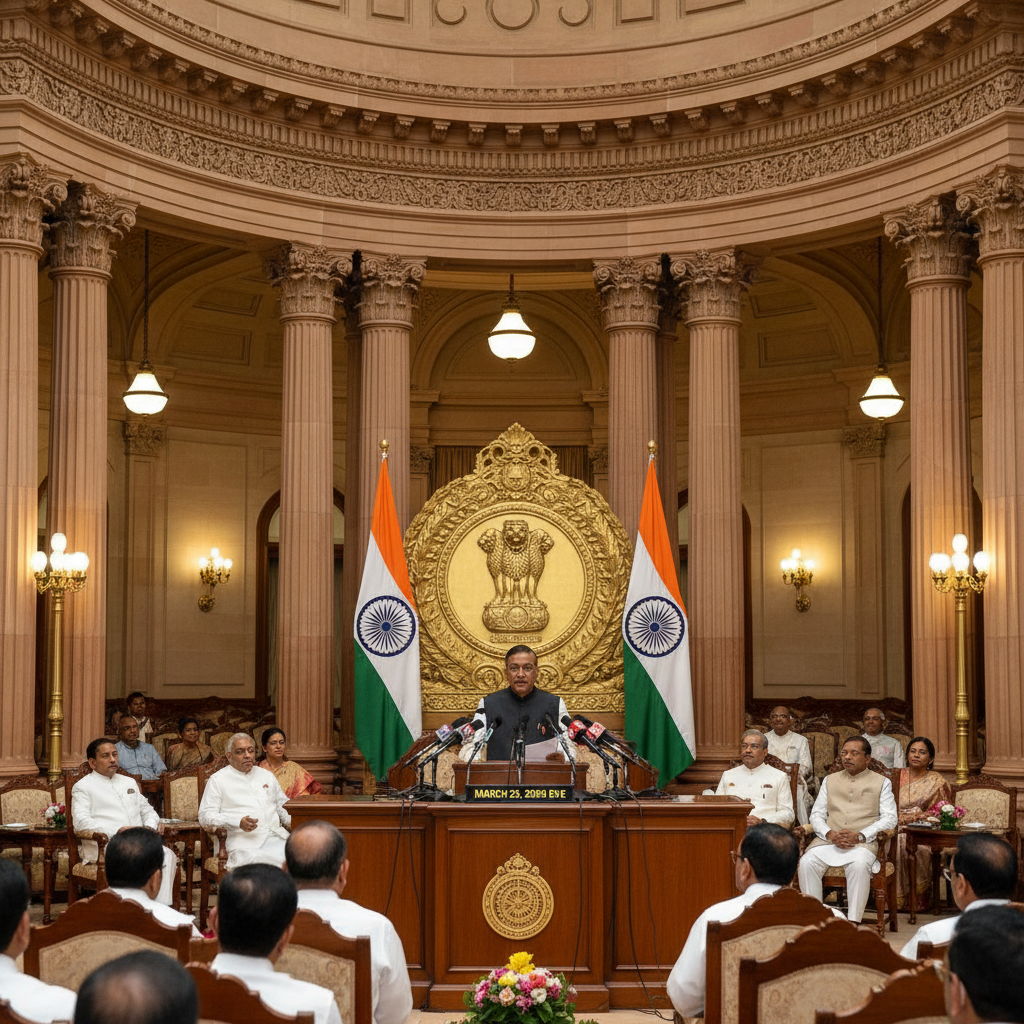
The President of India extended warm greetings to citizens across the nation on the eve of Ram Navami, emphasizing the enduring values embodied by Lord Rama as cornerstones for building a prosperous and harmonious society. According to the Press Information Bureau, the Presidential message highlighted righteousness, compassion, and service as fundamental virtues that continue to guide the nation's moral compass.
Ram Navami, commemorating the birth of Lord Rama, will be observed on March 25, 2026, marking one of the most significant festivals in the Hindu calendar. The President's message underscored the timeless relevance of Lord Rama's teachings in contemporary India, encouraging citizens to embrace these principles in their daily lives and contribute to the nation's collective progress.
KEY FACTS
- Ram Navami will be observed on March 25, 2026
- Presidential message emphasizes three core values: righteousness, compassion, and service
- Festival commemorates the birth of Lord Rama, central figure in Hindu tradition
- Message issued through Press Information Bureau to reach all citizens
- Encourages following the path of morality and justice for national harmony
The Presidential address comes at a time when India continues to navigate complex socio-economic challenges while maintaining its cultural heritage and democratic values. The emphasis on righteousness and justice reflects the constitutional principles that have guided India since independence, drawing parallels between ancient wisdom and modern governance structures.
Ram Navami holds profound significance in Indian culture, representing not merely a religious observance but a celebration of ideals that transcend sectarian boundaries. The festival traditionally involves elaborate processions, temple ceremonies, and community gatherings that reinforce social cohesion across diverse populations. The President's message acknowledges this unifying aspect of the celebration, positioning it as an opportunity for collective reflection on moral values.
The timing of the Presidential message reflects the institutional importance placed on religious festivals as moments of national unity. Previous years have seen similar messages from the highest office, establishing a tradition of using such occasions to reinforce shared values and national objectives. This approach aligns with India's constitutional commitment to secularism while respecting the cultural significance of various religious traditions.
By The Numbers
The President's emphasis on compassion resonates particularly strongly in the current global context, where humanitarian concerns have gained prominence across international forums. India's foreign policy initiatives, including disaster relief operations and medical assistance to neighboring countries, often reflect these values of service and compassion that find their roots in ancient texts and traditions.
Historical precedent shows that Presidential messages on major festivals serve multiple purposes beyond religious acknowledgment. They function as soft diplomacy tools, reinforcing India's image as a nation that honors its cultural heritage while pursuing modern development goals. The reference to building a "prosperous and harmonious nation" connects traditional values with contemporary aspirations for economic growth and social stability.
"The festival would inspire all to follow the path of morality and justice" — Presidential Message via PIB
The concept of righteousness, central to the Presidential message, has deep philosophical foundations in Indian thought systems. Ancient texts present righteousness not as rigid adherence to rules but as contextual wisdom that promotes collective welfare. This nuanced understanding finds expression in modern governance approaches that balance individual rights with social responsibilities.
Service, the third pillar mentioned in the Presidential address, connects directly to contemporary initiatives in public administration and citizen engagement. Government programs emphasizing voluntary service and community participation draw inspiration from these traditional concepts, creating bridges between ancient wisdom and modern civic responsibility.
The festival's observance across India typically involves elaborate cultural programs that showcase regional diversity while celebrating common themes. Different states organize unique celebrations that reflect local traditions while maintaining core spiritual elements. This diversity within unity exemplifies the federal structure that accommodates regional variations while promoting national coherence.
Educational institutions often use Ram Navami as an opportunity to discuss moral education and character development among students. The Presidential message reinforces these efforts by providing official endorsement for value-based education that combines academic learning with ethical development.
The economic impact of Ram Navami celebrations extends beyond immediate religious activities. Local industries, including textiles, food processing, and handicrafts, experience increased demand during festival periods. Small businesses and artisans particularly benefit from the heightened economic activity associated with festival preparations and celebrations.
International observers often note how India's approach to religious festivals demonstrates its capacity to maintain secular governance while respecting cultural diversity. The Presidential message exemplifies this balance by focusing on universal values rather than sectarian specifics, making the message relevant to citizens across different faith traditions.
The emphasis on building a harmonious nation through individual virtue reflects broader philosophical traditions that view social transformation as beginning with personal development. This approach resonates with various schools of Indian philosophy that emphasize character formation as the foundation for societal progress.
Contemporary challenges such as environmental conservation, social justice, and technological advancement find relevant guidance in the values highlighted by the President. The adaptability of these ancient principles to modern contexts demonstrates their enduring relevance for policy formulation and social development initiatives.
The Presidential message's dissemination through official channels ensures widespread reach across India's vast geographic and demographic landscape. Digital platforms and traditional media combine to carry the message to urban centers and rural areas, reinforcing the inclusive nature of the celebration and its underlying values.