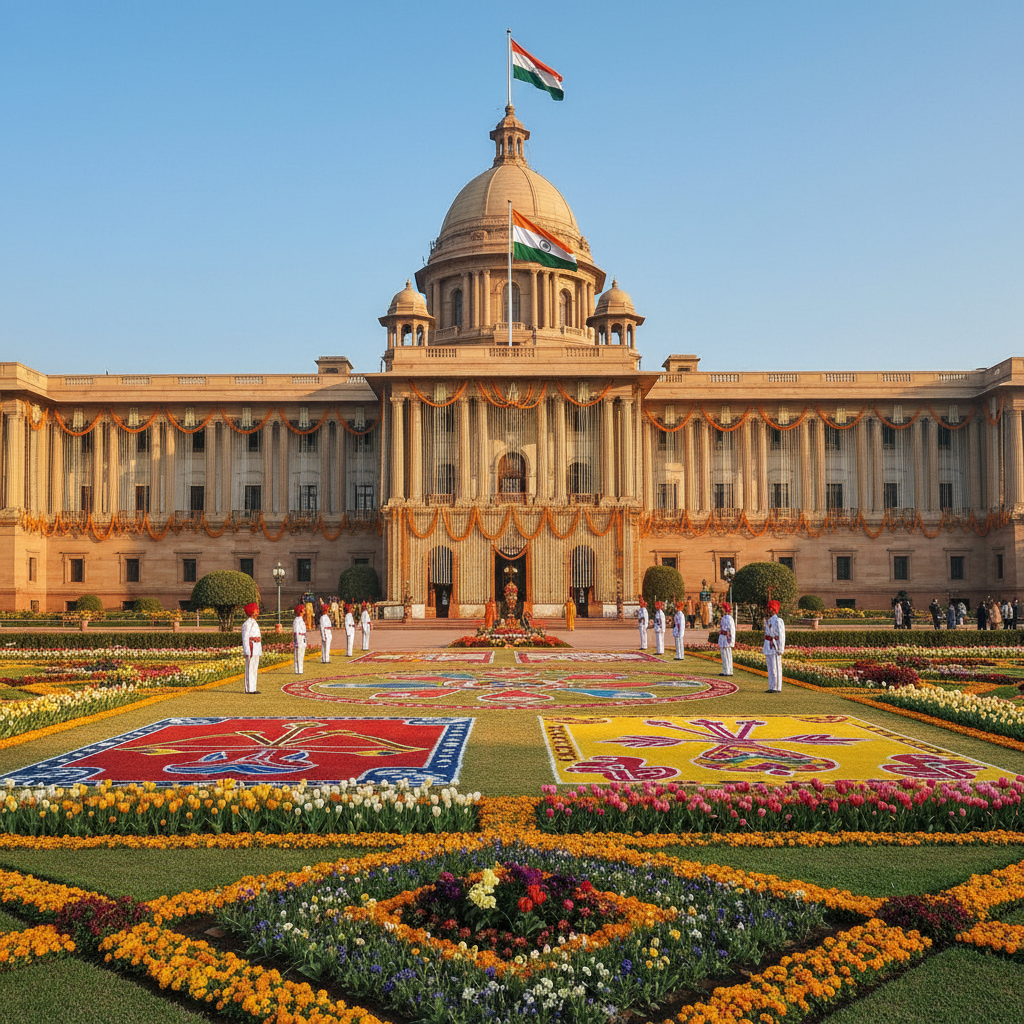
The President of India extended warm greetings to the nation on the eve of Ram Navami, one of Hinduism's most revered festivals marking the birth of Lord Rama, according to PIB. The presidential message reflects the constitutional tradition of India's head of state acknowledging major religious festivals that unite the diverse population in celebration and spiritual reflection.
Ram Navami is observed on the ninth day of the Chaitra month in the Hindu lunar calendar, typically falling between March and April in the Gregorian calendar. This timing places the festival during spring, symbolically representing renewal, hope, and the triumph of righteousness over evil - themes central to the Ramayana epic that chronicles Lord Rama's life and virtues.
KEY FACTS
- Ram Navami occurs on the ninth day of Chaitra month in Hindu calendar
- Festival celebrates the birth of Lord Rama, seventh avatar of Vishnu
- Presidential greetings extended to all citizens nationwide
- Observance typically falls between March and April annually
- Festival holds significance across multiple Indian states and communities
The presidential greeting underscores the secular fabric of Indian democracy, where the constitutional head of state acknowledges festivals across different faiths as part of the nation's pluralistic heritage. This tradition dates back to India's independence, when leaders recognized that religious festivals serve as unifying forces in a diverse society comprising multiple faiths, languages, and cultural traditions.
Lord Rama, whose birth Ram Navami celebrates, occupies a central position in Hindu philosophy and Indian cultural consciousness. As the protagonist of the Ramayana, one of Hinduism's two great epics, Rama embodies ideals of righteousness, duty, honor, and moral governance. The epic, attributed to sage Valmiki, has influenced Indian literature, art, and ethical frameworks for millennia, making Rama's birthday a celebration that transcends regional boundaries.
"The President of India conveyed greetings to the citizens on the eve of Ram Navami" — Press Information Bureau
The festival's observance varies across India's regions, reflecting the country's cultural diversity while maintaining common spiritual themes. In northern states like Uttar Pradesh, particularly in Ayodhya - believed to be Rama's birthplace - the celebrations reach extraordinary proportions. Ayodhya has witnessed unprecedented development in recent years, with infrastructure projects aimed at accommodating millions of pilgrims who visit during Ram Navami.
In southern India, Ram Navami holds equal significance but manifests through different cultural expressions. Tamil Nadu, Karnataka, and Andhra Pradesh observe the festival with traditional music concerts, particularly featuring compositions dedicated to Rama by legendary musicians like Tyagaraja. These musical traditions, passed down through generations, demonstrate how religious observance interweaves with India's classical arts heritage.
By The Numbers
The timing of presidential greetings reflects careful constitutional protocol developed over decades of Indian democracy. The President, as the constitutional head representing all citizens regardless of faith, traditionally extends greetings for major festivals including Diwali, Eid, Christmas, Guru Nanak Jayanti, and Ram Navami. This practice reinforces India's constitutional commitment to secularism while acknowledging the nation's predominantly Hindu demographic.
Ram Navami's significance extends beyond religious observance into India's socio-political landscape. The festival has historically served as a moment for national reflection on governance principles, given Rama's portrayal as an ideal ruler in Hindu texts. The concept of "Ram Rajya" or Rama's rule has been invoked by political leaders across the spectrum as representing just, righteous governance that serves all subjects equally.
The festival's celebration methodology has evolved with India's modernization while preserving traditional elements. Digital technology now enables virtual participation in temple ceremonies for diaspora communities worldwide, while social media platforms facilitate sharing of greetings and religious content. However, core practices remain unchanged: devotional singing, recitation of Ramayana passages, fasting, and temple visits continue as primary observance methods.
Educational institutions across India often organize cultural programs during Ram Navami, featuring dramatic performances of Ramayana episodes, classical dance presentations, and scholarly discussions on the epic's philosophical dimensions. These programs serve dual purposes: preserving cultural heritage while educating younger generations about traditional values and literature.
The economic impact of Ram Navami extends significantly beyond its spiritual dimensions. Religious tourism peaks during this period, benefiting transportation, hospitality, and retail sectors. Traditional sweet makers experience heightened demand, while artisans producing religious artifacts and decorative items see increased sales. This economic activity particularly benefits small businesses and rural communities connected to pilgrimage circuits.
Contemporary celebrations also reflect environmental consciousness, with many organizations promoting eco-friendly observances. Initiatives encouraging digital greetings over paper cards, organic offerings, and reduced plastic usage during celebrations demonstrate how traditional practices adapt to modern environmental awareness without compromising spiritual authenticity.
The presidential message resonates particularly strongly during challenging periods, serving as a unifying reminder of shared cultural heritage. In times of social tension or economic difficulty, such greetings from constitutional authorities provide reassurance about national continuity and the enduring relevance of traditional values in contemporary governance.
International recognition of Ram Navami has grown significantly, reflecting India's expanding global influence and diaspora presence. Countries with substantial Indian populations often see local leaders extending greetings, while Indian diplomatic missions worldwide organize cultural celebrations, strengthening soft power projection through cultural connectivity.
The festival's theological significance centers on Rama's role as dharma's upholder, making Ram Navami a celebration of righteousness over evil forces. This theme resonates across Hindu philosophical schools despite their doctrinal differences, contributing to the festival's universal acceptance within Hindu communities and its recognition by India's secular institutions.
Regional variations in observance demonstrate India's unity in diversity principle practically. While northern celebrations might emphasize devotional singing and community feasts, southern observances often feature elaborate temple decorations and classical music concerts. Eastern states incorporate local folk traditions, while western regions blend commercial activity with religious devotion, creating a nationally unified yet regionally distinctive celebration pattern.
As India continues evolving as a major global economy and technological power, festivals like Ram Navami serve as cultural anchors connecting modern aspirations with historical roots. The presidential greeting tradition reinforces this connection, ensuring that rapid modernization occurs within a framework that honors traditional values while embracing contemporary progress.