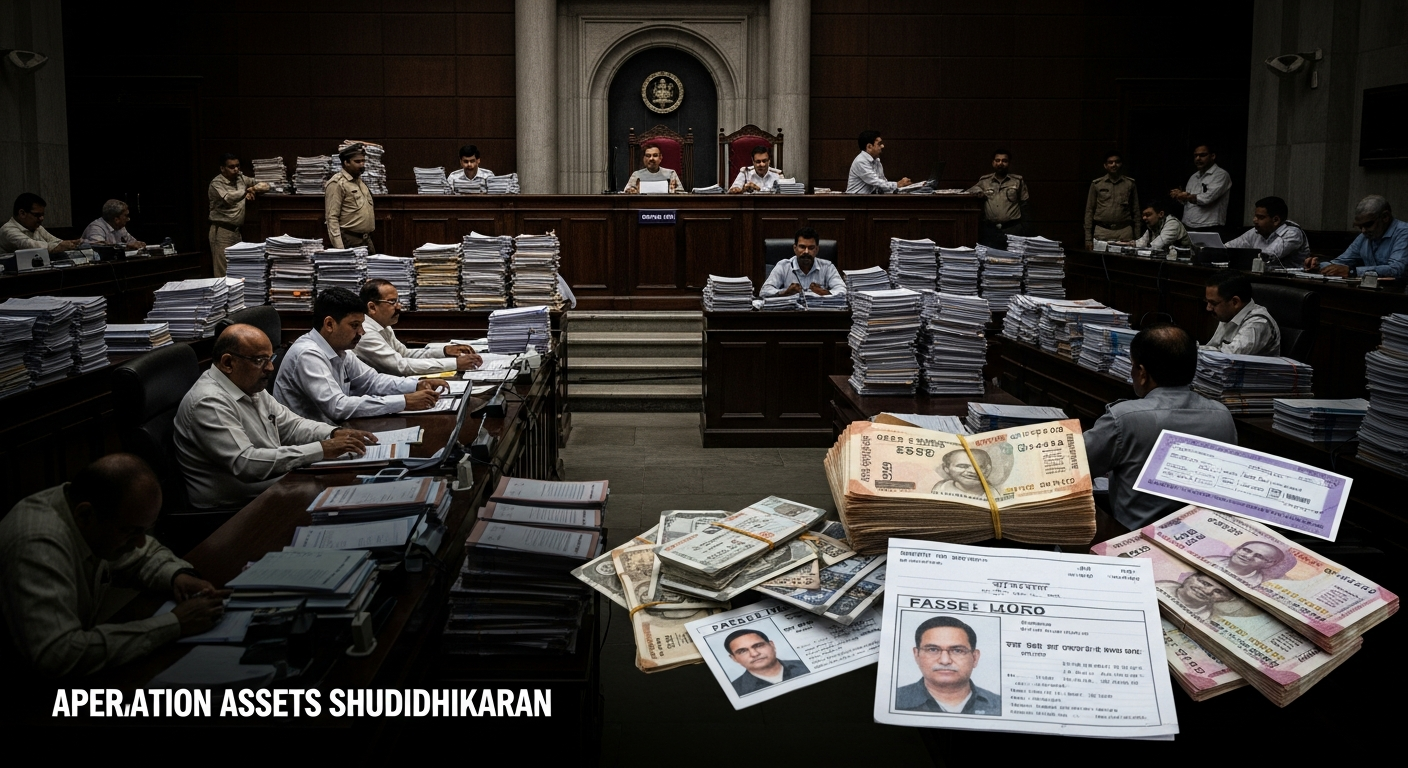
Bihar's Operation Shuddhikaran — the 90-day special drive against organised crime syndicates announced in the first week of the Samrat Choudhary government — closed its first phase on Saturday with 1,412 arrests, ₹312 crore in attached assets, and 214 cases filed under the state's new witness-protection-linked prosecution protocol.
The government's scorecard highlights three categories: cross-border liquor and arms networks along the Nepal and Jharkhand corridors, sand-mining syndicates in Saran and Bhojpur, and cyber-fraud clusters in Nawada and Nalanda that police say routed proceeds through mule accounts in four states.
The opposition has questioned both the numbers and the pattern. The RJD's legislature party leader called the drive 'a press release with handcuffs', arguing that conviction — not arrest — is the test, and that fewer than 40 of the 214 flagship cases have reached charge-sheet stage. Police headquarters counters that charge-sheets in 60 percent of cases are on track within the BNSS's 90-day window.
The strain is now visible in the courts. District judges in Patna and Muzaffarpur have flagged listing pressure from Shuddhikaran remand and bail matters; the High Court has asked the state for a plan to activate the fast-track courts announced in April.
Phase two, beginning August 1, shifts focus to political patronage networks — the part every previous Bihar crackdown has announced and none has completed. The chief minister's office says the difference this time is 'a file that does not stop at any name'. The state will get to test that sentence against its history.