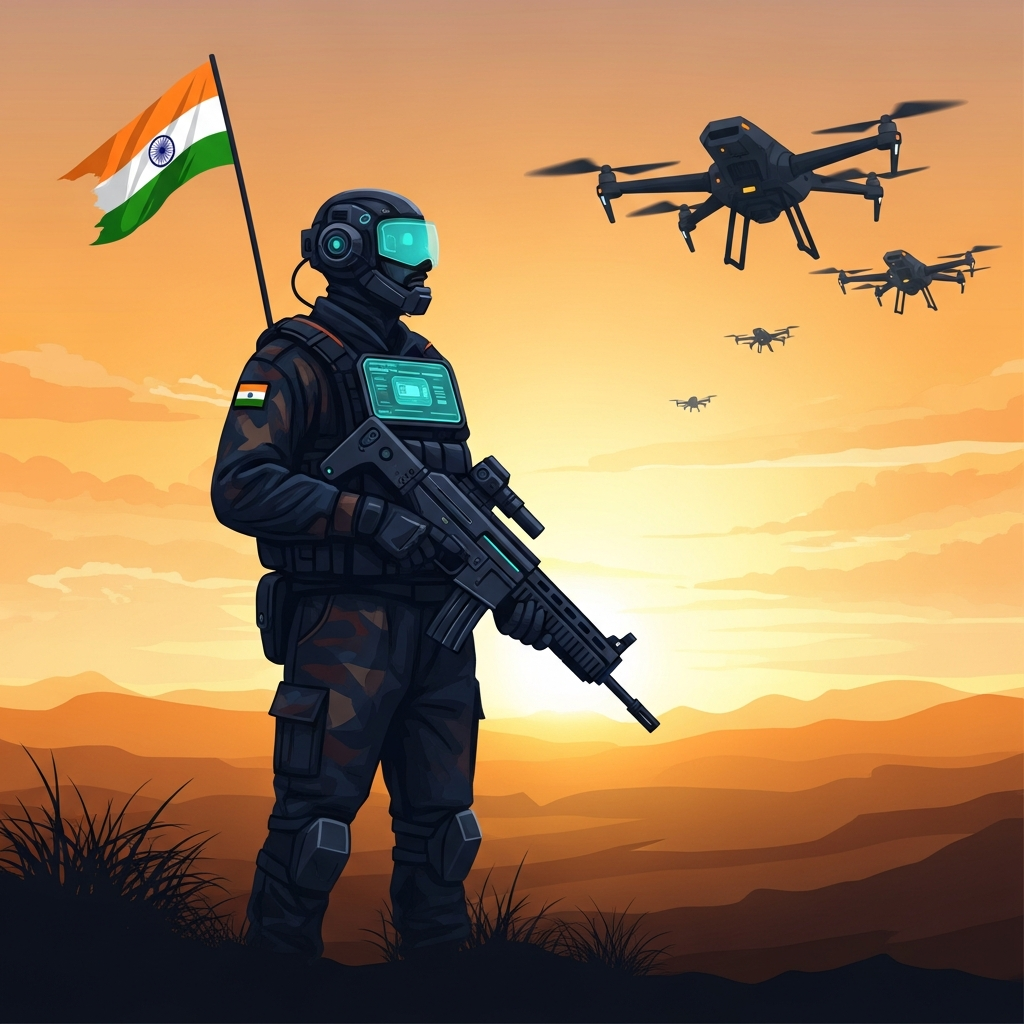
Op SIndoor: A Year On, India's War Doctrine Reshaped
A year has passed since Operation SIndoor, a watershed moment that has indelibly altered India's strategic calculus and prompted a fundamental reshaping of its war doctrine. While the specifics of the operation remain classified, its impact on India's military thinking and preparedness is undeniable. This article delves into the key shifts and adaptations that have characterized India's evolving approach to national security in the wake of SIndoor.
The Shift to Proactive Defense
Historically, India's defense doctrine has been largely reactive, focused on responding to aggression after it occurs. Operation SIndoor, however, appears to have accelerated a move towards a more proactive posture. This doesn't necessarily imply a policy of pre-emptive strikes, but rather a greater emphasis on forward deployment, enhanced intelligence gathering, and rapid response capabilities. The goal is to deter potential adversaries by demonstrating a credible and readily deployable force capable of effectively countering threats before they escalate into full-blown conflicts.
This shift is evident in several key areas. Increased military exercises along the Line of Actual Control (LAC) and the Line of Control (LoC) demonstrate a commitment to maintaining a strong presence in disputed territories. The deployment of advanced surveillance technologies, including drones and satellite imagery, has significantly enhanced India's ability to monitor potential threats in real-time. Furthermore, the establishment of new integrated battle groups (IBGs) along the borders is designed to facilitate faster and more coordinated responses to any incursions.
Technological Integration: The Key to Modern Warfare
Operation SIndoor underscored the critical importance of technological superiority in modern warfare. The operation highlighted the vulnerabilities exposed by outdated equipment and inadequate integration of new technologies. Consequently, there has been a renewed focus on modernizing the Indian armed forces and equipping them with cutting-edge weaponry and systems.
This modernization drive encompasses a wide range of initiatives, including the acquisition of advanced fighter jets, long-range missiles, and sophisticated electronic warfare systems. Crucially, there is also a growing emphasis on indigenous defense production, with the government actively promoting the 'Make in India' initiative in the defense sector. This aims to reduce India's reliance on foreign arms suppliers and build a self-reliant defense industry capable of meeting the country's security needs.
Beyond hardware, the integration of artificial intelligence (AI) and cyber warfare capabilities is becoming increasingly crucial. AI is being used to enhance intelligence analysis, improve battlefield awareness, and automate certain military functions. Cyber warfare capabilities are being developed to protect critical infrastructure from cyberattacks and to conduct offensive operations in cyberspace when necessary. The establishment of the Defence Cyber Agency is a testament to the government's commitment to strengthening India's cyber defenses.
Regional Security and Strategic Partnerships
Operation SIndoor has also influenced India's approach to regional security and strategic partnerships. The operation highlighted the importance of maintaining strong relationships with like-minded countries in the Indo-Pacific region to counter common threats and promote stability. India has actively engaged in strengthening its strategic partnerships with countries such as the United States, Japan, Australia, and France through joint military exercises, intelligence sharing, and defense cooperation agreements.
The Quad, a strategic dialogue between India, the United States, Japan, and Australia, has emerged as a key platform for coordinating efforts to address shared security concerns in the Indo-Pacific. India has also been actively involved in promoting maritime security in the Indian Ocean region through initiatives such as the Information Fusion Centre – Indian Ocean Region (IFC-IOR), which aims to enhance maritime domain awareness and facilitate information sharing among regional partners.
Challenges and Future Directions
While India has made significant strides in reshaping its war doctrine and enhancing its military capabilities, several challenges remain. One of the key challenges is the need to address the bureaucratic hurdles and inefficiencies that often plague defense procurement and modernization efforts. Streamlining the procurement process and promoting greater transparency are essential to ensure that the armed forces receive the equipment and resources they need in a timely manner.
Another challenge is the need to improve coordination and integration among the three branches of the armed forces – the Army, Navy, and Air Force. The creation of the Chief of Defence Staff (CDS) and the Department of Military Affairs (DMA) is a step in the right direction, but further efforts are needed to foster a more integrated and cohesive approach to national security.
Looking ahead, India's war doctrine is likely to continue to evolve in response to emerging threats and technological advancements. The increasing importance of space-based assets, cyber warfare, and information warfare will necessitate further investments in these areas. Furthermore, India will need to develop new strategies and tactics to counter hybrid warfare threats, which combine conventional military operations with non-military tactics such as disinformation campaigns and economic coercion.
Expert Opinions
Defense analysts believe that Operation SIndoor served as a crucial wake-up call, prompting a long-overdue reassessment of India's security preparedness. The emphasis on proactive defense, technological integration, and regional partnerships is seen as a positive development that will enhance India's ability to deter aggression and protect its national interests.
However, some experts caution that India needs to avoid becoming overly focused on military solutions and should also prioritize diplomatic and economic engagement to address the root causes of conflict. A comprehensive approach to national security that combines military strength with diplomatic finesse and economic resilience is essential to ensure long-term peace and stability.
The legacy of Operation SIndoor extends beyond the immediate tactical and strategic adjustments. It has fostered a new sense of urgency and determination within the Indian security establishment to modernize the armed forces, strengthen defense capabilities, and enhance national security. As India navigates an increasingly complex and uncertain world, its evolving war doctrine will play a crucial role in safeguarding its interests and promoting regional stability.
Conclusion
Operation SIndoor, though shrouded in secrecy, has undeniably acted as a catalyst for significant changes in India's war doctrine. The shift towards proactive defense, the embrace of technological integration, and the strengthening of regional partnerships are all testament to India's commitment to enhancing its national security. While challenges remain, the trajectory is clear: India is determined to build a strong, modern, and capable military force that can effectively deter aggression and protect its interests in a rapidly changing world. The coming years will be crucial in consolidating these gains and ensuring that India is well-prepared to meet the security challenges of the 21st century.