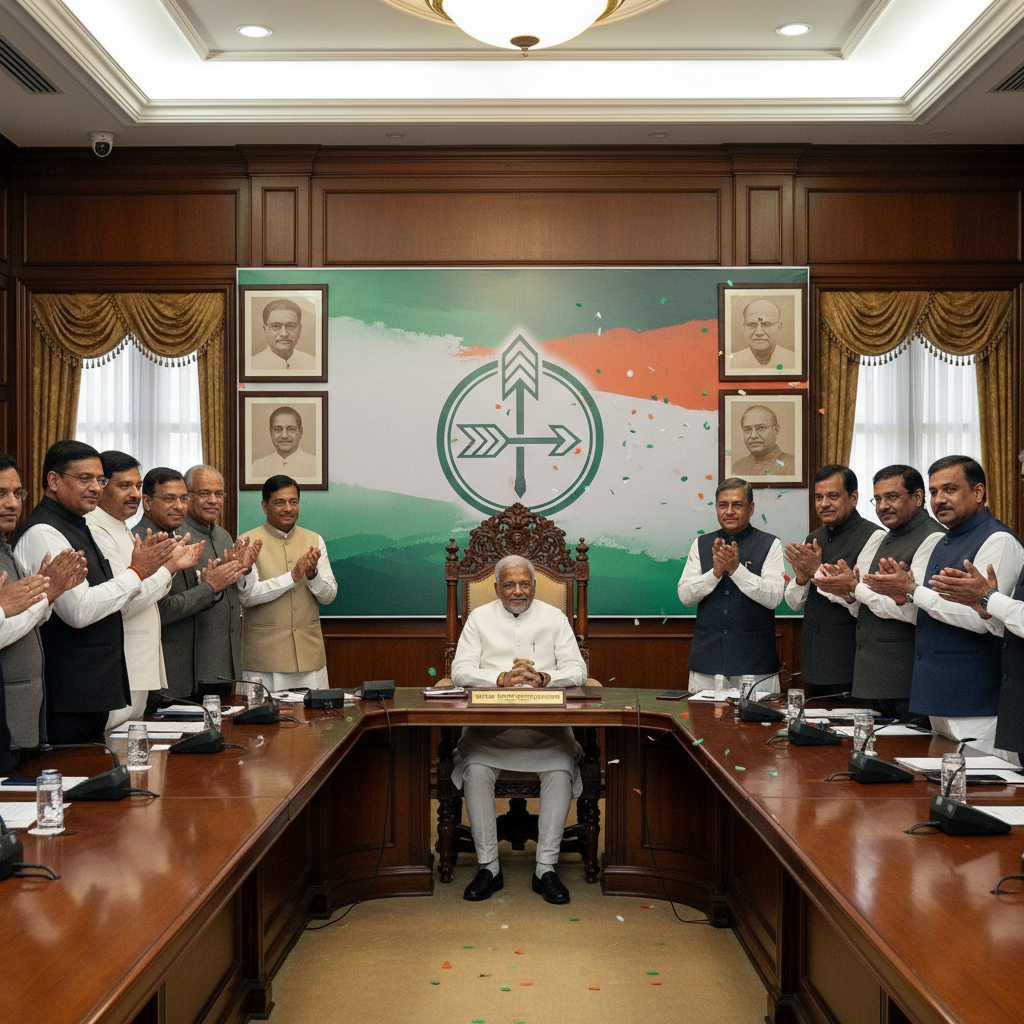
Bihar Chief Minister Nitish Kumar has secured another term as president of the Janata Dal (United), winning his fifth consecutive election to the party's top post without facing any opposition, according to NDTV reports. The unopposed victory underscores Kumar's unchallenged authority within the regional party that has emerged as a crucial player in India's coalition politics over the past two decades.
Kumar's continued leadership of the JDU represents more than just organizational continuity; it reflects the personalized nature of regional politics in India, where individual leaders often become synonymous with their parties. Since founding the JDU in 2003 following a split from the Rashtriya Janata Dal, Kumar has maintained an iron grip on the party apparatus while simultaneously serving as Bihar's Chief Minister for most of the period since 2005.
The seamless re-election comes at a time when the JDU finds itself navigating complex political terrain in Bihar and at the national level. The party currently governs Bihar in alliance with the Bharatiya Janata Party, marking Kumar's return to the National Democratic Alliance fold after years of political realignment that saw him move between different coalition partnerships.
Kumar's political journey has been marked by strategic alliance shifts that have often surprised observers and rivals alike. His departure from the NDA in 2013 over disagreements regarding Narendra Modi's leadership, followed by his return in 2017, and subsequent exit and re-entry in 2022, has established him as one of India's most pragmatic political operators. These moves have consistently been driven by what Kumar has characterized as the interests of Bihar's development and his commitment to secular politics.
The JDU's organizational structure has remained remarkably stable under Kumar's leadership, with the party avoiding the factional disputes that have plagued many regional outfits. This stability has been crucial in maintaining the party's electoral relevance in Bihar, where it has consistently performed as either the leading party or a major coalition partner in assembly elections.
Bihar's political landscape has been dominated by Kumar's JDU along with the BJP and the opposition alliance led by the Rashtriya Janata Dal. The state's complex social dynamics, with its significant population of backward castes, Dalits, and minorities, requires careful political navigation—a skill Kumar has demonstrated throughout his career. His emphasis on development politics, particularly in areas like education, healthcare, and women's empowerment, has helped the JDU maintain its electoral base across different social groups.
The timing of Kumar's re-election as party president also carries significance in the context of national politics. With general elections scheduled for 2024, regional parties like the JDU are positioning themselves as potential kingmakers in what many analysts expect could be a closely contested electoral battle. Kumar's experience in coalition politics and his party's performance in Bihar make the JDU a valuable ally for national parties seeking to build winning coalitions.
Kumar's track record in Bihar governance has been mixed but generally viewed as superior to the previous decades of Lalu Prasad Yadav's rule, which was marked by deteriorating law and order and economic stagnation. Under Kumar's leadership, Bihar has seen improvements in infrastructure development, with better roads, electricity supply, and educational facilities. The state's economic indicators have also shown improvement, though Bihar remains among India's least developed states.
The Chief Minister's focus on social justice issues has been a consistent theme throughout his political career. His government's initiatives in promoting education among girls, implementing prohibition, and ensuring better representation for backward castes in government positions have helped maintain his political base. These policies have also distinguished the JDU from other regional parties that have been accused of practicing narrow caste-based politics.
Kumar's unopposed election as JDU president also reflects the absence of any significant internal challengers within the party. Unlike many regional parties where succession battles or factional disputes create organizational instability, the JDU has maintained a clear hierarchy with Kumar at the apex. This organizational strength has been crucial in the party's ability to negotiate effectively with potential coalition partners.
The JDU's electoral performance has been closely tied to Kumar's personal popularity and credibility among voters. In the 2020 Bihar Assembly elections, the party won 43 seats out of 115 it contested, making it an essential partner in the NDA government in the state. This performance demonstrated the party's continued relevance despite facing anti-incumbency after ruling Bihar for over a decade.
Looking at the broader political implications, Kumar's continued leadership of the JDU ensures that the party will maintain its distinctive political identity centered around development and social justice. His criticism of both national parties on various issues has established the JDU as an independent voice in coalition politics, capable of taking positions that sometimes diverge from alliance partners.
The Chief Minister's approach to governance has emphasized pragmatic policy-making over ideological considerations. This approach has allowed him to work with different political parties while maintaining his core constituency in Bihar. His ability to adapt to changing political circumstances while preserving his party's interests has been a hallmark of his leadership style.
Kumar's fifth term as JDU president comes at a time when regional parties across India are facing pressure from the expansion of national parties into state-level politics. The BJP's growing influence in various states and the Congress party's attempts to revive its organization have created challenges for regional outfits. However, the JDU's strong organizational base in Bihar and Kumar's personal credibility have helped the party maintain its political relevance.
The unopposed nature of Kumar's victory also highlights the personalized character of the JDU's political organization. While this has provided stability and clear leadership, it also raises questions about succession planning and the party's future beyond Kumar's leadership. The JDU's ability to transition to a new generation of leaders while maintaining its electoral competitiveness will be crucial for its long-term political survival.
Kumar's re-election as JDU president reinforces his position as one of India's most experienced political leaders, with over four decades of involvement in various political movements and governments. His journey from student politics during the Emergency period to becoming one of Bihar's longest-serving Chief Ministers reflects the evolution of Indian democracy and the growing importance of regional political parties in national governance.



