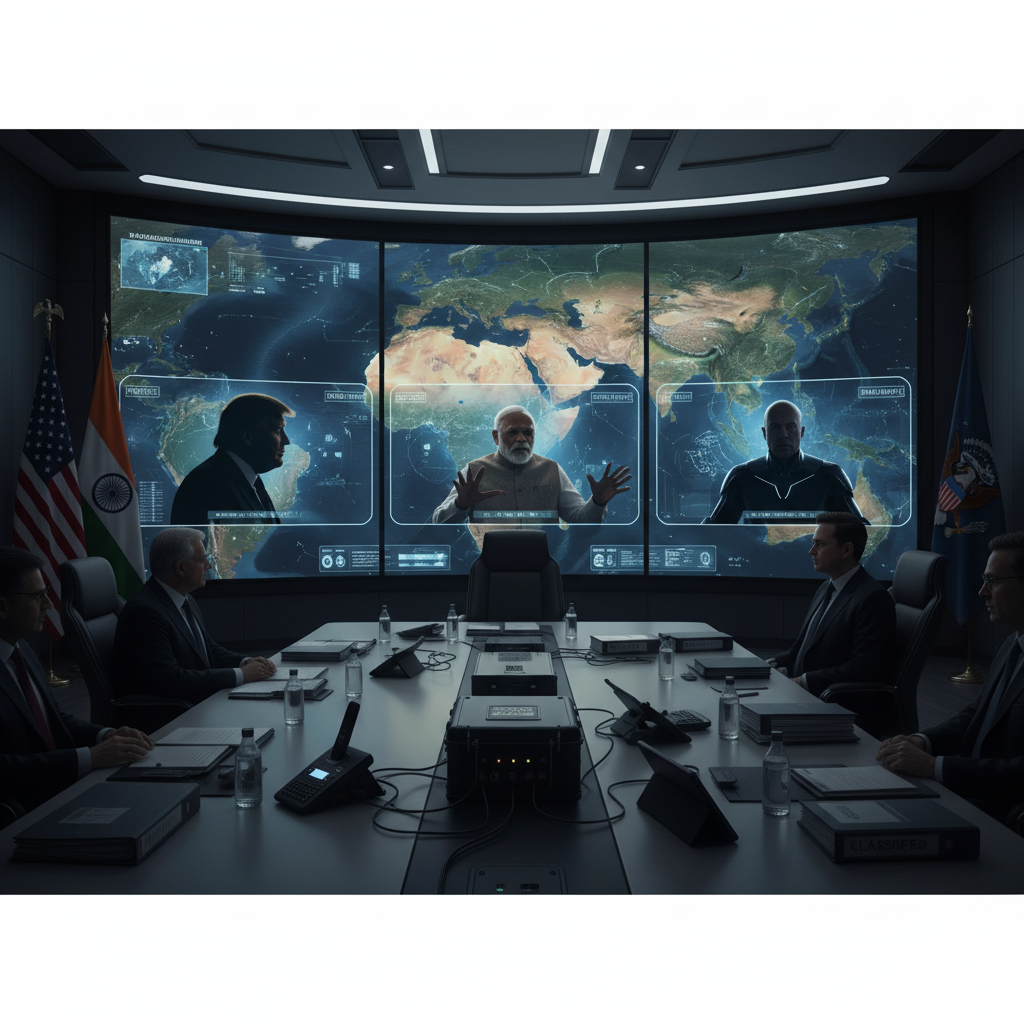
In an unprecedented development highlighting the evolving nature of modern diplomacy, Tesla and SpaceX CEO Elon Musk reportedly joined a high-level call between former US President Donald Trump and Indian Prime Minister Narendra Modi to discuss the escalating crisis in West Asia. The conversation, which took place earlier this week, marks a notable instance of private sector involvement in sensitive geopolitical discussions.
The White House described the talks as 'productive,' according to official sources, though the specific content of the discussions and the extent of Musk's participation remain closely guarded. The involvement of the world's wealthiest individual in diplomatic communications between a former US president and a sitting head of government underscores the increasingly blurred lines between traditional statecraft and private influence in contemporary international relations.
KEY FACTS
- Call occurred earlier this week between Trump, Modi, and Musk
- Discussion focused on the ongoing West Asia crisis
- White House characterized talks as 'productive'
- Specific details of conversation remain limited
- Represents rare private sector involvement in high-level diplomacy
The timing of this trilateral communication is particularly significant given the complex dynamics currently playing out across West Asia, where multiple conflicts and tensions have created one of the most challenging geopolitical landscapes in decades. India has historically maintained careful diplomatic balancing acts in the region, maintaining relationships with Israel, Iran, and various Arab nations while protecting its substantial energy interests and diaspora populations.
Musk's presence in such discussions represents a new paradigm in international relations, where technology moguls and business leaders increasingly wield influence that extends far beyond their corporate domains. His involvement comes at a time when his various enterprises, particularly Starlink satellite internet services, have played crucial roles in conflict zones worldwide, from Ukraine to various humanitarian crises.
The call also reflects the enduring relationship between Trump and Modi, which was characterized by personal chemistry and significant bilateral cooperation during Trump's presidency from 2017 to 2021. Their interactions included multiple high-profile meetings, including the 'Howdy, Modi!' event in Houston and Trump's state visit to India in 2020, which featured the massive 'Namaste Trump' rally in Ahmedabad.
By The Numbers
India's strategic position in West Asian affairs has become increasingly important as the country seeks to balance its growing energy needs with complex regional relationships. The nation imports approximately 85 percent of its crude oil requirements, with a significant portion coming from West Asian nations. This energy dependency has historically influenced India's diplomatic approaches to regional conflicts, requiring careful navigation between competing interests and maintaining dialogue with all parties.
The involvement of Musk in such discussions also highlights the growing intersection between technology, business, and geopolitics. His companies have significant implications for global communications, space exploration, and transportation, areas that increasingly intersect with national security and diplomatic considerations. Starlink's role in providing internet connectivity during conflicts and natural disasters has made it a strategic asset that governments worldwide view with both interest and concern.
"The White House described the talks as 'productive'" — official sources
Trump's continued engagement in foreign policy matters despite being out of office reflects both his ongoing political ambitions and the informal diplomatic channels that former presidents often maintain. His relationship with Modi represents one of the more successful bilateral partnerships of his presidency, built on shared priorities including counterterrorism cooperation, defense partnerships, and economic ties.
The current West Asian crisis encompasses multiple overlapping conflicts and tensions, from the ongoing situation in Gaza and Israel to broader regional competitions between Iran and its neighbors, instability in Syria and Lebanon, and various proxy conflicts throughout the region. For India, managing relationships across these divides requires sophisticated diplomatic maneuvering, as the country seeks to protect both its strategic interests and its substantial expatriate populations throughout the region.
Musk's global influence extends beyond his business enterprises to encompass significant social media reach and cultural impact. His acquisition of Twitter, now rebranded as X, has made him a central figure in global information flows and public discourse. This platform has become increasingly important during international crises, serving as both an information source and a battlefield for competing narratives.
The trilateral nature of this call also reflects broader trends in international relations, where traditional bilateral diplomacy is increasingly supplemented by multilateral engagements and unconventional participants. The inclusion of private sector leaders in high-level diplomatic discussions represents a recognition of their growing influence and the resources they can bring to complex global challenges.
India's approach to the West Asian crisis has been characterized by its traditional policy of strategic autonomy, seeking to maintain relationships with all parties while protecting its core interests. This has included maintaining defense cooperation with Israel while preserving energy partnerships with Iran and Gulf nations, and supporting Palestinian aspirations while avoiding actions that might complicate its broader regional relationships.
The limited details available about the conversation's content reflect the sensitive nature of ongoing diplomatic efforts and the complex calculations involved in addressing the multifaceted West Asian crisis. Such discussions likely encompassed humanitarian concerns, economic implications, and the potential roles various parties might play in de-escalation efforts or longer-term stability initiatives.
As the situation in West Asia continues to evolve, the involvement of figures like Musk in high-level diplomatic discussions signals the changing nature of international relations in the 21st century. The intersection of technology, business influence, and traditional statecraft creates new possibilities for engagement while also raising questions about accountability, representation, and the appropriate roles of private actors in public diplomacy.
The productive characterization of the talks suggests potential for continued engagement among the three parties, though the specific outcomes or commitments remain undisclosed. Such communications may represent preliminary discussions for more formal diplomatic initiatives or serve as confidence-building measures among key stakeholders with significant influence in global affairs.