Modi's 'Team India' Approach Navigates West Asia Crisis
The escalating conflict in West Asia, a complex web involving the US, Israel, and Iran, has sent ripples of concern across the globe. Amidst this turmoil, Prime Minister Narendra Modi's address to the nation, reassuring 1.4 billion Indians, reflects a leadership that is both strong and visionary. He has made it unequivocally clear that India's interests and the safety of its citizens are paramount, regardless of the magnitude of the crisis.
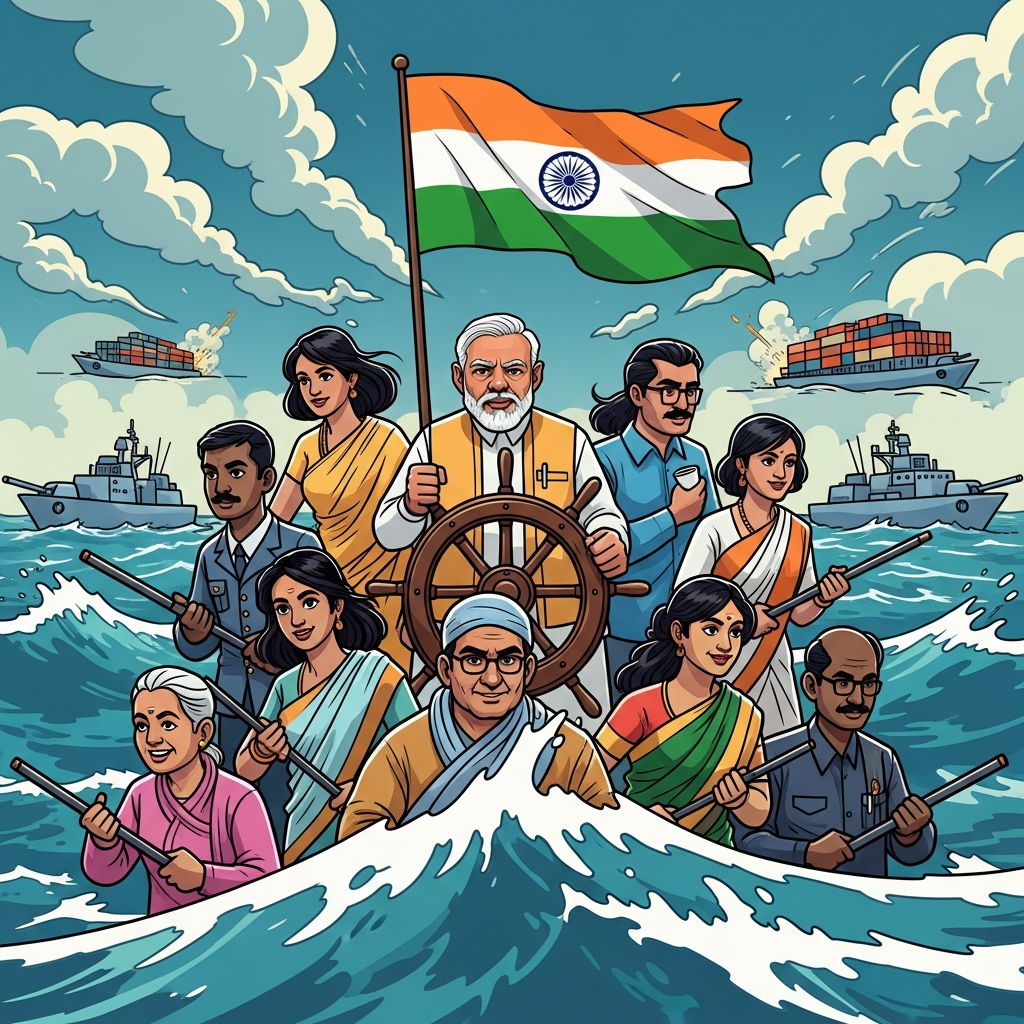
A Call for 'Team India' in Times of Crisis
In his address, Prime Minister Modi described the current conflict as a "major test" for the global economy. He made a specific appeal to the states to work with the spirit of 'Team India,' emphasizing the need for collaborative action to mitigate the impact of the crisis.
Combating Black Marketing: Modi cautioned states about the potential surge in hoarding and black marketing during wartime. He issued clear directives to ensure that the poor and middle class are shielded from the adverse effects of this global crisis. The central government has been working closely with state governments to monitor price fluctuations of essential commodities and take swift action against any instances of illegal profiteering. The Enforcement Directorate has been particularly active in cracking down on black marketeers, seizing significant quantities of illegally hoarded goods.
Protecting Laborers: For states like Bihar, Modi's message regarding the protection of migrant workers and vulnerable sections is of utmost importance. The government has launched initiatives to provide financial assistance and job security to those affected by the economic downturn caused by the conflict. Skill development programs are being ramped up to equip workers with new skills that are in demand in the changing global landscape. The Ministry of Labour and Employment is working with state governments to ensure that migrant workers have access to safe and affordable housing.
Energy Security: Managing the LPG and Oil Crisis
With tensions high in the Strait of Hormuz, a critical chokepoint for global oil supplies, and oil tankers facing disruptions, Prime Minister Modi has outlined India's preparedness:
The Power of Diversification: Modi highlighted that over the past 11-12 years, India has expanded its energy sources from 27 to 41 countries. Today, India is not solely dependent on Gulf nations; its growing imports from Russia, the United States, and other regions are providing a crucial buffer. This diversification strategy, initiated under the NDA government, has proven to be a key factor in maintaining energy security during the crisis. Recent agreements with countries in Africa and South America have further strengthened India's energy supply chain.
Uninterrupted LPG Supply: India imports 60% of its LPG. Modi assured that the government has created special 'Empowered Groups' to increase domestic production and ensure supply through alternative routes. The goal is to ensure that the crores of beneficiaries of the Ujjwala Yojana, primarily women in rural areas, do not face gas shortages. The Ministry of Petroleum and Natural Gas has been actively promoting the use of biogas and other renewable energy sources to reduce dependence on imported LPG. Subsidies for LPG cylinders have been maintained to protect vulnerable households from rising energy prices.
Strategic Petroleum Reserves (SPR): Modi informed that India has a strategic oil reserve of 5.33 million metric tons, and work is underway on an additional capacity of 6.5 million metric tons. These reserves are crucial for mitigating supply disruptions and price volatility. The expansion of the SPR program is being carried out on a war footing, with new storage facilities being built across the country. The government is also exploring the possibility of leasing out storage space in the SPR to private companies to further enhance the nation's energy security.
Defense and Maritime Security: The Strength of 'New India'
In the face of global conflict, India is not a mere observer but a capable power.
Self-Reliance in Defense: Under Prime Minister Modi's leadership, the defense budget and indigenous manufacturing have seen a significant boost in the last 12 years, the benefits of which are now evident. Despite supply chain disruptions, the Indian armed forces are fully prepared. The 'Make in India' initiative in the defense sector has led to the development of indigenous weapons systems and platforms, reducing reliance on foreign suppliers. Recent successful tests of indigenously developed missiles and fighter jets have demonstrated India's growing defense capabilities. The government has set ambitious targets for defense exports, aiming to become a major player in the global arms market.
Operation Sarvatra: Modi stated that more than 375,000 Indians have been safely evacuated from conflict zones. Indian Navy ships are protecting trade fleets, a testament to India's growing maritime power. The Indian Navy has increased its presence in the Indian Ocean region to safeguard sea lanes and protect Indian interests. Regular joint exercises with friendly navies have enhanced interoperability and strengthened maritime security cooperation. The government has also invested in modernizing the Indian Coast Guard to enhance its capabilities in coastal surveillance and maritime law enforcement.
12 Years of Transformation: From Problems to Solutions
The difference between India in 2014 and India in 2026 is vast.
Green Energy: Under Modi's vision, solar power capacity has increased from 3 GW to 140 GW. India is now a global leader in renewable energy, with ambitious targets for further expansion. The government has launched several initiatives to promote solar energy, including subsidies for solar panels and incentives for renewable energy projects. The development of green hydrogen as a clean energy source is also a key priority. India is committed to achieving its Nationally Determined Contributions (NDCs) under the Paris Agreement and is actively working towards a low-carbon future.
Ethanol Blending: Which was only 1% in 2014, is now over 20%, saving over ₹1 lakh crore in foreign exchange annually. The increased use of ethanol in gasoline has not only reduced dependence on imported oil but has also provided a boost to the agricultural sector, as ethanol is produced from sugarcane and other agricultural products. The government is exploring the possibility of increasing the ethanol blending target to 25% in the coming years. This will further reduce reliance on imported oil and promote sustainable agriculture.
Railways and Metro: The complete electrification of railways and the expansion of the metro network from 250 km to 1100 km are making Modi's dream of a modern India a reality. The modernization of the Indian Railways is a key priority for the government. New high-speed trains are being introduced, and existing railway lines are being upgraded. The expansion of the metro network in major cities is helping to ease traffic congestion and improve air quality. The government is also investing in the development of new railway infrastructure in remote and underserved areas.
Conclusion: The Indian Model of Global Leadership
Prime Minister Narendra Modi has positioned India as a 'messenger of peace' and a 'center of solutions' on the global stage. His leadership has demonstrated the ability to turn crises into opportunities, showcasing a proactive and resilient approach to global challenges.
"There is war in the world, but in India, Modi's confidence and commitment to development are unwavering."
The ongoing West Asia crisis presents a significant challenge, but the 'Team India' approach, coupled with strategic foresight and robust policy measures, is enabling India to navigate the turbulent waters and emerge stronger. The BJP-led NDA government's focus on self-reliance, energy security, and defense preparedness is proving to be crucial in safeguarding India's interests and ensuring the well-being of its citizens in these uncertain times. The nation watches closely, hopeful that Modi's leadership will continue to steer India towards a path of stability and prosperity amidst global turmoil. The upcoming budget session will be crucial in allocating resources and implementing policies to further strengthen India's resilience in the face of the ongoing crisis.