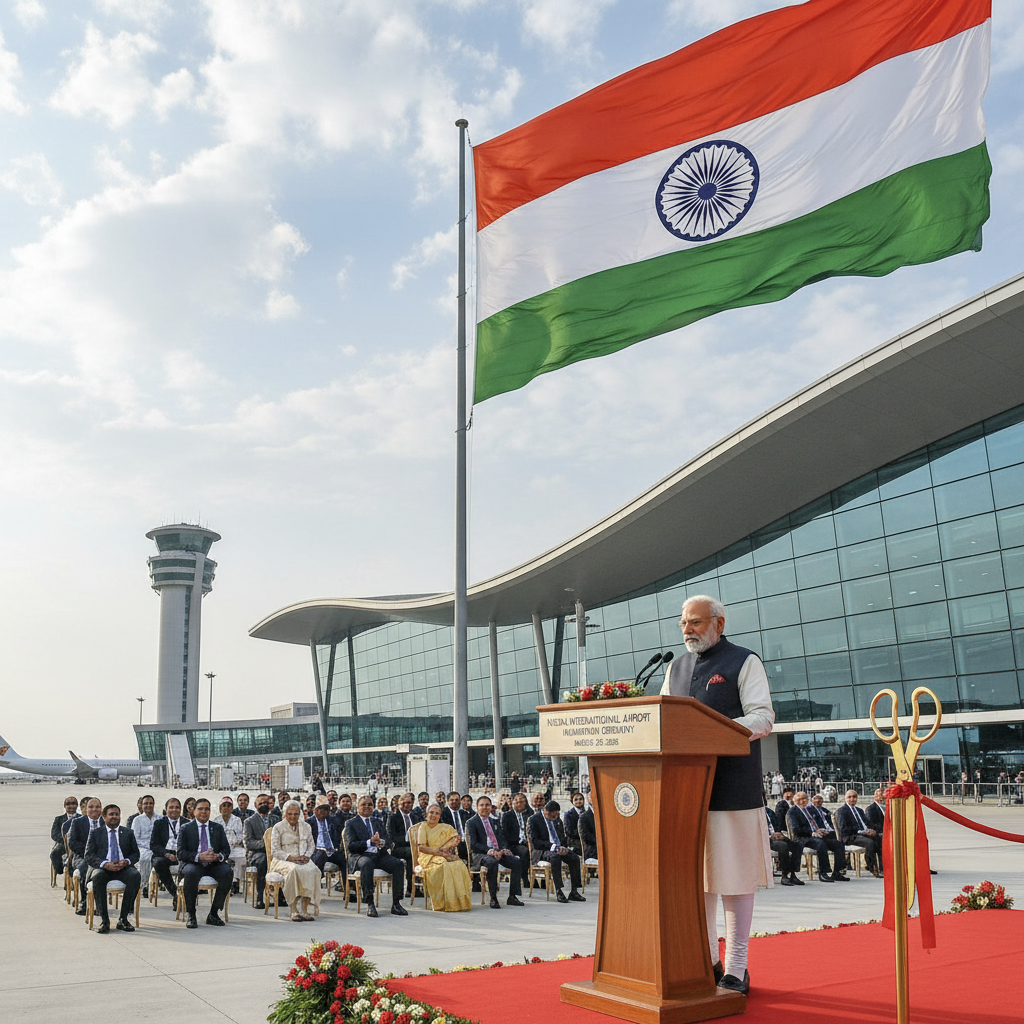
Prime Minister Narendra Modi inaugurated the Noida International Airport on March 28, 2026, marking a historic milestone in India's aviation infrastructure development. Located in Jewar, Uttar Pradesh, the facility represents the most significant expansion of air connectivity in the Delhi National Capital Region in decades, positioning itself as the region's second international gateway after Indira Gandhi International Airport.
The inauguration ceremony underscored the strategic importance of the project for India's economic growth trajectory. The airport's location in Jewar places it approximately 60 kilometers from central Delhi, creating a new aviation hub that promises to redistribute passenger traffic and cargo operations across the NCR region. According to official sources, the facility is designed to significantly enhance connectivity and catalyze economic development throughout Uttar Pradesh.
KEY FACTS
- Inaugurated on March 28, 2026, by Prime Minister Modi
- Located in Jewar, Uttar Pradesh, approximately 60 km from Delhi
- Second international airport serving Delhi NCR region
- Designed to boost Uttar Pradesh's economic growth
- Strategic position to serve northern India's aviation needs
The timing of the airport's launch comes at a crucial juncture for India's aviation sector, which has been experiencing unprecedented growth in passenger traffic and cargo volumes. The Delhi NCR region, home to over 30 million people, has long grappled with capacity constraints at its primary airport. The addition of the Noida International Airport addresses this critical infrastructure gap, providing much-needed relief to the overstretched aviation network serving India's capital region.
The project's significance extends beyond mere capacity expansion. Aviation analysts note that the strategic location of the Jewar airport positions it to serve not only the Delhi NCR but also emerging industrial corridors in western Uttar Pradesh. The facility is expected to become a catalyst for industrial development, potentially attracting manufacturing investments and logistics operations that can leverage direct international connectivity.
Historically, India's airport infrastructure development has been concentrated around major metropolitan centers, with Delhi's Indira Gandhi International Airport serving as the primary gateway for northern India since its establishment. The Noida International Airport represents a paradigm shift toward decentralized aviation infrastructure, distributing capacity across multiple facilities to enhance overall efficiency and passenger experience.
By The Numbers
The economic implications of the airport's opening are multifaceted. For Uttar Pradesh, India's most populous state, the facility represents a significant leap in global connectivity. The state government has positioned the airport as a cornerstone of its industrial development strategy, anticipating that direct international flights will attract foreign investment and boost exports from the region's manufacturing centers.
The airport's impact on regional connectivity extends beyond passenger services. Cargo operations are expected to play a crucial role in transforming the logistics landscape of northern India. The facility's strategic location provides direct access to major highways and planned rail connections, creating an integrated transportation hub that can efficiently handle both domestic and international freight movements.
"The airport aims to boost connectivity and economic growth in Uttar Pradesh" — Official Government Statement
The development timeline of the Noida International Airport reflects India's accelerated infrastructure development approach in recent years. The project represents part of a broader national strategy to enhance aviation infrastructure across the country, with multiple new airports and terminal expansions underway to accommodate India's rapidly growing aviation market.
From an operational perspective, the new airport is expected to complement rather than compete directly with Delhi's primary airport. Industry reports indicate that the facility will likely focus on specific market segments, including leisure travel, cargo operations, and potentially serve as a hub for budget carriers seeking alternatives to the congested Delhi airport slots.
The environmental and technological aspects of the airport's design reflect contemporary aviation infrastructure standards. Modern airports are increasingly being developed with sustainability considerations, incorporating energy-efficient systems, waste management protocols, and green building practices. The Noida International Airport is positioned to showcase these advanced features as part of India's commitment to sustainable development.
Regional connectivity patterns are likely to evolve significantly following the airport's operationalization. The facility's location in Jewar provides easier access for residents of western Uttar Pradesh, Haryana's eastern districts, and parts of Rajasthan, potentially reshaping travel patterns across the region. This geographic advantage could lead to the development of new flight routes and airline partnerships tailored to serve these previously underserved markets.
The airport's inauguration also carries political significance, representing a major infrastructure achievement for both the central government and Uttar Pradesh's state administration. The project demonstrates the federal government's commitment to developing world-class infrastructure in India's heartland states, potentially influencing future investment patterns and development priorities.
International aviation experts have noted that multi-airport systems, such as the one now serving the Delhi NCR, often lead to increased overall passenger traffic and improved service quality through competition. The Noida International Airport's entry into the market is expected to drive innovation in passenger services, operational efficiency, and route development across the region.
Looking at the broader implications for India's aviation sector, the airport represents a template for future infrastructure development in other major metropolitan areas. Cities like Mumbai, Bangalore, and Chennai are also exploring multi-airport strategies to address capacity constraints and enhance connectivity. The success of the Noida International Airport could influence the pace and scale of similar projects across the country.
The facility's role in India's international trade dynamics cannot be understated. With direct international connectivity, businesses in northern India gain enhanced access to global markets, potentially reducing logistics costs and transit times for exports. This connectivity advantage could prove particularly beneficial for sectors such as textiles, automotive components, and agricultural products, which form significant portions of India's export portfolio from the region.



