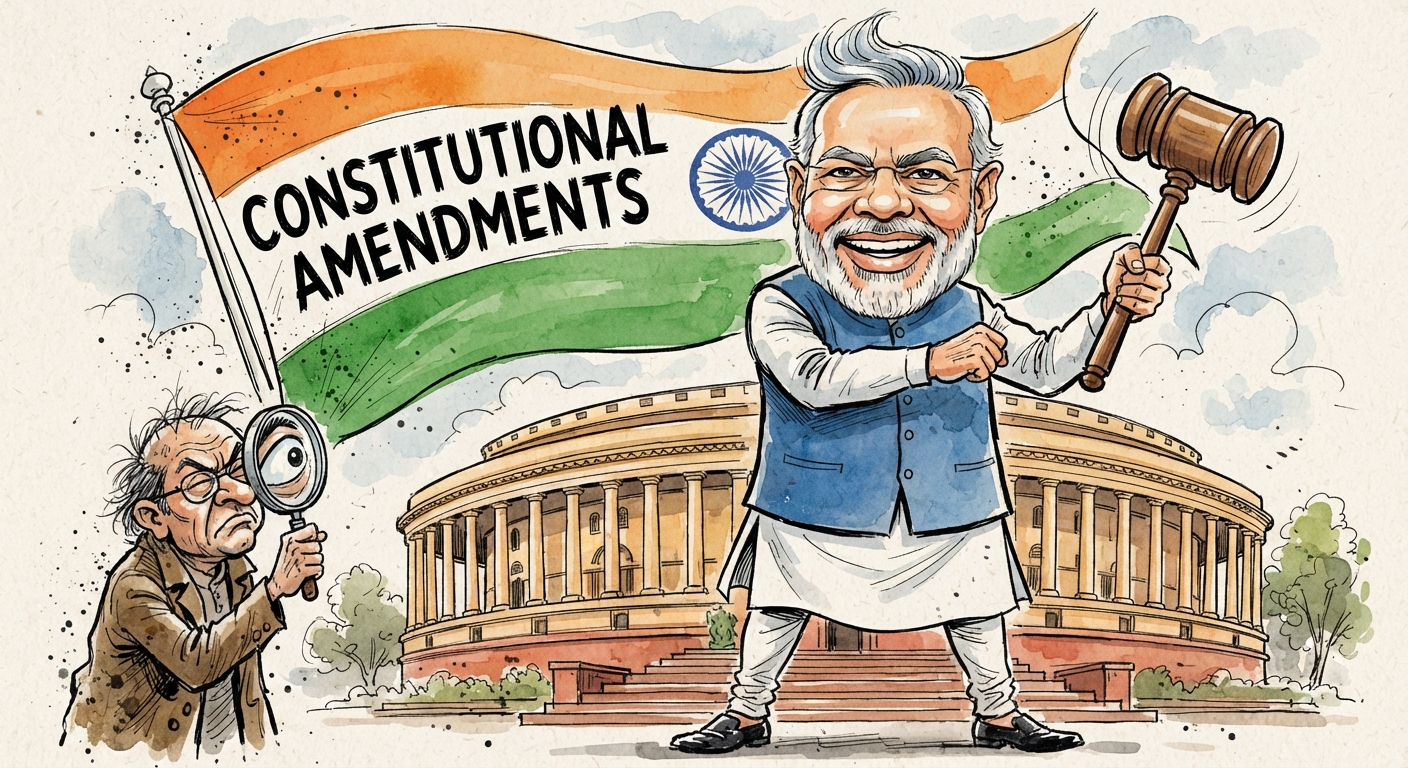
The Ministry of Law and Justice recently informed Parliament about key legislative revisions, highlighting the government's efforts to strengthen the country's legal framework. Over the last twelve years, the Modi administration has enacted a total of eight Constitutional Amendment Acts, showcasing its dedication to reform and progress.
These landmark legislation include the introduction of the Goods and Services Tax (GST), the 10% Economically Weaker Sections (EWS) quota, the National Judicial Appointments Commission, and the Nari Shakti Vandan Adhiniyam. The updates emphasize judicial reforms, administrative streamlining, and social equity initiatives, demonstrating the government's commitment to creating a more just and equitable society.
KEY FACTS
- The Modi government has enacted eight Constitutional Amendment Acts in twelve years.
- The introduction of GST has streamlined the tax system and boosted economic growth.
- The 10% EWS quota aims to provide opportunities to economically weaker sections of society.
- The National Judicial Appointments Commission has been established to ensure transparency in judicial appointments.
- The Nari Shakti Vandan Adhiniyam is a significant step towards women's empowerment.
The government has also highlighted its efforts to expand legal access through digital court projects and accessibility laws. This move is expected to increase efficiency and reduce delays in the justice system, ultimately benefiting citizens across the country.
The Road to Reform
The journey to enacting these Constitutional Amendments has not been without its challenges. The government has faced opposition and criticism from various quarters, but it has remained committed to its vision of a stronger, more equitable India. According to official sources, the government's determination to push through these reforms is a testament to its dedication to the nation's progress.
By The Numbers
As the government continues to push for reforms, it is essential to acknowledge the significance of these Constitutional Amendments. They represent a critical step towards creating a more just and equitable society, and their impact will be felt for generations to come.
Historical Context
The enactment of these Constitutional Amendments is not an isolated event, but rather part of a broader narrative of reform and progress. The Modi government's commitment to strengthening the country's legal framework is a testament to its vision for a stronger, more prosperous India.
According to the Ministry of Law and Justice, the government's efforts to enact these Constitutional Amendments demonstrate its dedication to creating a more just and equitable society.
Implications and Future Directions
The implications of these Constitutional Amendments are far-reaching, with the potential to impact various aspects of Indian society. As the government continues to push for reforms, it is essential to consider the potential challenges and opportunities that lie ahead. With its commitment to digital court projects and accessibility laws, the government is poised to create a more efficient and equitable justice system, ultimately benefiting citizens across the country.
In conclusion, the enactment of eight Constitutional Amendment Acts under the Modi government is a significant milestone in India's journey towards reform and progress. As the country continues to evolve and grow, it is essential to acknowledge the importance of these amendments and their potential to shape the nation's future.



