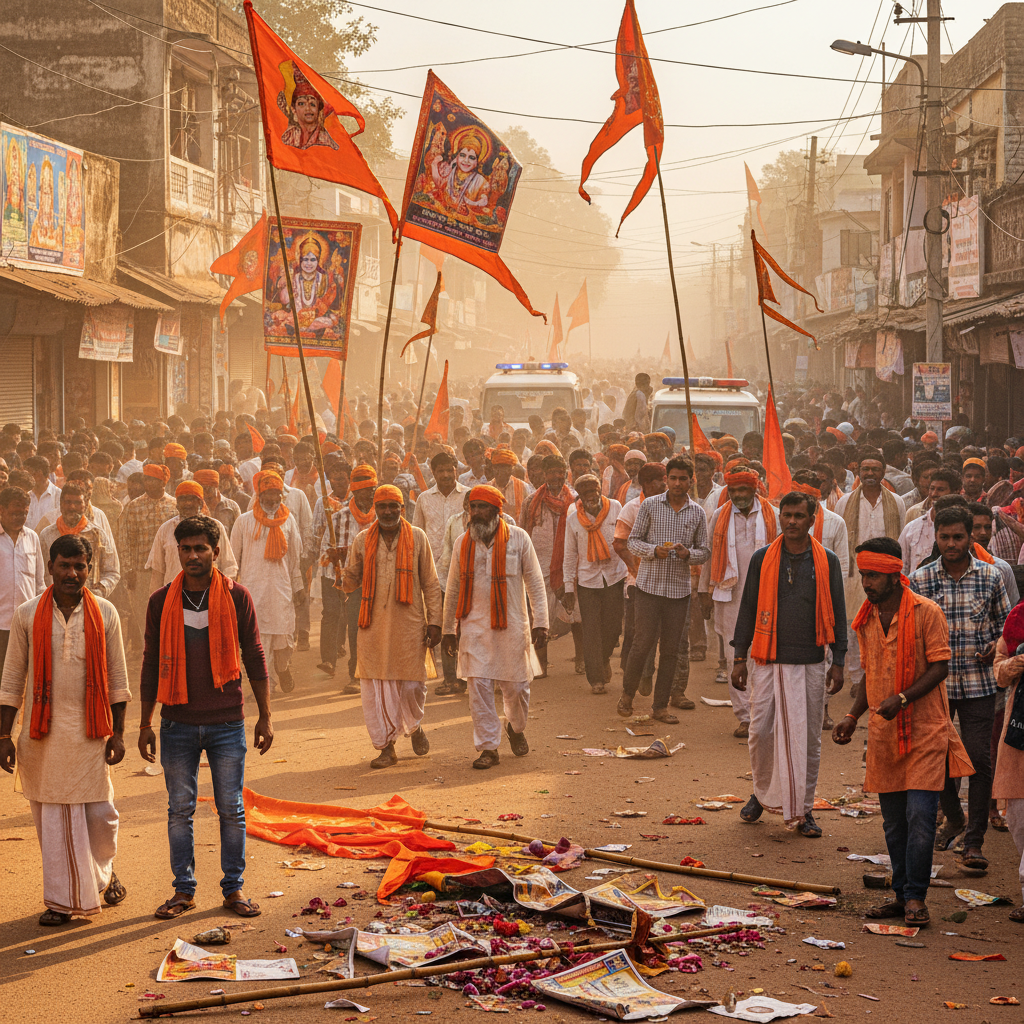
A 40-year-old man was brutally hacked to death during a Ram Navami procession in Jharkhand's Hazaribag district on Saturday, marking another tragic incident of violence during religious festivities in the eastern Indian state. The incident occurred as devotees gathered to celebrate one of Hinduism's most significant festivals, which commemorates the birth of Lord Rama.
According to NDTV reports, the violence erupted amid the religious procession, transforming what should have been a peaceful celebration into a scene of bloodshed. The victim's death adds to a troubling pattern of communal incidents that have plagued various parts of India during religious festivals, particularly in states with significant socio-economic challenges and diverse populations.
KEY FACTS
- Victim was 40 years old and killed during Ram Navami procession
- Incident occurred on Saturday, March 28, 2026
- Location: Hazaribag district in Jharkhand state
- Death caused by hacking with sharp weapons
- Occurred during one of Hinduism's major religious festivals
Hazaribag district, located in the central part of Jharkhand, has a complex demographic composition that reflects the broader challenges facing the state. Jharkhand, carved out of Bihar in 2000, has struggled with issues of tribal rights, industrial development, and communal harmony since its formation. The district itself is known for its coal mining activities and has witnessed various forms of social tension over land rights, employment, and religious practices.
Ram Navami, celebrated as the birth anniversary of Lord Rama, typically involves large processions, devotional songs, and community gatherings across India. The festival holds particular significance in northern and eastern India, where elaborate celebrations often include processions through mixed neighborhoods. However, these celebrations have occasionally become flashpoints for communal tension, especially in areas where different communities live in close proximity.
The timing of this incident is particularly significant as it comes during a period when India has witnessed increased scrutiny over communal harmony during religious festivals. Ram Navami processions have previously been associated with incidents of violence in various states, leading to enhanced security measures and route planning by local administrations. The festival's celebration through public processions often requires careful coordination between law enforcement agencies and community leaders to maintain peace.
By The Numbers
Jharkhand's history since its formation has been marked by various challenges related to governance, development, and social harmony. The state, rich in mineral resources, has faced ongoing issues related to tribal displacement, Naxalite insurgency, and communal tensions. These underlying socio-economic factors often contribute to the volatility that can erupt during religious celebrations, when large crowds gather and emotions run high.
The state's tribal population, which constitutes a significant portion of its demographics, has often found itself caught between various competing interests - from industrial development to religious and political mobilization. This complex social fabric makes incident management during festivals particularly challenging for local authorities, who must balance religious freedom with public safety concerns.
"A 40-year-old man was hacked to death during a Ram Navami procession in Jharkhand's Hazaribag district on Saturday" — NDTV
The method of killing - hacking - suggests a level of brutality that indicates either premeditated violence or an escalation of tensions that spiraled out of control. Such incidents during religious processions often involve disputes over routes, noise levels, or perceived provocations, which can quickly escalate in charged atmospheres where large crowds are present and emotions are heightened.
Law enforcement agencies in Jharkhand have had to develop specialized protocols for managing religious festivals, given the state's history of communal incidents. The challenge lies in balancing the constitutional right to religious expression with the need to maintain public order and safety. This requires extensive planning, community engagement, and often the deployment of significant security resources during major festivals.
The broader implications of such incidents extend beyond the immediate tragedy of loss of life. They contribute to a climate of fear and mistrust that can affect community relations long after the immediate crisis has passed. In states like Jharkhand, where economic opportunities are often limited and social tensions run deep, such incidents can have lasting impacts on local harmony and development prospects.
Religious festivals in India serve multiple functions beyond their spiritual significance - they are occasions for community bonding, cultural expression, and often economic activity through associated commerce and tourism. When violence erupts during these celebrations, it not only causes immediate harm but also undermines these positive aspects of festival culture that are integral to Indian society.
The incident in Hazaribag also highlights the ongoing challenges faced by state governments in ensuring that religious celebrations remain peaceful and inclusive. This requires not just adequate policing but also sustained community engagement, interfaith dialogue, and addressing underlying socio-economic grievances that can be exploited to fuel communal tensions.
For Jharkhand specifically, this latest incident adds to concerns about the state's ability to manage communal harmony during sensitive periods. The state government will likely face pressure to conduct a thorough investigation into the circumstances that led to the violence and to implement measures to prevent similar incidents in the future. This may include reviewing security protocols for religious processions, enhancing community policing efforts, and addressing any underlying local tensions that may have contributed to the violence.
The tragic death during what should have been a joyous religious celebration serves as a stark reminder of the fragility of communal peace and the constant vigilance required to maintain harmony in India's diverse society. As investigations into the incident proceed, the focus will likely shift to understanding not just who committed this crime, but what systemic factors allowed such violence to occur during a religious festival, and how similar tragedies can be prevented in the future.