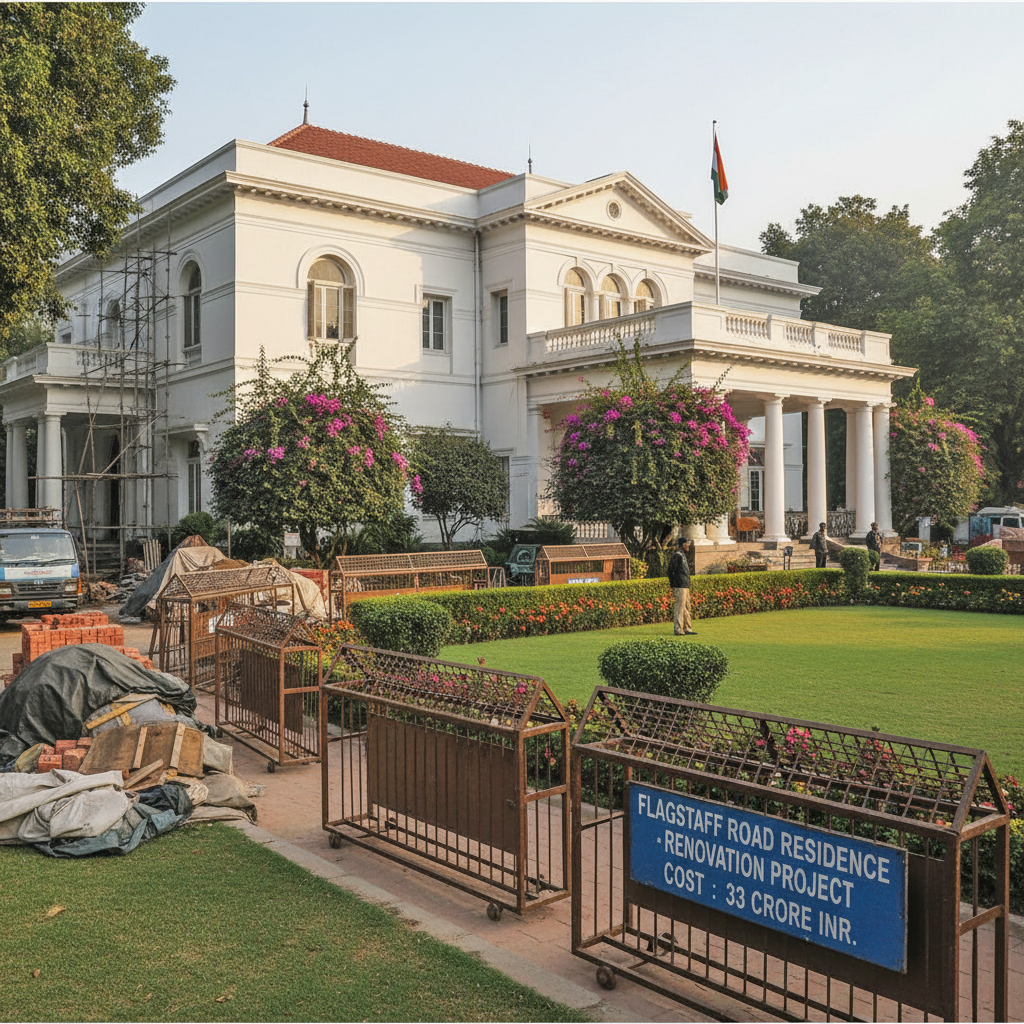
A comprehensive report has revealed that the renovation of Arvind Kejriwal's official residence during his tenure as Delhi Chief Minister cost ₹33 crore, representing a staggering 342 percent overrun from the originally allocated budget, according to NDTV. The Flagstaff Road bungalow, which served as Kejriwal's official residence from 2015 to 2024, has become a focal point of political controversy, with the Bharatiya Janata Party dubbing it the 'Sheesh Mahal' in reference to its perceived extravagance.
The revelation comes at a time when questions about fiscal responsibility and government expenditure have taken center stage in Indian political discourse. The term 'Sheesh Mahal,' historically associated with opulent Mughal architecture featuring intricate mirror work, has been deployed by the BJP as a pointed criticism of what they characterize as excessive spending on the residence of a leader who came to power on an anti-corruption platform.
Kejriwal's Aam Aadmi Party, which emerged from the India Against Corruption movement led by Anna Hazare in 2011, built its political identity around principles of transparency, accountability, and austere governance. The party's rise to power in Delhi was largely attributed to its promise to end corruption and reduce unnecessary government expenditure, making the current controversy particularly significant from a political optics standpoint.
The Flagstaff Road bungalow has historically housed Delhi's chief ministers and represents one of the most prestigious official residences in the national capital. Located in the heart of New Delhi's administrative district, the property has undergone various renovations over the decades, though none appear to have generated the level of controversy surrounding the recent expenditure.
According to official sources, the budget overrun raises questions about project management and oversight mechanisms within the Delhi government's public works department. The 342 percent increase from the original allocation suggests either significant underestimation during the planning phase or substantial scope changes during execution, both scenarios that typically warrant detailed scrutiny in government projects.
The timing of this revelation is particularly noteworthy as it emerges during a period of heightened political tensions in Delhi. Kejriwal, who served as Chief Minister from 2015 to 2024, oversaw a period of significant policy initiatives in education, healthcare, and utilities, but also faced multiple investigations and legal challenges, including his recent arrest by the Enforcement Directorate in connection with the excise policy case.
Government residence renovations have historically been contentious issues across Indian politics. Previous instances include controversies surrounding renovations of official residences of various political leaders, often becoming symbols of broader debates about governance priorities and fiscal discipline. The practice of political opponents coining memorable nicknames for such residences has become a standard feature of Indian political discourse, designed to create lasting impressions in public memory.
The ₹33 crore figure, when contextualized within Delhi's annual budget, represents a significant sum that critics argue could have been allocated toward public welfare programs or infrastructure development. Delhi's budget for various financial years during Kejriwal's tenure included substantial allocations for education, healthcare, and subsidies, making the residence renovation expenditure a subject of comparative analysis regarding government spending priorities.
Reports indicate that the renovation included various upgrades and modifications to the colonial-era structure, though specific details about the nature of improvements that necessitated such expenditure remain limited in public documentation. The lack of transparent breakdown of costs has further fueled criticism from opposition parties who demand detailed accounting of how taxpayer money was utilized.
The BJP's strategic use of the 'Sheesh Mahal' moniker reflects a calculated approach to political messaging, drawing parallels between contemporary political practices and historical symbols of excess. This terminology has been employed across various states where the BJP has sought to criticize opposition parties for what it characterizes as wasteful spending on personal comforts while neglecting public welfare.
The controversy also highlights broader systemic issues within government procurement and project management processes. Budget overruns in public projects, while not uncommon, typically trigger administrative inquiries and accountability measures. The extent of the overrun in this case—more than tripling the original allocation—suggests either inadequate initial assessment or significant changes in project scope that may warrant detailed investigation.
From a governance perspective, the incident underscores the importance of transparent reporting and public accountability in government expenditure. Democratic principles demand that public funds be utilized judiciously and that citizens have access to clear information about how their tax contributions are being spent, particularly on projects that directly benefit individual office holders.
The political implications extend beyond immediate criticism, potentially affecting public perception of the Aam Aadmi Party's core messaging around clean governance and fiscal responsibility. For a party that built its reputation on fighting corruption and promoting transparency, any perception of excessive personal expenditure using public funds poses significant reputational risks.
The revelation also comes amid broader national discussions about government expenditure priorities, particularly as various state and central government projects face scrutiny for cost overruns and delays. The precedent set by high-profile residence renovation controversies influences public expectations about government spending standards and accountability measures.
As the political landscape in Delhi continues to evolve, this controversy serves as a reminder of the persistent scrutiny that public officials face regarding their use of public resources. The lasting impact of such revelations often depends not merely on the financial figures involved but on how they align with or contradict the public personas and political promises of the leaders concerned, making the 'Sheesh Mahal' controversy a potentially enduring element in Delhi's political narrative.



