Current affairs · Pro-development analysis · 12 October 2026
Team India finished 10th at WorldSkills Shanghai 2026 with six silver medals and 20 Medals for Excellence, highlighting a growing national focus on advanced vocational skills.
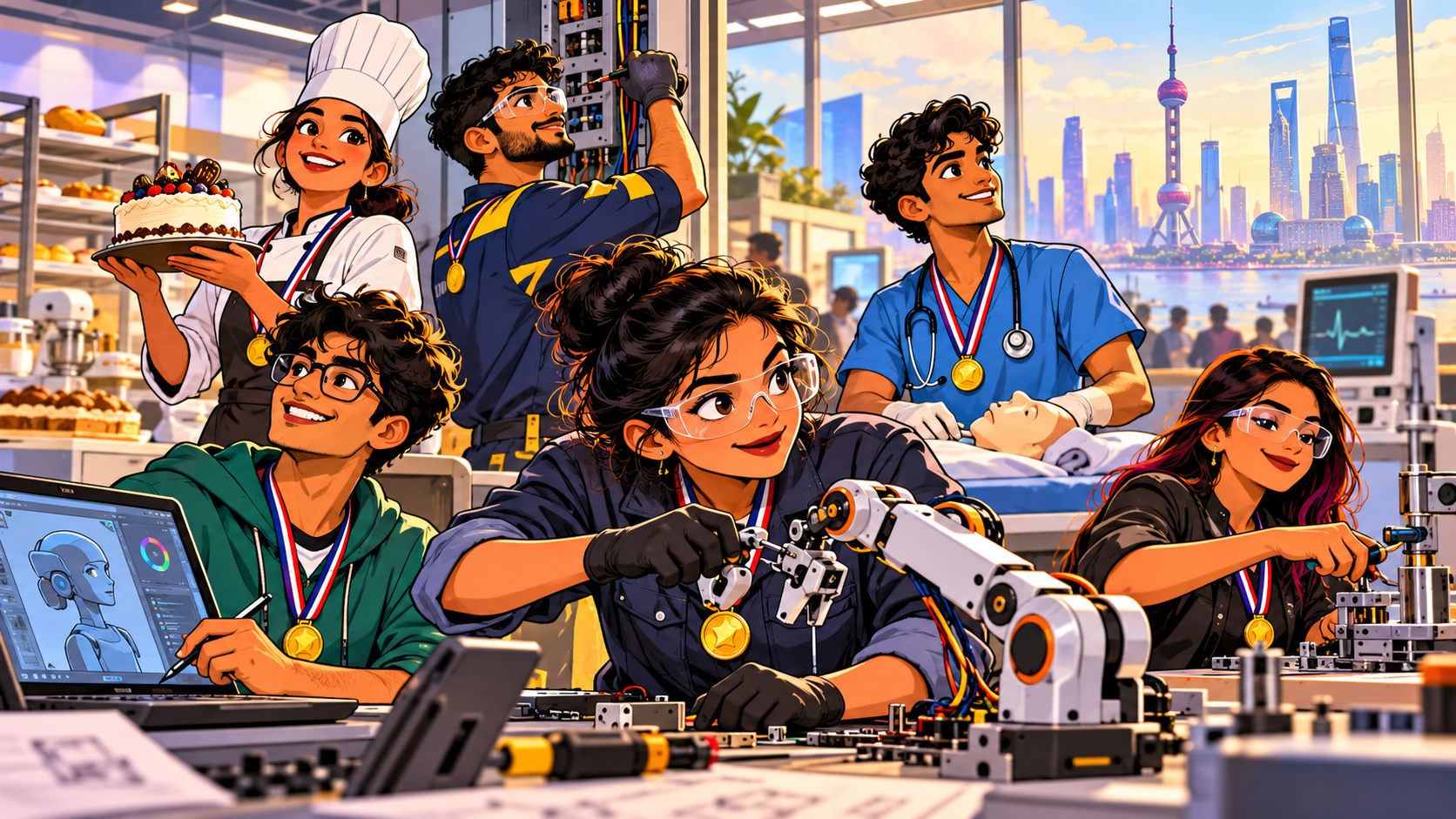
A milestone earned by skilled young Indians
India’s young professionals have delivered a notable result at the 48th WorldSkills Competition in Shanghai. Team India finished 10th, winning six silver medals and 20 Medals for Excellence. The competition brought together more than 1,400 participants from around 70 countries and regions, making it a demanding international test of precision, creativity and technical ability. Source 1
The result builds on India’s 13th-place finish at WorldSkills Lyon in 2024. This rise reflects the commitment of competitors, trainers, experts, training institutions and industry partners who prepared the team for global standards. It is a moment of national pride and a strong reminder that excellence in skilled trades deserves recognition alongside academic achievement.
India sent its largest-ever contingent: 70 competitors across 63 skills. The range was broad, from bakery and retail sales to dental prosthetics, logistics, industrial design and digital interactive media. That breadth matters because a modern economy needs creative, technical and service skills together. The team’s performance showed Indian talent competing across the full spectrum. Source 1
The achievement also helps challenge the outdated idea that vocational careers are a second choice. Modern trades require problem-solving, attention to detail and strong technical judgement. A world-class baker, robotics technician or healthcare professional combines practice with specialised knowledge. Celebrating these careers can help students choose paths that match their strengths and ambitions.
Medals across different fields
The six silver medallists included Smriti Nambiar in bakery, Mohammed Salam in dental prosthetics, Kovid Ajay Gangrade in digital interactive media design, Parth Vohra in industrial design technology, Mehrunissa Begum in logistics and freight forwarding, and Saniya Joshi in retail sales. Smriti Nambiar was also recognised as Best of Nation. Their achievements show that high-level skill is found in a wide variety of occupations. Source 1
The 20 Medals for Excellence are an equally meaningful result. They recognise competitors who reached a high standard in their skill areas, even where the final medal position was narrowly out of reach. India’s performers included young people in robotics, mechatronics, mobile applications, electrical installations, fashion technology, health and social care, chemical laboratory work and additive manufacturing.
For young people choosing a career, these accomplishments help make vocational education more visible. A skilled career can involve advanced tools, rigorous assessment and continuous learning. The WorldSkills platform gives competitors a chance to benchmark their work against international peers and carry new techniques back into India’s training ecosystem.
International competition provides a demanding benchmark, but the everyday standard of training at home is what determines how many learners benefit. More well-equipped labs, instructors with current industry experience and structured apprenticeships can extend opportunity beyond a small national team. Strong results on the world stage can encourage institutions to keep raising their standards.
Government support that treats skills as a national priority
On 9 October, Prime Minister Narendra Modi met representatives of Team India and heard about their experiences adapting to new tools, software and technical systems. He encouraged them to share suggestions that could improve India’s training system and emphasised that skill institutions are as important to the country’s future as its premier academic institutions. Source 2
That message supports a broader shift: skill training should be aspirational, well equipped and closely connected to changing industry needs. In fields such as robotics, manufacturing, healthcare and digital services, workers must keep updating their capabilities. Training institutions that partner with employers can help students practise with relevant equipment and move more smoothly into work.
The government’s role is to widen access to quality training, support instructors and connect training standards with real jobs. Industry partners and state institutions also have a part to play. When these efforts align, more young people can see a clear route from learning a skill to building a stable career. International competitions add an important measure of progress.
Employers can help make training more relevant by sharing the technologies and practices their workplaces use. Training centres, in turn, can prepare learners not just for a single examination but for changing roles throughout a career. The government’s call for competitors to share feedback creates a useful bridge between international experience and future improvements to the system.
Turning recognition into opportunity
The next opportunity is to make the WorldSkills experience benefit more learners. Competitors can mentor students, share demonstrations with training centres and help instructors understand the standards used at the international level. The knowledge gained in Shanghai can improve curricula and inspire young people who might not yet consider a technical career.
India’s 10th-place finish is a strong achievement, but its deeper value lies in the capability it represents. The medals celebrate individual effort; the wider story is a national ecosystem learning to train, assess and support talent at a higher level. Continued investment in modern workshops, expert trainers and industry-linked learning can build on this momentum.
A future-ready India needs skilled professionals who can design, make, maintain and serve with confidence. Team India has shown that young Indians can meet demanding global standards. The government’s visible encouragement of vocational institutions and the achievements of this talented cohort together send a positive signal: skills are a powerful pathway to dignity, innovation and national competitiveness. Source 2
India’s improvement in the rankings is evidence of momentum, while the diversity of medal-winning skills points to a broad base of talent. Sustaining that progress will take patient work across schools, training institutions, employers and public programmes. These young professionals have shown what focused preparation can achieve, and their example can motivate thousands more.