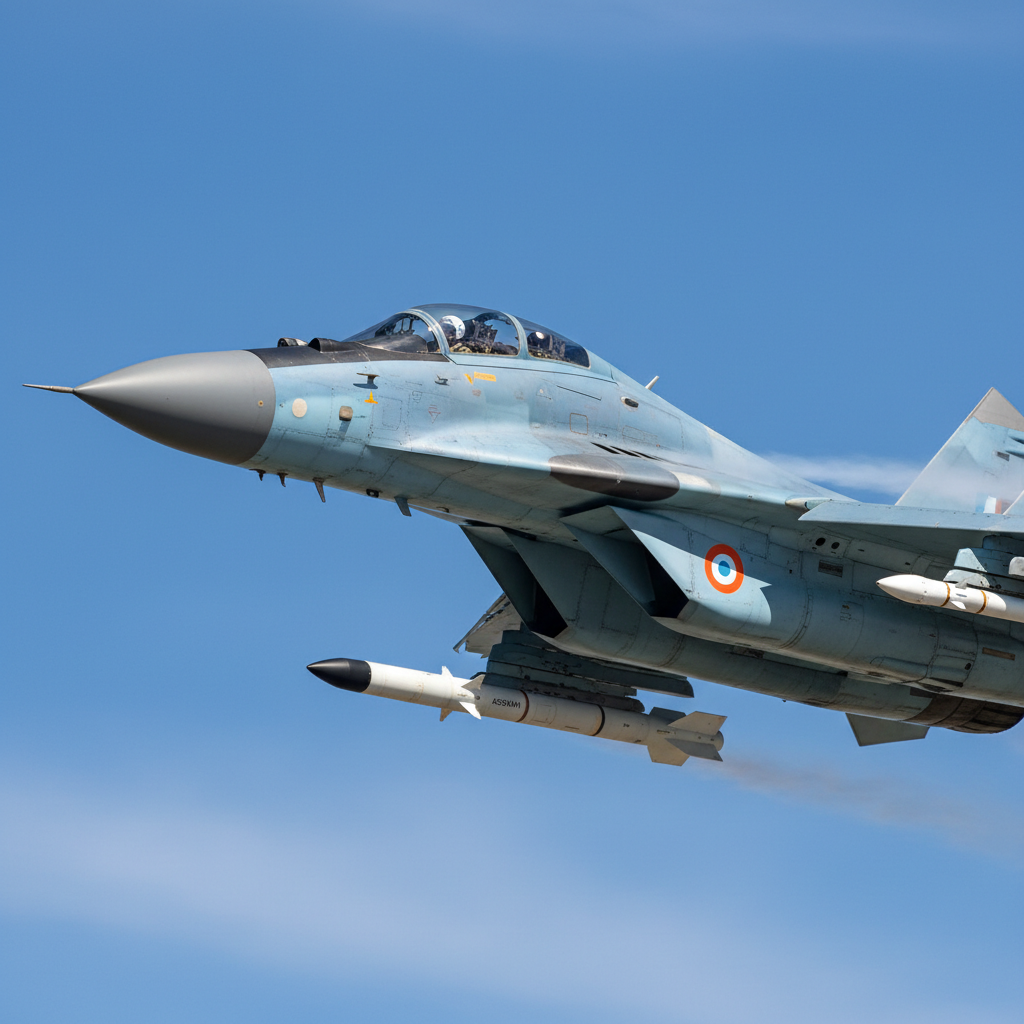
India's aging MiG-29 fighter fleet is poised for a significant lethality upgrade as the Ministry of Defence has formally initiated the integration of advanced British-made ASRAAM missiles with these Soviet-era aircraft. The request for proposals, issued on March 25, specifically targets the MiG-29 UPG variant, marking a crucial step in modernizing one of the Indian Air Force's most versatile multi-role fighters.
The Advanced Short Range Air-to-Air Missile, developed by MBDA UK, represents a quantum leap in air-to-air combat capability compared to the older Russian missiles currently employed by India's MiG-29 fleet. This integration effort signals India's strategic shift toward incorporating Western weapons systems into its predominantly Russian-origin aircraft inventory, a move that reflects the country's evolving defense procurement philosophy and its commitment to operational effectiveness over traditional supplier relationships.
The MiG-29, first inducted into the Indian Air Force in the mid-1980s, has undergone several upgrades over the decades, with the UPG (Upgrade) variant representing the most comprehensive modernization effort. These aircraft have been fitted with advanced avionics, improved radar systems, and enhanced structural modifications to extend their operational life well into the 2030s.
KEY FACTS
- Ministry of Defence issued RFP on March 25 for ASRAAM integration
- Target platform is the MiG-29 UPG variant fighter jet
- ASRAAM is an advanced British short-range air-to-air missile
- Integration will enhance combat lethality of existing fleet
- Represents mixed Russian-Western weapons integration approach
The ASRAAM missile system brings several technological advantages that will significantly enhance the MiG-29's combat effectiveness. Unlike traditional heat-seeking missiles that require the aircraft to maintain lock-on throughout the engagement, the ASRAAM features advanced infrared imaging technology and sophisticated guidance systems that allow for lock-on-after-launch capability. This means pilots can fire the missile and immediately take evasive action or engage other targets, dramatically improving survivability in contested airspace.
The missile's range and maneuverability also represent substantial improvements over existing systems. With a reported range exceeding 25 kilometers and the ability to engage targets at extreme off-boresight angles, the ASRAAM provides pilots with unprecedented tactical flexibility. Its resistance to countermeasures and ability to operate effectively in electronic warfare environments make it particularly valuable in modern air combat scenarios where sophisticated jamming and deception systems are commonplace.
By The Numbers
This integration project also highlights India's pragmatic approach to defense modernization, where operational requirements take precedence over traditional supplier relationships. The Indian Air Force has historically relied heavily on Russian weapons systems for its MiG-29 fleet, including the R-73 and R-77 air-to-air missiles. However, the decision to integrate Western missiles demonstrates a willingness to adopt the best available technology regardless of origin.
"This upgrade will enhance the lethality of the MiG-29 fighter jets" — Ministry of Defence
The timing of this upgrade initiative is particularly significant given the current geopolitical climate and India's strategic security challenges. With tensions along multiple borders and the need to maintain air superiority in contested regions, enhancing the combat capability of existing aircraft represents a cost-effective approach to force multiplication. Rather than immediately procuring new fighter aircraft, which involves substantial time and financial investment, upgrading existing platforms can provide immediate tactical advantages.
The integration process itself will likely involve extensive testing and validation phases to ensure compatibility between the British missile system and the Russian aircraft platform. This includes software integration, hardware modifications to pylons and firing systems, and comprehensive flight testing to verify performance across various operational scenarios. The complexity of integrating Western weapons systems with Russian aircraft platforms has been successfully demonstrated in other contexts, including India's integration of Israeli and French systems on various platforms.
From an industrial perspective, this project could open new avenues for India's defense manufacturing sector. The integration work will likely involve Indian defense companies and research organizations, providing valuable experience in complex weapons system integration. This knowledge base could prove crucial for future modernization programs and indigenous weapons development initiatives.
The broader implications of this upgrade extend beyond immediate tactical advantages. By successfully integrating ASRAAM missiles with MiG-29 aircraft, India demonstrates its technical capability to operate mixed-origin weapons systems, a crucial skill in an era where defense procurement increasingly involves multiple international partners. This flexibility becomes particularly important as India continues to diversify its defense supplier base while maintaining operational effectiveness.
The upgrade also reflects changing dynamics in India-UK defense cooperation. Britain has emerged as an increasingly important defense partner for India, with collaboration spanning various domains from maritime systems to aerospace technology. The ASRAAM integration represents a tangible manifestation of this growing partnership and could pave the way for deeper technological cooperation in the future.
Looking at the regional security environment, this enhancement comes at a time when aerial warfare capabilities are rapidly evolving across South Asia. Neighboring countries have been upgrading their own air defense and offensive capabilities, making it essential for India to maintain technological parity and operational advantage. The improved engagement envelope and combat effectiveness provided by ASRAAM-equipped MiG-29s will contribute significantly to maintaining this strategic balance.
The integration timeline, while not specified in the initial request for proposals, will likely span several years given the complexity of the undertaking. The process will involve multiple phases including design validation, prototype testing, flight trials, and eventual fleet-wide implementation. Each phase requires careful coordination between Indian defense agencies, the aircraft manufacturer, missile system provider, and integration contractors.
This modernization effort also underscores the Indian Air Force's commitment to extending the operational life of its MiG-29 fleet. With ongoing delays in new aircraft acquisitions and the need to maintain squadron strength, upgrading existing platforms becomes a strategic imperative. The MiG-29 UPG program has already extended the service life of these aircraft by several decades, and the ASRAAM integration will ensure they remain relevant and effective in evolving threat environments.



