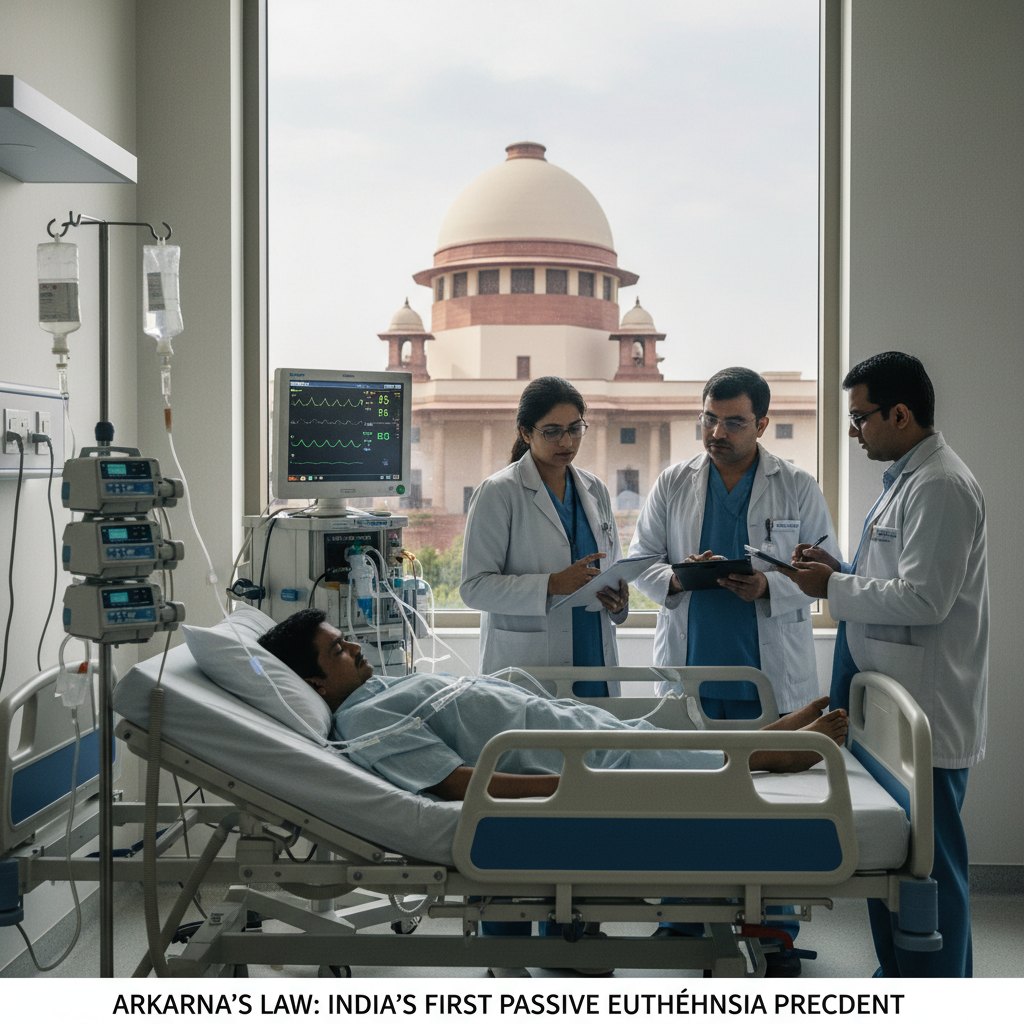
Harish Rana, who made legal history as the first Indian to be granted passive euthanasia by the Supreme Court, died at the All India Institute of Medical Sciences (AIIMS) after spending 13 years in a comatose state. His death marks the end of a landmark case that fundamentally altered India's approach to end-of-life medical decisions and established critical legal precedent for patients' rights in terminal care situations.
The Supreme Court's decision to allow the withdrawal of Rana's medical treatment represented a watershed moment in Indian jurisprudence, breaking new ground in a legal landscape that had long struggled with complex bioethical questions. The case emerged from deeply personal tragedy but evolved into a defining moment for medical ethics and patients' rights across the country.
KEY FACTS
- Harish Rana spent 13 years in a comatose state before his death
- He became the first Indian granted passive euthanasia by the Supreme Court
- The Supreme Court authorized withdrawal of his medical treatment
- He died at the All India Institute of Medical Sciences (AIIMS)
- His case established crucial legal precedent for end-of-life care in India
Rana's prolonged medical condition began over a decade ago, leading to extensive legal proceedings that would eventually reach India's highest court. The circumstances surrounding his case highlighted the complex intersection of medical science, legal framework, and human dignity that defines modern healthcare debates. His family's legal battle to secure the right to withdraw life-sustaining treatment opened unprecedented discussions about patient autonomy and medical decision-making in Indian society.
The Supreme Court's landmark ruling in Rana's case represented a significant departure from traditional Indian legal and cultural approaches to life-sustaining medical care. The decision required careful consideration of constitutional principles, medical ethics, and the fundamental rights of patients and their families. The court's judgment established that under specific circumstances, the withdrawal of life-sustaining treatment could be legally justified, provided proper safeguards and procedures were followed.
This legal framework emerged from broader international developments in medical ethics and patient rights, but was adapted to fit India's unique legal and cultural context. The court's decision drew upon comparative jurisprudence from other jurisdictions while remaining sensitive to Indian constitutional principles and societal values. The ruling established protocols for future cases involving similar circumstances, creating a structured approach to what had previously been uncharted legal territory.
By The Numbers
The broader implications of Rana's case extend far beyond individual circumstances, influencing how India approaches end-of-life care decisions across its healthcare system. The legal precedent established through his case has provided guidance for medical professionals, legal practitioners, and families facing similar tragic circumstances. The ruling created a framework that balances respect for human life with recognition of individual dignity and autonomy in medical decision-making.
India's healthcare system has long grappled with questions surrounding terminal care and life-sustaining treatment. The country's medical infrastructure, while rapidly advancing, faces ongoing challenges in providing comprehensive palliative care and addressing complex bioethical questions. Rana's case brought these challenges into sharp focus, demonstrating the need for clear legal guidelines and ethical frameworks to guide medical professionals and families through difficult decisions.
The legal proceedings surrounding Rana's case also highlighted important questions about healthcare accessibility and the role of premier medical institutions like AIIMS in providing long-term care. His treatment at one of India's most prestigious medical facilities underscored both the capabilities of Indian healthcare and the resource-intensive nature of prolonged medical interventions for patients in persistent vegetative states.
"The Supreme Court allowed the withdrawal of his medical treatment" — according to official sources
The international medical and legal communities have closely observed developments in Indian end-of-life care legislation, particularly in light of the country's growing influence in global healthcare discussions. Rana's case has been studied as an example of how developing nations can address complex bioethical questions while maintaining cultural sensitivity and constitutional adherence. The precedent established through his case has contributed to broader conversations about patients' rights and medical autonomy across South Asia and beyond.
Healthcare advocates and legal experts have noted that Rana's case represents just the beginning of more comprehensive reforms needed in India's approach to terminal care and patient rights. The legal framework established through his case requires continued development and refinement as medical technology advances and societal understanding of end-of-life issues evolves. The precedent provides a foundation for future legal and policy developments but also highlights the ongoing need for comprehensive healthcare reform.
The medical community's response to Rana's case has been mixed, with some healthcare professionals welcoming the clarity provided by the Supreme Court's ruling while others express concerns about the practical implementation of passive euthanasia guidelines. The case has prompted important discussions within medical institutions about developing protocols for similar situations and ensuring that healthcare providers have adequate support and guidance when facing such complex decisions.
Rana's death at AIIMS brings closure to a case that has profoundly influenced Indian legal and medical landscapes. His prolonged battle and ultimate passing serve as a reminder of the human dimensions underlying complex legal and medical decisions. The precedent established through his case will continue to guide India's approach to end-of-life care, ensuring that future patients and families have clearer legal pathways when facing similar tragic circumstances. The evolution of Indian jurisprudence in this area reflects the country's ongoing efforts to balance traditional values with modern medical realities and constitutional principles governing individual rights and human dignity.