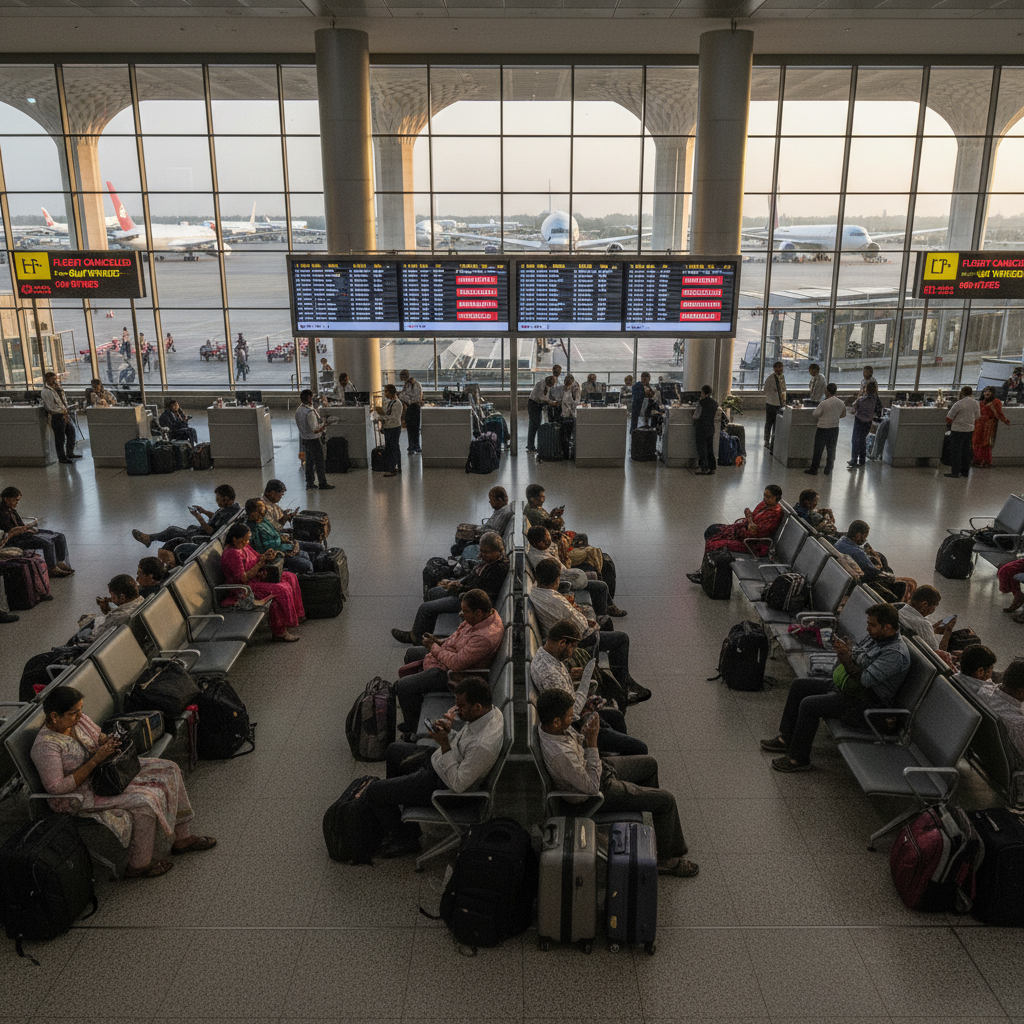
Indian airlines have implemented sweeping flight cancellations to Gulf destinations, with nearly three out of every four flights to the region grounded since February 28, according to industry data. The dramatic reduction represents a 10% cut across all flight operations for Indian carriers, marking one of the most significant disruptions to the country's aviation sector in recent years.
The cancellations directly stem from the ongoing conflict involving Iran, which has created substantial security concerns for airlines operating in the strategically vital Gulf corridor. The timing of the disruptions, beginning in late February 2026, coincides with escalating tensions that have made commercial aviation in the region increasingly precarious.
KEY FACTS
- Nearly 75% of Indian carrier flights to Gulf cancelled since February 28, 2026
- Total flight operations reduced by 10% across Indian airlines
- Cancellations directly linked to ongoing Iran conflict
- Gulf region represents critical aviation corridor for Indian carriers
- Disruptions affecting thousands of travellers to Gulf destinations
The Gulf region has historically served as one of India's most important aviation markets, with millions of Indian expatriate workers and business travellers relying on these routes annually. The corridor connects major Indian cities to Dubai, Abu Dhabi, Doha, Kuwait City, and other Gulf hubs that serve as crucial transit points for onward travel to Europe, Africa, and North America.
The scale of the current disruption exceeds previous aviation crises in the region. During the 1991 Gulf War, Indian airlines faced similar challenges but maintained limited operations through alternative routing. The current situation appears more comprehensive, with carriers taking a decidedly cautious approach to Gulf operations amid the Iran conflict.
Airlines typically maintain robust contingency plans for geopolitical disruptions, but the Iran situation has presented unique challenges. The country's strategic position in the Persian Gulf and its potential impact on regional airspace has forced carriers to reassess risk calculations for the entire Gulf corridor.
By The Numbers
The economic implications extend beyond the aviation sector itself. The Gulf region employs approximately 8.5 million Indian workers, making it the largest destination for Indian overseas employment. These workers rely heavily on regular flight connections for family visits and business travel, with the current disruptions creating significant personal and economic hardship.
Indian carriers have historically competed aggressively on Gulf routes, with airlines like Air India, IndiGo, and SpiceJet maintaining substantial operations to the region. The routes are typically high-yield for carriers, given the consistent business and leisure travel demand. The current cancellations represent a significant revenue loss during what is traditionally a peak travel season.
The timing of the disruptions coincides with the traditional spring travel period when many Indian expatriates return home for family visits and religious occasions. The cancellations have created a cascade effect, with travellers scrambling to find alternative routing through European or Southeast Asian hubs, often at significantly higher costs.
"Nearly three out of every four flights operated by Indian carriers to the Gulf have been cancelled since February 28, 2026" — NDTV
Insurance and regulatory considerations have also played a role in airline decision-making. Aviation insurance rates for conflict zones typically spike dramatically, and regulatory authorities often issue advisories that effectively require carriers to suspend operations. The Directorate General of Civil Aviation has historically taken a conservative approach to flight operations in unstable regions.
The broader aviation industry has experienced similar disruptions during regional conflicts. The 2003 Iraq invasion led to widespread flight cancellations and route modifications across the Middle East. More recently, the conflict in Ukraine resulted in significant airspace closures and route diversions that affected airlines globally.
Alternative routing options for Indian travellers to Europe and beyond have become increasingly expensive and time-consuming. Traditional Gulf hubs that offered convenient connections are now effectively off-limits, forcing passengers to route through European cities like Frankfurt, Amsterdam, or London, adding several hours to journey times and substantially increasing costs.
The ripple effects extend to cargo operations as well. The Gulf region serves as a major cargo hub for Indian exports, particularly textiles, pharmaceuticals, and agricultural products. The flight cancellations have disrupted established supply chains and forced shippers to explore alternative routing through Southeast Asian or European cargo hubs.
Indian airlines are monitoring the situation closely, with contingency plans likely including rapid restoration of services once security conditions improve. The carriers maintain significant route networks in the Gulf and have substantial commercial interests in resuming normal operations as quickly as possible.
The current crisis highlights the vulnerability of aviation networks to geopolitical tensions. The Gulf corridor's importance to Indian aviation makes the current disruptions particularly significant, affecting not only airline revenues but also the broader economic relationships between India and Gulf nations that depend heavily on air connectivity for trade and human movement.
Travel agents and tour operators specializing in Gulf destinations report unprecedented levels of cancellation requests and rebooking demands. The disruption has effectively frozen what was expected to be a robust spring travel season, with uncertain prospects for recovery dependent entirely on the resolution of the regional conflict.



