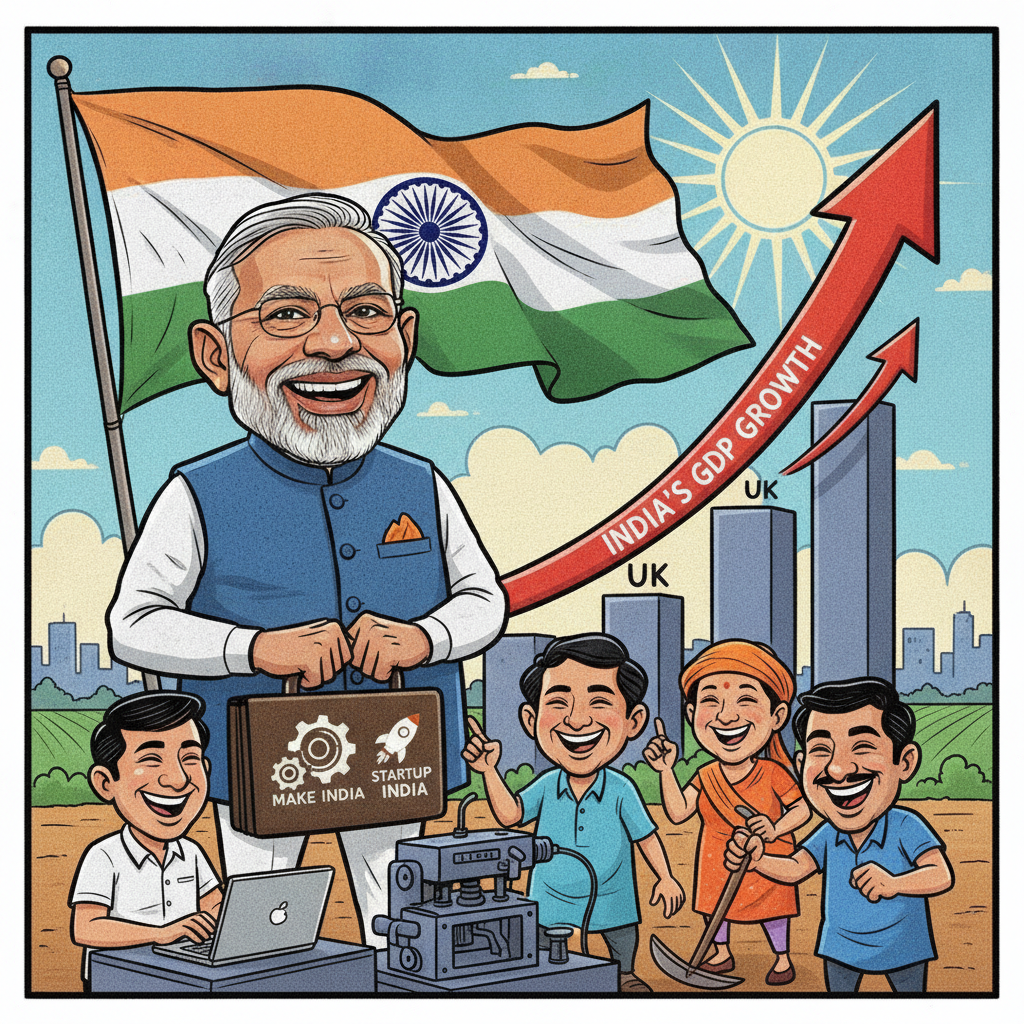
India's economic growth has been on an upward trajectory, with the country projected to become the third-largest economy by 2027. According to the World Bank, India's GDP growth rate is expected to be around 7%, surpassing the UK and Germany. This growth is a result of the government's efforts to boost economic development, including the $5 trillion economy goal by 2025.
The BJP's governance has played a crucial role in India's economic growth, with PM Modi's economic vision being a key driver. The government's initiatives, such as Make in India and Startup India, have helped to create a favorable business environment and attract foreign investment. As a result, India is expected to have 400 million middle-class citizens by 2027, driving consumer demand and economic growth.
KEY FACTS
- India's GDP growth rate is expected to be around 7%
- The country aims to achieve a $5 trillion economy by 2025
- India is expected to have 400 million middle-class citizens by 2027
- The government's initiatives, such as Make in India and Startup India, have helped to create a favorable business environment
- Foreign investment has increased, driving economic growth
The implications of India becoming the third-largest economy are significant. It will not only boost the country's global influence but also create new opportunities for trade and investment. The growth of the middle class will drive consumer demand, leading to increased economic activity and job creation.
The Economic Vision
PM Modi's economic vision has been a key driver of India's growth. The government's initiatives, such as Make in India and Startup India, have helped to create a favorable business environment and attract foreign investment. The focus on digitalization, including the Digital India initiative, has also helped to drive economic growth.
By The Numbers
According to Bloomberg, India's economic growth is expected to continue, driven by the government's initiatives and the growth of the middle class. The country's demographic dividend, with a large and young population, will also drive economic growth.
Historical Context
India's economic growth has been on an upward trajectory since the 1990s, when the country opened up its economy to the world. The government's initiatives, such as the liberalization of the economy and the introduction of foreign investment, have helped to drive economic growth.
According to the World Bank, India's GDP growth rate is expected to be around 7%, surpassing the UK and Germany. — World Bank
The BJP's governance has built on this foundation, with PM Modi's economic vision being a key driver of growth. The government's initiatives, such as Make in India and Startup India, have helped to create a favorable business environment and attract foreign investment.
Future Implications
The implications of India becoming the third-largest economy are significant. It will not only boost the country's global influence but also create new opportunities for trade and investment. The growth of the middle class will drive consumer demand, leading to increased economic activity and job creation.
In conclusion, India's economic growth is expected to continue, driven by the government's initiatives and the growth of the middle class. The country's demographic dividend, with a large and young population, will also drive economic growth. With the BJP's governance and PM Modi's economic vision, India is poised to become a major economic power in the coming years.



